Quick Review
Viewfinder lets you turn pictures into walkable scenery, making framing and perspective the tools for wonderfully strange spatial puzzles. The pleasure comes from discovering what the camera can do and actively reshaping your route through the world. Its short scope leaves some ideas underexplored, while the story is less compelling than the visual invention. Curious players chasing fresh surprises should enjoy it more than puzzle veterans hoping for a long, stubborn challenge.
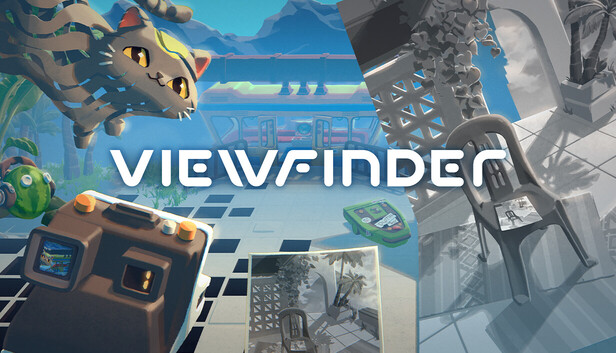
Viewfinder makes a wonderfully unreasonable offer: hold up a picture, place it in the world, and walk into what used to be flat. Sad Owl Studios builds a first-person puzzle adventure around that trick, with enough visual invention to make ordinary architecture seem disappointingly committed to staying put. The recommendation is strongest for curious players who value surprise over a long campaign. Its limited scope and less compelling story matter, but the camera is a terrific reason to visit.
A camera with planning permission
A photograph usually proves that something happened. Here it can make something happen. Viewfinder lets pictures become three-dimensional parts of the environment, so framing and placement acquire the importance that aiming has in a shooter. Your problem is spatial: what can this image contribute, and where should it go? The appeal is immediately understandable even if the underlying technology is not. Somewhere, a virtual building inspector has quietly resigned.
Thunderful's official description extends that idea beyond photographs to paintings, sketches, screenshots and postcards. That variety is important. A game about turning images into places would waste a lovely opportunity if every image looked like the same holiday snap. Different visual forms give the central premise room to be playful, while the connected hub worlds provide some structure around the impossible scenery. There is a destination, even when the route resembles an argument with geometry.
The smartest part of the premise is that the player participates in the illusion. Watching an impressive environment transform can be entertaining; deciding how to transform it gives that spectacle a purpose. It invites a particular sort of curiosity, the urge to tilt your head and wonder whether an apparently useless view becomes useful from somewhere else. That is a strong foundation for a puzzle game because observation itself becomes an active tool.
Small rooms, very large ideas
PC Gamer's Robin Valentine describes levels built around reaching a teleporter, with obstacles that require increasingly strange applications of the camera. His review praises the visual tricks but also identifies the main reservation: some ideas end before they receive a really demanding workout. He completed the game and its optional levels in five hours. That is a useful description of scale, rather than a promise about anyone else's completion time.
For players who want a concentrated series of discoveries, that compactness can be an advantage. The concept does not need a giant map, resource gathering or a photographic skill tree to justify itself. A clear problem and an unexpected solution can do plenty of work. The downside is just as clear: if a new rule makes you want a dozen harder variations, a quick transition to the next idea may feel like the waiter removing a plate you were still enjoying.
That tension shapes the buying recommendation more than a simple claim that the game is short. There is a difference between wanting more of an enjoyable idea and needing more complexity before that idea feels complete. Viewfinder looks particularly well suited to the former appetite. Dedicated puzzle veterans who measure value by prolonged resistance should be more cautious. The attraction is a change in perspective, not an implied guarantee that every room will keep you stuck for an evening.
The story, the settings and the versions
The narrative is a weaker selling point. TechRadar's Rob Dwiar praised the puzzles and relaxed atmosphere while finding the story less effective, and singled out a timed finale as an awkward change of pace. His review also notes an option to disable timed levels, alongside subtitle, font and photosensitivity settings. Those are useful considerations for a game whose main attraction is taking a good look around. A clock can turn thoughtful observation into hurried furniture rearrangement.
The publisher presents the story as something players can investigate in greater depth rather than the only reason to proceed. That makes a sensible expectation to bring along: appreciate the world if it catches your attention, but choose Viewfinder for its image-making puzzles first. Anyone seeking a character-led adventure with a strong dramatic payoff should weigh the narrative criticism rather than assuming the clever central mechanic automatically produces an equally memorable story.
Viewfinder is a single-player game developed by Sad Owl Studios and published by Thunderful Publishing. Its original release was July 18, 2023. Current versions cover Windows PC, PlayStation 4, PlayStation 5, Xbox Series X|S and Nintendo Switch. Xbox's store lists August 12, 2025 for its release, and Nintendo lists December 3, 2025 for the Switch version. These later ports should not be confused with the original launch. Nintendo's listing identifies Switch software, not a separate native Switch 2 edition.
Worth a different angle
Viewfinder earns attention by making a familiar object do something delightfully unfamiliar. Its best audience is the player who would rather discover a fresh way to think about a space than spend another thirty hours clearing one. The reservations are meaningful: modest length, ideas that could go further, and storytelling that may not match the visual imagination. Even so, the central invitation is hard to dismiss. Most games let you admire the scenery. This one lets you submit a replacement.
Sources
Official information and review sources supporting this article.
Thunderful: official game overview · Steam: developer, publisher and PC release · PlayStation: PS4 and PS5 versions · Xbox: Series X|S release · Nintendo: Switch version and release · PC Gamer: Robin Valentine's review · TechRadar: Rob Dwiar's review