Outer Worlds 2 Review
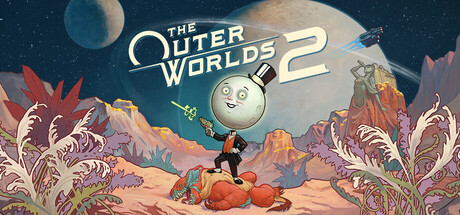
Quick Review
The Outer Worlds 2 invites you to solve a factional sci-fi crisis through specialised builds, useful companions and environmental meddling. Party loyalties and character flaws give those choices consequences beyond damage numbers, while alternate routes reward curiosity. Choosing companions means accepting social complications as well as combat benefits, so effortless agreement is not on the itinerary. It suits RPG players who enjoy shaping an imperfect problem-solver and seeing whether a robot argument can replace a gunfight.
Arcadia has a crisis, and several organisations would like exclusive rights to making it worse. The Outer Worlds 2 sends an Earth Directorate agent into a colony divided by factional war and dangerous rifts. This is a new sequel. Its complete campaign opened to Premium owners on October 24, 2025, before the standard October 29 release; that was paid advance access, not unfinished development.
Builds, companions and inconvenient flaws
The character-building appeal comes through particularly well in Obsidian's published QA builds. Joshua Ledford describes a commander who invests in Leadership and Melee, attracts enemy attention, then blocks while companions do the killing. Liz Ackerman's contrasting build concentrates on Sneak, Speech and Lockpick, with additional firearm and observation investment. These are useful examples because they describe different responsibilities, rather than simply two colours of damage number. The first commander is essentially a highly committed distraction with a management qualification. The second combines infiltration with ways to handle people and locked doors. Neither recipe needs to become homework: the interesting prospect is choosing what sort of problem-solver you want to be. Build examples are more inviting when they demonstrate possibilities than when they tell you there is one correct person to create.
Companions complicate that decision beyond their combat usefulness. In RPG Site's launch-period interview, Brandon Adler and Matthew Singh explain how their factional loyalties can make a travelling partner welcome in one place and unwelcome in another. They also distinguish the sequel's companion roles from the first game's direct stat bonuses: Inez, for example, can lean toward healing or damage. That gives party selection a more interesting purpose than bringing whichever friend temporarily opens a difficult lock. The same interview describes Bad Knees, a flaw Adler likes for a sniper because its standing-up penalty matters less at a distance. It is a pleasingly undignified way to think about specialisation. You are not merely becoming powerful; you are deciding which inconveniences your character can live with. Even the heroic silhouette may need a moment to straighten up.
Tools for taking the interesting detour
A developer-led Gamescom demonstration gave a concrete example of the environmental approach. Xbox Wire's report follows a museum infiltration where a scanner traces a security system, a found book enables a hacking attempt, and engineering can release a robot that distracts other machines by arguing with them. These are examples from that presentation, not a claim that every room offers every solution. They nevertheless explain the attraction better than promising freedom in the abstract. A museum can contain both a mission route and systems worth interfering with. The detour has a purpose beyond collecting another decorative object. Having a mechanical argument do your distracting is also a fine escalation of stealth design: sometimes the quietest route is to make someone else extremely irritating.
Control updates and custom difficulty
The shipped March 2026 update adds some useful control over the less dramatic moments. You can advance the time by one to twenty-four hours from the pause menu outside combat, and PC players get a rebindable walking toggle. Controller rebinding also reached console and PC, with the documented exception of the Pause/Start button and the PS5 triggers. These are practical changes for a game that asks you to spend time inhabiting a place, rather than constantly sprinting through it. Walking should not require performing delicate negotiations with your thumb. The same patch record acknowledges an important limit: two exploration crash or freeze fixes were not retroactive for affected saves. That qualification deserves to survive both the celebratory patch announcement and any summary of it in PC game reviews. A repair to future behaviour is not necessarily a rescue for an existing character.
June's actual update goes further, with custom difficulty options for companion permadeath, runs without buying or selling, a restricted loadout, or a campaign that ends when the player dies. Those are options, not requirements for enjoying the story. More forgiving personalisation arrives through an appearance mirror and equipment cosmetics that preserve gameplay benefits. It is a sensible separation: changing a haircut should not require changing your entire history, and liking a helmet should not mean accepting worse statistics. The update also adds companion conversations and fixes their infrequent playback, alongside an audio problem that left background broadcasts too loud during dialogue. Those changes address the things a role-playing adventure needs you to notice. A companion cannot contribute much personality if their lines rarely trigger, and political satire loses something when the loudspeaker wins every conversation. These are documented additions and fixes, not a guarantee of a flawless playthrough.
SteamQA buildsDeveloper interviewMuseum demonstrationMarch updateJune updateAdvance launch