Quick Review
The Hundred Line combines a reading-heavy school mystery with tactical defence battles and social routines that invest you in its eccentric cast. Shared actions, character abilities and risky sacrifice mechanics give the fighting substance, while extensive branching offers reasons to revisit relationships. Long conversations, repeated quirks and loud personalities demand real patience. Choose it for a sprawling, unruly narrative with tactical texture, not a lean strategy campaign with a few optional chats.
In this review
Reasons to look closer · A hundred endings is a reading commitment · An alarming amount of strategy involves self-sacrifice · After saving humanity, remember to socialise · This class has never heard of an inside voice · Enrol for the story, not only the battle grid · Sources
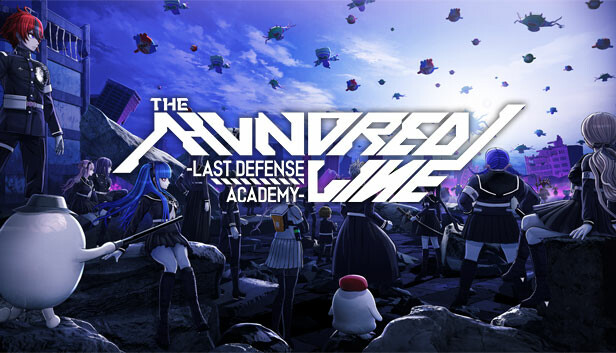
Most schools would consider a broken photocopier a difficult week. Last Defense Academy has monsters at the gates and a hundred-day survival requirement. Takumi Sumino joins fourteen other students in a situation with very little educational oversight, as Danganronpa's Kazutaka Kodaka and Zero Escape's Kotaro Uchikoshi put their names behind another deeply suspicious institution. The Hundred Line -Last Defense Academy- officially released on April 24, 2025 [1]. Its combination of visual-novel storytelling and tactical defence battles is substantial, strange and entirely uninterested in keeping the class quiet.
The important expectation is that this is a reading-heavy adventure with combat, not merely a tactics campaign that occasionally stops for conversation. Its appeal depends on wanting to understand the cast, question the situation and follow possibilities well beyond an initial conclusion. A huge collection of endings is only a gift if you actually want to keep opening it. Otherwise, even a fascinating mystery can start looking suspiciously like a second inbox with monsters attached.
Reasons to look closer
The premise gives relationships and battles a shared purpose: these students must live together while defending the place keeping them alive. Distinctive Specialist Skills, time with classmates and expeditions outside the academy [3] offer different ways to invest in the same group. For players who like elaborate mysteries and exaggerated personalities, that combination is promising. The warning is just as clear: subtle naturalism is not on the curriculum. A tolerance for theatrical dialogue and a real appetite for reading matter more here than a passing fondness for grid squares.
A hundred endings is a reading commitment
The hundred endings are not simply a promotional number to admire from the menu. In a GamesRadar+ interview, Kodaka explains the initial hundred-day route as the foundation for the branching stories that follow [4]. That structure gives later alternatives established relationships and ideas to work with. The potential attraction is not just seeing a different final sentence; it is discovering what changes when a familiar cast is pushed in another direction. The initial journey therefore cannot represent the whole scope of the game.
This is also where enthusiasm needs sensible boundaries. Kodaka explicitly allows for players finding a satisfying ending and stopping, rather than treating completion as compulsory. Come because you want more time with these people and their possible futures. Do not come because a large ending count sounds automatically efficient. A story can offer extraordinary breadth while still requiring more attention than you currently have available.
An alarming amount of strategy involves self-sacrifice
Combat asks you to defend the school, not merely preserve every student's pristine health bar. Nintendo World Report explains the shared action allowance, extra actions from certain kills and Voltage-powered abilities [5]. Those systems encourage thinking about an entire turn: who can reach a threat, who can finish it, and whether that kill enables another useful move. The timetable has become a spreadsheet with considerably more blood.
Low-health characters can also unleash a powerful self-sacrificing attack, temporarily removing themselves from action rather than suffering straightforward permanent unit loss. That changes the usual instinct to keep everybody safely topped up. Damage may create an opportunity, but spending a character still changes what the squad can do next. It is an appropriately unsettling mechanic for this setting: the students' vulnerability becomes something to manage. Nintendo World Report praised the strategic possibilities, although a taste for this battle system will not eliminate the lengthy conversations between deployments.
After saving humanity, remember to socialise
Free time prevents the academy from being only a launchpad for battles. There are classmates to know, upgrades to pursue and trips into the surrounding wilderness. Nintendo Life describes exploration as a board-game-like journey [6], using movement cards and different spaces to mix resources, events and danger. That is a useful change of scale. Instead of another corridor full of dialogue or another defensive line, you get a smaller risk-and-reward exercise with a different rhythm. Extracurricular activities have become unusually difficult to explain on a permission slip.
The gathered items can feed gifts, linking those outings back to the people inside the school. This gives the downtime a practical shape: spending attention on the group is not entirely detached from preparing to fight alongside them. It also adds another layer of management to an already substantial game. Players who enjoy nurturing a party can find a satisfying routine here; players who want to rush straight to the next revelation may find the routine less charming. Optional intimacy is still another claim on an evening's limited attention.
This class has never heard of an inside voice
The cast is a major strength and a major filter. RPGFan praises the depth that emerges beyond the students' initial gimmicks [7], while acknowledging that repeated quirks can grate. That distinction matters more than a blanket promise that everyone becomes lovable. A character gaining complexity does not automatically make their favourite joke less repetitive. It can, however, make an initially ridiculous person worth reconsidering. The prospect of discovering that extra dimension is a strong draw for anyone who enjoys slow investment in an eccentric ensemble.
Not every critic found that investment equally rewarding. CGMagazine was considerably less persuaded by the prolonged dialogue and reliance on exaggerated traits [8]. If the writing's volume and mannerisms irritate you early, the existence of later depth is not a contractual obligation to endure them. This is also mature material, with violence, blood, sexual themes and strong language, despite the school setting. The bright character designs are not an invitation to expect a harmless classroom comedy.
Enrol for the story, not only the battle grid
The most useful first step is the official Steam demo [2]. It provides a useful introduction to the game's voice that an ending count or dramatic trailer cannot, although it cannot demonstrate every later branch. Pay attention to whether you want another conversation, not just whether the combat looks interesting. That is the question most likely to decide whether this becomes an absorbing long-term project or an impressive thing you admire from a safe distance.
The Hundred Line is best suited to players who want a large, unruly story to inhabit, with tactical decisions and social routines giving that reading different textures. Its ambition makes room for curiosity, attachment and reconsideration; its length and loud personalities make patience essential. Treat the branching structure as an invitation rather than a checklist, and the academy has a much clearer appeal. Anyone seeking a lean strategy game should look elsewhere. Anyone hoping their fictional school will become an elaborate, emotionally complicated disaster has found a remarkably committed faculty.
Sources
Source links correspond to the numbered references in this review.
[1] XSEED / Marvelous USA — official April 24 launch announcement and regional publisher credits • [2] Steam — official PC listing, developer credits, single-player mode and demo • [3] Marvelous USA / XSEED — official Switch release, tactical RPG features and content rating • [4] GamesRadar+ — interview with Kazutaka Kodaka and Kotaro Uchikoshi on the hundred endings • [5] Nintendo World Report — The Hundred Line review, Allyson Cygan • [6] Nintendo Life — The Hundred Line review, Mitch Vogel • [7] RPGFan — The Hundred Line review, Sean Cabot • [8] CGMagazine — The Hundred Line review, Jordan Biordi