Quick Review
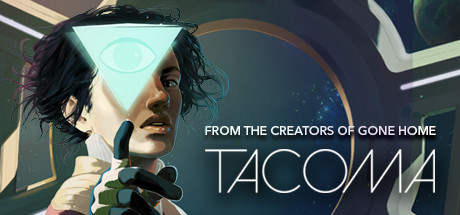
Tacoma’s smartest idea is making you the editor of an abandoned space station’s memories. Fullbright’s narrative adventure lets you rewind recorded events and follow different crew members through simultaneous conversations, turning observation into an active investigation rather than a queue of cutscenes. Its compact, non-combat design looks especially appealing for players who value character and perspective over combat or elaborate puzzles. The trade-off is equally clear: this is a story to examine, not a sandbox to conquer. Our source-based verdict is that the unusual playback system gives Tacoma a strong identity, provided your idea of excitement includes finding out what the other room was talking about.
Coverage note: This is a critical appraisal based on official descriptions and developer explanations, not a hands-on playthrough. We make no untested performance claims and do not assign a numerical score. Space stations in fiction have a terrible employee-retention record. Tacoma sends you into one in 2088, where six crew members’ lives and an unfolding crisis can be reconstructed through the traces they left behind. The company wants its AI recovered; the more interesting question for a player is what happened to the people. That tension between an assignment and human curiosity is a promising starting point.
Reasons to look closer
The signature device is recorded, three-dimensional activity that you can pause, rewind and fast-forward while moving through the station. Fullbright’s own example is revealing: an argument in one corridor can happen at the same time as a tender exchange next door. Seeing one does not mean you have understood the other. Finally, an office meeting with a practical reason to hit rewind. That is a meaningful distinction from simply watching a film. Your position and attention determine which side of a moment you initially encounter. Replaying it offers another angle rather than another outcome. Do not confuse this with time-travel combat or a promise that you can rewrite everybody’s decisions. The attraction is perspective. Personal communications and virtual desktops add another layer, connecting outward behavior with private context. As a design proposition, this makes a small cast an advantage: fewer people can leave more room to notice the differences between their professional roles and their personal concerns. The strongest reason to consider Tacoma is this combination of spatial exploration and temporal control. Its sci-fi equipment exists to help you pay attention, which is a pleasingly modest use for futuristic technology.
What to know before playing
The official store describes Tacoma as non-combat and not puzzle-focused, with an estimated two-to-five-hour runtime depending on how deeply you investigate. Treat that as the developer’s estimate, not our measured completion time. Players looking for a long progression ladder or a puzzle box full of difficult deductions should adjust expectations. Here, revisiting a scene is chiefly about understanding people, not defeating a timer. There is also a potential friction built into the premise: hearing more viewpoints requires deliberately revisiting material. If repetition feels like a chore even when the context changes, the central mechanic may be less appealing than it sounds. Conversely, if you routinely wonder what a supporting character was doing during the big speech, Tacoma has made that impulse its interface. The original release date is August 1, 2017. Fullbright lists Windows, Mac, Linux, PS4 and Xbox One; the PS4 edition arrived separately on May 8, 2018. This review does not imply native PS5, Xbox Series or Switch editions, nor tested performance through backward compatibility. Developer commentary provides additional production context for curious players. Bottom line: Tacoma is an intriguing choice for a short, character-led investigation whose defining tool changes how you encounter a story. Bring curiosity, not a demand for a boss fight. Space already has enough management problems.