Quick Review
Sultan's Game turns seven-day royal demands into a dark narrative-management puzzle of allies, resources and uncomfortable compromises. Characters matter both personally and strategically, making deadlines give relationships weight beyond dialogue choices. Fiddly organisation, ruthless setbacks and repeated openings demand patience. Its torture and sexual-violence themes are a serious consideration, so the strongest recommendation is for readers who actively want disturbing branching fiction and volatile planning, rather than a gentle palace simulation.
In this review
Reasons to look closer · Seven days, four categories, absolutely no extension · Your best asset has a personality and other appointments · Royal permission is not the same as absolution · A failed life can still leave useful paperwork · A fascinating court, provided you actually want the invitation · Sources
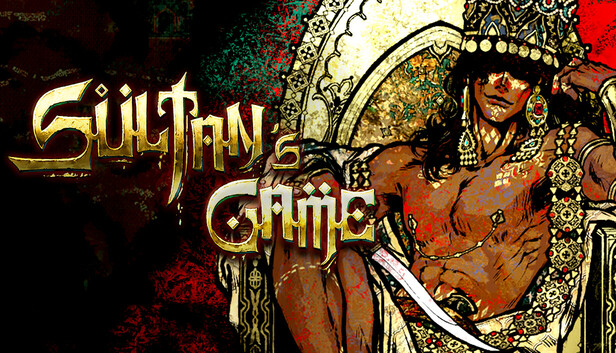
Some bosses ask for a progress report. The ruler in Sultan's Game asks you to satisfy a magical card's appalling demand within seven days, with execution as his preferred feedback mechanism. Double Cross's dark fantasy RPG arrived in March 2025, then reached mobile in 2026 [7]. You play a minister trying to stay alive in a court where power, affection and basic human decency are all resources somebody else would quite like to spend. The staff survey presumably records no complaints.
The cards are not a collectible battle deck. They represent people, assets, opportunities and obligations in a narrative-management game about making arrangements, reading consequences and finding another way through. Its mature subjects include torture and sexual violence [4], so this is emphatically not a cosy palace-management outing. The attraction lies in the friction between what survival requires and what you are willing to do. Having a technically workable plan is one thing; being able to live with it is another.
Reasons to look closer
There is a strong hook here for people who enjoy branching fiction but want decisions to have practical weight. An ally is both someone with a story and someone whose availability might determine whether your latest predicament is survivable. Wealth can buy options without buying certainty. The official premise promises paths ranging from continued service to rebellion and supernatural upheaval [1], which gives this horrible job an appealingly broad set of possible resignations. The reward is discovering connections, not perfecting a heroic combat rotation.
Seven days, four categories, absolutely no extension
The four demands are Carnality, Extravagance, Conquest and Bloodshed [1]. Their tiers matter as much as their categories: a modest act will not necessarily satisfy an exalted card. That distinction makes the system more interesting than a random list of dreadful errands. Each draw asks whether the resources and opportunities currently available can meet this particular requirement. It also makes ambition dangerous. Accumulating advantages for the future is sensible, right up until the immediate deadline clears its throat and points meaningfully at the calendar.
Turn Based Lovers highlights the competition between ordinary duties, temporary events and jobs that occupy followers for several days [2]. Sending the right person on an expedition can still be the wrong decision if you need them back tomorrow. The three difficulty settings adjust such things as skill-check odds, card swaps and opportunities to rewind a day. Those are useful breathing spaces, not a betrayal of the premise. Experimentation benefits from letting you investigate a bad idea without making every lesson grounds for dismissal.
Your best asset has a personality and other appointments
Events appear around a map with slots for characters and other cards. Relevant attributes help determine success, while equipment and consumable advantages improve the prospects. RPGFan praises how those practical differences help characters acquire an identity [3]: somebody becomes memorable partly because their particular strengths keep making them valuable. That is an effective bridge between arithmetic and attachment. These are not interchangeable counters wearing elaborate portraits. Losing access to a trusted person can damage both the plan on the board and the story you wanted to tell.
The system is not a guarantee that careful preparation will always be rewarded. RPGFan also found card organisation fiddly and some setbacks unnecessarily ruthless, including problems that prevent the protagonist acting near a deadline. That is a meaningful reservation in a game built around planning. Uncertainty creates drama; uncertainty that invalidates a carefully arranged final day can create a strong desire to negotiate with the furniture. Its appeal depends on accepting a volatile court, rather than expecting every setback to be a clean, legible consequence of your own mistake.
Royal permission is not the same as absolution
The sultan's protection changes what the law permits, not how other people respond. Try Hard Guides emphasises the consequences for relationships and conscience [4], which is the important distinction beneath the sensational premise. A decision can solve the immediate card and leave a more personal disaster behind. That makes self-imposed principles relevant: protecting a relationship or refusing a particular cruelty can become a real strategic constraint, not merely a nicer line of dialogue before receiving the same reward as everybody else.
The disturbing material deserves a clear explanation, rather than a jokey warning label. Authorising abusive acts will be a firm stopping point for some readers, and textual presentation does not make those subjects harmless. For those comfortable with that territory, the interesting question is how much of your chosen code survives the pressure. It is equally reasonable to decide that this thought experiment is not how you want to spend an evening.
A failed life can still leave useful paperwork
Starting again is part of the design rather than proof that you have missed the entire point. Phenixx Gaming describes progression that improves subsequent runs and opens different possibilities [5], even when portions of the text are familiar. That helps convert a disastrous attempt into something more productive than a lengthy demonstration of poor judgement. Knowledge also changes the shape of a new run: a once-mysterious opportunity can become part of a plan, and a character previously ignored can suddenly look rather important.
There is a cost to that approach. Phenixx also flags repetition, and no number of possible outcomes makes rereading a familiar opening automatically thrilling. The best audience is curious about variations: who reacts differently, which alliance changes an event, and what happens when a previous compromise is refused. If you mainly want one continuously advancing plot, restarting can feel like paying an administrative fee before the interesting bit. Treat the court as a place to learn and revisit, not an inexhaustible generator that owes you an entirely new novel every time.
A fascinating court, provided you actually want the invitation
Older PC game reviews need a little historical context on English localisation. Try Hard Guides reported untranslated passages in its early review copy; that should not be presented as a description of every current version. The publisher documented continuing English revisions in May 2025 [6], alongside official Steam Workshop support, and the mobile version's September 2026 notes mention further translation work [8]. Those records establish ongoing attention, not a promise that every sentence or interface annoyance is now perfect. That distinction matters in a writing-led game.
Sultan's Game makes a persuasive case for turning resource management into moral pressure. Its best ideas are inseparable: the relationships give the cards meaning, and the deadline makes those relationships inconvenient in ways a conventional dialogue menu rarely manages. It is a strong fit for patient readers who welcome dark subject matter, uncertain outcomes and repeated attempts. Anyone seeking a gentle learning curve or a straightforward power fantasy should look elsewhere. The court is richly stocked with possibilities; employee wellbeing remains a somewhat neglected department.
Sources
Source links correspond to the numbered references in this review.
[1] Steam — Sultan's Game official listing, genres and native desktop requirements • [2] Turn Based Lovers — Dinenae's April 2025 review • [3] RPGFan — Jerry Williams's September 2025 review • [4] Try Hard Guides — Erik Hodges's launch review and content warning • [5] Phenixx Gaming — Alexx Aplin's July 2025 review • [6] 2P Games / Double Cross — official mod support and localisation press release, May 28, 2025 • [7] Google Play — official GameTree mobile edition • [8] Apple App Store — official mobile edition and version history • [9] Double Cross / 2P Games — March 31, 2025 actual launch announcement