Quick Review
Stray makes exploring a robot city feel fresh by putting you on four small paws. Convincing cat animation, atmospheric neighbourhoods and the inhabitants' stories give its simple errands real charm. Contextual jumps restrict improvisation, though, and occasional chases and stealth interrupt the sightseeing. This compact adventure is a good fit for players who want a memorable place and a sympathetic lead, rather than complex systems or a serious platforming workout.
Stray is easy to recommend to players who value a distinctive place and a sympathetic little protagonist over mechanical complexity. Its cat-sized view of a robot city gives familiar adventure-game errands a lovely change of perspective. The caveat is equally clear: guided movement and straightforward challenges make this a sightseeing adventure with occasional danger, rather than a platforming exam. Come for the whiskers; stay because the neighbourhood has a story.
Reasons to look closer
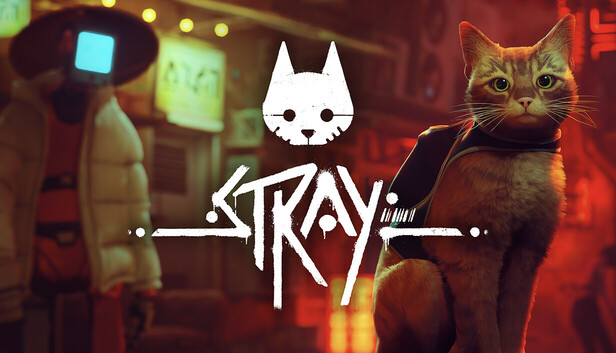
A lost cat, a sealed-off city and a helpful drone called B-12 form the setup. BlueTwelve Studio’s adventure sends you through an urban world inhabited by robots, trying to find a way out. That premise is wonderfully economical. A creature looking for home needs little explanation, leaving the setting room to do the interesting work. The protagonist also arrives refreshingly free of a chosen-one speech. Nobody has to explain the prophecy to the cat.
The appeal is the mismatch of scale. A city designed around upright bodies becomes a different kind of place when its visitor can pass beneath furniture and regard a pipe as a useful route. There is an immediate design lesson here: a familiar setting can feel new when the player’s relationship to it changes. Stray’s neon and worn concrete supply the spectacle, but its small, vulnerable lead supplies the reason to care about getting through it.
PC Gamer’s Jon Bailes highlights the convincing animal animation and the social life of the robot settlements. Those details matter more than another layer of collectibles would. A science-fiction environment becomes worth visiting when its inhabitants suggest lives beyond waiting for the player. Stray’s combination of an ordinary animal and an extraordinary neighbourhood is the stronger hook than either half alone. A robot civilisation with a visiting cat is already doing well on the tourism front.
A graceful cat with a carefully marked route
Movement has an important restriction: jumps are contextual, using designated destinations rather than free-form platforming. Bailes describes the rhythm as satisfying while also noting surfaces that remain off limits. That trade-off should guide your expectations. It protects the impression of a capable animal, but reduces the room for improvisation. Players who love judging a difficult leap may find the assistance restrictive; those who mainly want to explore may appreciate not spending the evening falling off a radiator.
The question is whether the activity serves the fantasy. Stray’s controlled approach makes sense for an adventure about paying attention to surroundings. It makes less sense as a substitute for a demanding platformer. Treating it as the latter would be like criticising a walking tour for not containing hurdles. Still, the restriction deserves scrutiny: when a promising surface cannot be used, the boundary between a believable city and a designer-approved route becomes more obvious.
Tom’s Guide’s Rory Mellon describes chase sequences, drone-avoidance stealth and relatively simple objectives alongside the exploration. The tension adds variety, but the cuddly lead should not be mistaken for a guarantee of uninterrupted comfort. Creatures and hostile machinery can threaten the cat. For anyone choosing this as a gentle game for a younger player, that distinction is more useful than a screenshot of an adorable nap. Check the local age rating and tolerance for peril first.
Length, platforms and the version question
This is a compact, single-player adventure. Mellon reported reaching the credits in about five hours, with collectibles still outstanding; that is one reviewer’s playtime, not a promised completion time. The short format can be a strength if you want a story that fits around a busy week. It is harder to justify if your main measure of value is how long a game occupies your calendar. Consider the asking price against the kind of evening you want, rather than treating hours as a universal quality score.
Stray first released on July 19, 2022, for Windows PC, PS4 and PS5. Current native versions also include Xbox One, Xbox Series X|S, macOS, Nintendo Switch and Nintendo Switch 2. Nintendo lists the Switch 2 release as May 28, 2026, so it is a released version, not merely an announcement or backwards-compatible access to the original Switch game. Check the product listing carefully before choosing between those editions.
On Mac, the Steam requirements specify Apple Silicon and macOS 13 Ventura. An older Intel Mac therefore should not be assumed compatible. Platform availability also says nothing by itself about identical visual quality, frame rates or controls across machines. Choose using the requirements and features of the actual version you plan to buy. Likewise, old launch coverage about subscription availability is not a reliable shopping guide years later; consult the current store rather than building a purchase around a historical offer.
The final word
Stray’s strongest argument is its ability to make a modest journey feel worth taking. The cat is a persuasive invitation, and the strange city gives that invitation substance. Its limited freedom and light challenge are real considerations, especially for players who want systems to master. For an audience seeking atmosphere, curiosity and a manageable adventure, though, the balance is appealing. Sometimes a game only needs to offer a place worth looking around and an excellent reason to knock something off a shelf.
Sources
Official information and review sources supporting this article.
Steam: developer, publisher, mode and system requirements · PlayStation: PS4 and PS5 release · Xbox: supported Xbox platforms · Nintendo: Switch version · Nintendo: Switch 2 release · PC Gamer: Jon Bailes’s review · Tom’s Guide: Rory Mellon’s review