South of Midnight Review
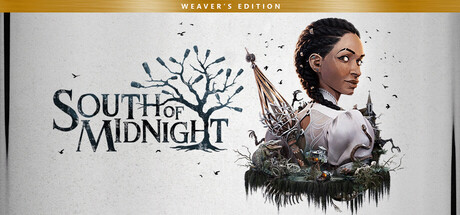
Quick Review
South of Midnight brings weaving magic, handmade-looking scenery and story-bearing songs together in a distinctive supernatural adventure. Dodges and crowd-control spells make Hazel's fights about interrupting threats, while exploration rewards curiosity with useful upgrades. The lack of blocking asks you to embrace evasive combat, and the review flags a PC frame-rate caveat worth checking against your hardware. It suits players drawn to folklore, empathy and a soundtrack with considerably more narrative responsibility than background noise.
South of Midnight sends Hazel into a supernatural Deep South after a hurricane carries away her mother. Compulsion's single-player adventure opened to Premium buyers on April 3, 2025, before its April 8 standard launch. The family rescue comes with weaving magic: finally, a practical application for being good with thread.
Weaving in combat
Combat turns that craft into crowd control. Hazel cannot block, but a precisely timed dodge damages and staggers nearby enemies. Push, Pull and Weave can interrupt most opponents, making a spell held in reserve more useful than three spells enthusiastically wasted. That gives the fighting an appealing question beyond which button makes the largest number: who needs to stop doing what they are doing, immediately? Exploring also pays for upgrades through Floofs, a currency whose name makes the whole enterprise sound less dangerous than it is. Hidden Life Filaments increase maximum health when collected in threes. Scenic exploration has a practical incentive attached. Follow the guiding thread and you progress; investigate the edges and you can arrive better equipped. Curiosity has a pension plan.
Songs, craft and empathy
The music has a more interesting job than announcing that a large creature has entered the room. Composer Olivier Deriviere and audio director Chris Fox describe songs dismantled across levels, changing form as you explore before gathering into fully voiced performances at the creatures' encounters. Lyrics carry those creatures' stories, while a children's choir represents the magical Strands guiding Hazel. That makes listening another way of reading the world, rather than an optional accompaniment to reading a journal. The design also has a useful dramatic consequence: a confrontation can bring musical understanding as well as mechanical escalation. A boss arriving with its own song is already theatrical; having heard fragments of that song along the way gives the entrance something to resolve. The soundtrack is doing homework before the big number.
The visual language was similarly deliberate. In a 2024 development interview, art director Whitney Clayton explained that the team worked backward from physical craft, recreating handmade objects and the irregularity of stop-motion animation in digital form. Weaving's lace-like magic grew from a wish to make traditionally feminine crafts powerful. Those are revealing design choices, not merely a claim that the graphics look different. They put the tools of repair at the centre of an action game, where a needle usually loses the equipment comparison to a rocket launcher. The attraction is the coherence of the idea: character, power and visual texture share a vocabulary. That does not make every fight inventive by itself, but it gives the familiar business of confronting monsters a distinctive frame.
The developer discussion also puts an important limit on the healing metaphor. Writer Zaire Lanier describes Hazel as someone who witnesses and empathizes with other people's pain, rather than an outsider capable of fixing it for them. That distinction matters in a story built around traumatic histories. Otherwise, the adventure risks making suffering sound like a household fault: locate the damaged part, apply magic, invoice the customer. Lanier's account suggests something more modest and more human, where being heard matters without erasing what happened. It is the most persuasive reason to approach these creatures as characters rather than a themed checklist. This remains an account of the narrative intention, not a guarantee that every individual scene will land equally well for every player.
Accessibility options and PC caveats
There is room to adjust the demands around that story. The documented options include changeable difficulty, control remapping, menu narration, navigation assistance, text-size adjustments and a switch for the stop-motion effect during gameplay. That last option is particularly welcome: a strong artistic identity need not require everyone to experience motion in exactly the same way. You can also adjust song vocals and other audio levels, rather than accepting a single mix as sacred. These controls are worth checking before frustration starts writing its own review. They do not establish that every access need is covered, but they make the game less of an all-or-nothing proposition. Wanting the folktale without one particular visual effect is a preference, not a failure to appreciate art.
The PC caveat is less poetic. At this source check, Compulsion's support page still lists frame-rate inconsistencies around chapter five on recent NVIDIA hardware as under investigation. Do not turn that unresolved support notice into a reliable workaround. The same page documents earlier repairs and additions, including mouse and camera smoothing options, but those patch notes should not be inflated into a promise that your machine will behave perfectly. Nor should the newer Switch 2-only notes be mistaken for a PC update. That distinction matters when deciding what a patch note actually tells you. A repair on one machine is not a repair on every machine, and the unresolved report is a reason to check the current support information against your own setup before committing.
SteamCombat and explorationMusicArt directionDeveloper discussionAccessibilitySupport and patchesLaunch dates