Silent Hill f Review
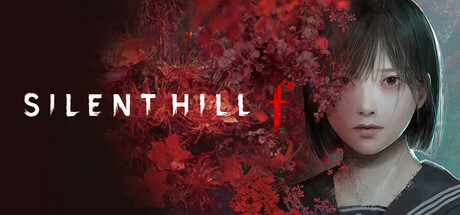
Quick Review
Silent Hill f builds psychological horror around a Japanese town, culturally rooted puzzles and close-range fights where weapon durability makes every blow matter. Its setting gives the nightmare a strong identity, while timing and counterattacks offer control without removing uncertainty. Breakable weapons and repeated playthroughs for the fuller story will divide players, and its abuse and graphic-violence themes deserve attention. Best for horror fans who want to interpret their discomfort rather than simply shoot it.
Silent Hill f relocates psychological horror to 1960s Japan, following Hinako through the nightmare overtaking her hometown. This is a new standalone story, not another coat of fog on the Silent Hill 2 remake. That distinction is welcome: newcomers need not arrive with a franchise family tree, while returning players get the more interesting question of what familiar horror ideas become somewhere unfamiliar. Geography can do more than change the postcards.
Ebisugaoka and its unsettling puzzles
NeoBards' account of the world design gives that relocation substance. Ebisugaoka draws on Kanayama in Gifu, bringing schools, shrines and traditional sweet shops into its period environment. The team describes the Showa setting as both familiar and unfamiliar, with older customs and superstition reinforcing unease. That is a useful foundation for psychological horror: an ordinary place needs to feel like somebody's ordinary place before its corruption means anything. A school is not inherently frightening; the expectations attached to it can be. The setting therefore offers more than exotic scenery. It supplies a social world for the nightmare to distort, rather than simply installing the standard haunted corridor beside a different vending machine.
The puzzles pursue a similar relationship between place and meaning. Producer Motoi Okamoto connects them to Ryukishi07's story, psychological distress and cultural elements such as scarecrows. That is a stronger proposition than collecting three arbitrary ornaments because a door has developed interior-design ambitions. A puzzle can interrupt movement while still advancing understanding, provided its imagery tells you something about the people caught in it. The important appeal here is not merely difficulty. It is the possibility that working out what an arrangement means matters alongside working out how it opens. The producer's design explanation supports that intention; video game reviews still need individual evidence rather than pretending every riddle lands equally well.
Close-range danger and horror sound
Combat makes a more immediately practical change: no guns. Director Al Yang explains how weapon durability takes over some of ammunition's job, making each blow consume a resource while enemy health remains uncertain. You can see your weapon wearing down without receiving a reassuring spreadsheet of exactly how many hits remain. Focus and counterattacks reward patience and timing, translating the deliberate opening of an aimed shot into close-range danger. That is a coherent horror bargain: more control over the strike, less comfort about the cost. It also clarifies the likely dividing line. Anyone who dislikes breakable weapons should not expect this system to apologise for them; the uncertainty is part of its purpose, not an administrative oversight at the pipe factory.
Sound is another deliberate part of the construction. In NeoBards' studio interview, audio director Corey Chan describes Konami requiring live-instrument recording and adopting Dolby Atmos during production. Those are production choices, not proof that a particular speaker setup will perform miracles. Their relevance is the attention given to space and texture: horror benefits when the soundtrack can imply something beyond what the camera shows. An expensive noise is still just a noise unless its placement matters. The useful takeaway is that audio was treated as part of the game's identity early on, rather than someone adding a scream track after the monsters had already clocked out.
Returning to the story and its warnings
Revisiting the story is more than an optional victory lap: the first playthrough has a fixed conclusion, with choices shaping later runs across five endings. Expect interpretation to require returning, not merely selecting a final dialogue option. Also heed the content warning: bullying, child abuse and graphic violence are among the listed subjects. This is not a cosy mystery whose sole offence is making the gardening unpleasant.
Post-launch difficulty and replay changes
The shipped PC game is not frozen at launch balance. The November 13, 2025 patch 1.10 added Casual action difficulty, accelerated stamina recovery slightly, reduced mandatory encounters and thinned enemies in several sections. When weighing atmosphere against repeated fights in PC game reviews, the version behind the assessment matters because of those changes. New Game Plus also gained a skip for a particular stretch, but it is not consequence-free: skipped items are not collected and three achievements become unavailable on that run, although branching paths and endings are unaffected. That is a sensible distinction to understand before pressing the helpful-looking button. A shorter repeat journey can preserve the narrative possibilities without preserving every reward attached to walking the long way.
The December 9, 2025 patch 1.11 further adjusted a New Game Plus condition involving red capsules and corrected an achievement that failed to unlock on Casual. Without spoiling the ending requirements, the broader point is useful: replay routing has received specific changes. An old guide can be out of date even when the rooms and their unpleasant residents look familiar.
The latest captured official Steam patch notice, July 2026's 1.21, concerns costume-name localisation. It is a narrow maintenance change, not evidence of a performance overhaul. Treat the current build as a patched narrative horror game, not a promise that every technical complaint has vanished into the mist.
LaunchSteamAdvance accessUnlock mapWorld designProducerCombatAudioPacing updateReplay updateLatest patch