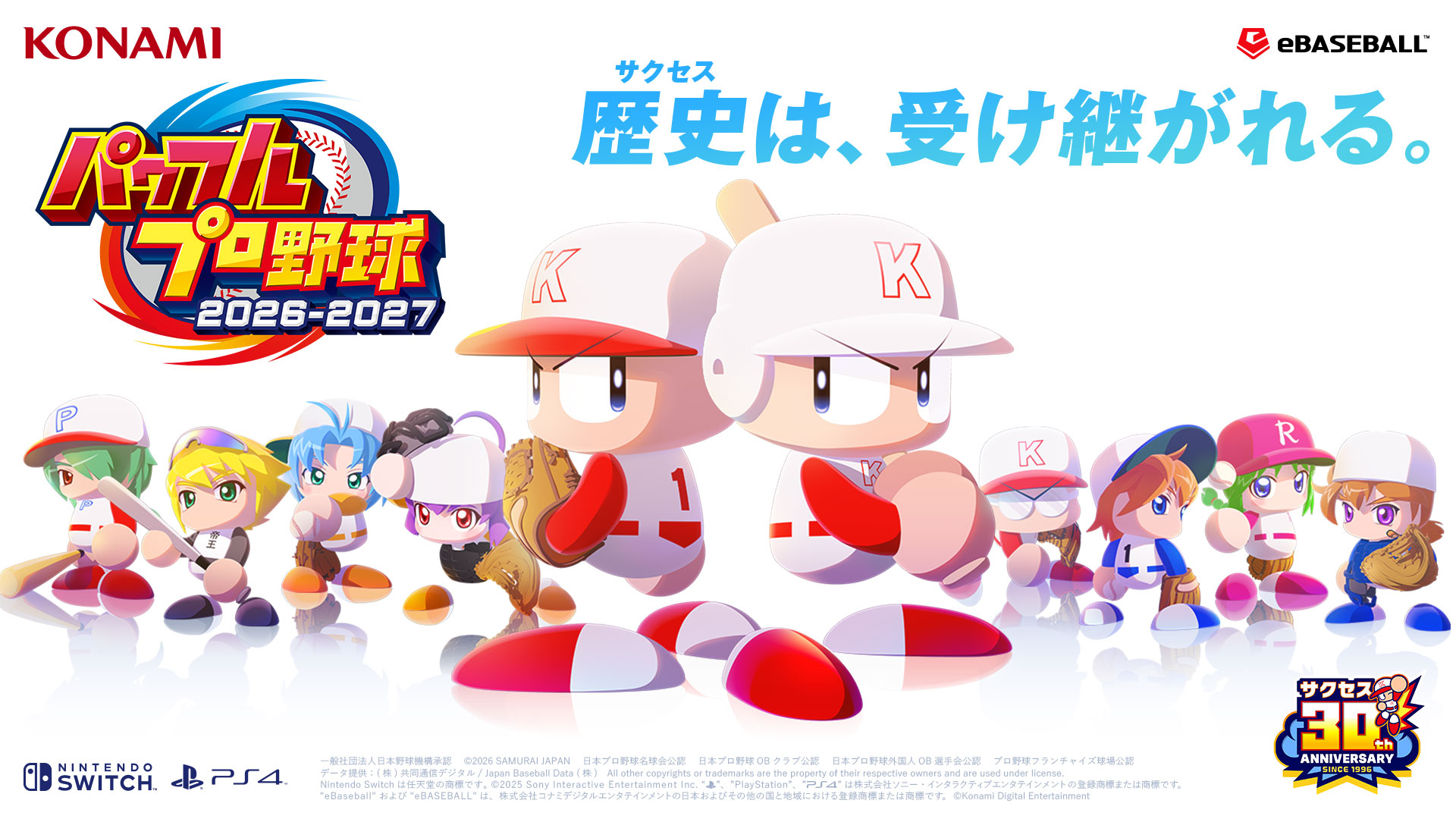
Quick Review
Powerful Pro Baseball 2026-2027 offers several ways to care about a team, from building prospects and coaching a school club to managing seasons or negotiating a long playing career. Relationships, recruitment and specialised modes give the baseball a satisfying life beyond individual matches. Language support needs checking before importing, and cross-platform matches stay within console families. It suits baseball fans who enjoy developing people as much as hitting balls, provided the managerial calendar sounds like entertainment.
Success treats a baseball prospect as someone you build, not simply someone whose name you select. Its Parallel All-Stars scenario visits earlier Success settings to recruit companions, while the World Baseball Classic scenario offers real or original Japanese squads. Even an international tournament can become a personal recruitment project. This is a particularly inviting starting point if your favorite player is the one whose questionable attributes you personally approved.
Reasons to look closer
Training and social contact earn buddy points for special training in the WBC scenario. Relationships therefore have a practical place in development, rather than merely decorating the trip with familiar uniforms.
Employment by elimination
Pawafes gives its tournament a specific employment problem: your television company's baseball captain is trying to avoid redundancy. Choosing an announcer career favors winning matches; choosing producer favors developing stronger players. The choice also changes recruits and exploration areas, so it is not selecting a business card before batting practice. Headhunting and a shop add recruitment and preparation tools, while the map identifies event types. That information matters: a player-building tournament becomes more deliberate when you can distinguish a story destination from a combination opportunity before committing to the outing.
The school has a calendar
Eikan Nine places you in charge of a school club, deciding monthly practice and advancing through training opportunities. Normal play offers tactical, team and individual control. Its bounded three-year variant is tactical-only, although the team can continue into normal mode afterward. Anyone picturing a short coaching project with occasional hands-on batting should know: this particular timetable keeps you in the managerial seat.
School reputation can attract reincarnated international representatives, and the initial class can be rerolled three times. April also offers a move to a new school; your former team may become a rival. Building a successful program and then facing it elsewhere is reason to reconsider how thoroughly you taught everybody your favorite tactics.
A longer view from the office
Pennant removes the season limit, emphasizing club maintenance rather than reaching a retirement date. Team traits can supply temporary effects, with stronger versions available for some. Their limited duration makes checking the current situation more useful than assuming yesterday's advantage remains on the payroll.
Scouting reveals prospect information, with hidden wishes requiring a complete investigation. The draft now sits before the Japan Series, so recruitment belongs on the calendar before the season's final business is finished. December's winter league can develop up to four players, but injury can wipe out the benefit. Sending a prospect abroad is therefore a decision, not a festive gift voucher. The player album also preserves favorites who may never reach the Hall of Fame. That small provision understands something club management invites: affection for the useful ordinary player, not only its trophy collectors.
Negotiate your own future
My Life follows a career for up to thirty years, starting fresh, with a real player or with a created one. Performance incentives and requests for multiyear deals put ambition into contract talks. Separate difficulty settings distinguish opponents, negotiations and changes in playing assignment. Wanting tougher pitchers does not automatically mean wanting an obstinate employer. Social and marriage events sit alongside that career, giving the professional schedule an outside life instead of treating retirement as the permitted evening off.
Legends in manageable groups
Legend Battle organizes opponents into selectable groups. Beating a group's fourth player brings out a Japanese representative, with traits and items supporting continued progress. Its fifty-opponent format is a challenge ladder, not fifty people simultaneously demanding your attention. Defeated players enter a collection to revisit their models and commentary. Winning leaves something to browse beyond the next hurdle.
Let the roster work
My Player League runs thirty-six automatic matches weekly, using created players and awarding rank-based rewards. Its seventy roster slots cover first and second teams, not a seventy-person multiplayer meeting. Team construction is the activity; you need not supervise every pitch.
Connections matter
Switch 2 compatibility adds no dedicated hardware features. Matches stay within console families: Switch with Switch 2, PS4 with PS5, never Switch against PlayStation.
My Player League needs an internet connection, but its Switch version does not require Nintendo Switch Online membership.
Keep the version in view
The October 29 update adds player-data changes and fixes across several modes, following earlier development, recruitment and statistics repairs. Those are documented changes, not proof of flawless operation. Konami's separate notice about some Switch physical early-bonus codes remains published without a resolution statement; affected buyers are directed to its support form. That concerns bonus redemption, not a claim that the base game cannot be played, and the update's separate in-game DLC-ticket change does not explicitly resolve it.
Konami gives June 11, 2026 as the Japanese launch date, while the Japanese PlayStation Store lists June 10. Those are the respective published dates, not a reason to suggest the game has yet to release. The PS4 listing specifies Japanese voice and display text, not English. Switch language support remains unverified here; check that edition's language information before importing rather than assume it matches another platform.