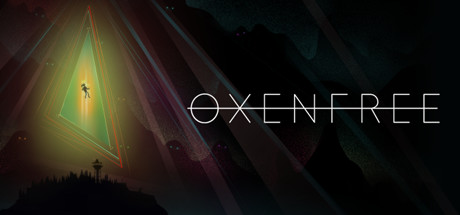
Quick Review
Oxenfree puts teenage conversation and supernatural trouble on the same frequency, then hands you the radio dial. Night School Studio’s original adventure follows Alex and a group of friends through an island outing that goes spectacularly off-plan. Its most persuasive idea is that talking, exploring and dealing with the uncanny belong to one continuous experience, not separate boxes. The trade-off is that a player uninterested in dialogue will be unimpressed by dialogue with better ghost coverage. This looks like a strong fit for narrative-adventure fans who enjoy relationships, choices and eerie mysteries rather than combat. This is a source-based assessment of the documented design, not a hands-on review or performance test.
The premise starts with Alex bringing her new stepbrother Jonas to an overnight gathering on Edwards Island, a former military site. An accidental supernatural opening turns the trip into a much worse bonding exercise than anybody requested. Meeting a new family member is already awkward; adding restless entities seems like an unreasonable escalation from the welcoming committee. That setup gives the horror a useful human center. Alex is not merely an empty flashlight holder waiting for a monster to appear. She has relationships that can change, and the choices offered through conversation affect the story. The studio’s official presentation makes those exchanges a central mechanic rather than decorative chatter between objectives. That is the key purchasing question: do you want to inhabit a personality through responses, or do you mainly want something to fight? Neither answer is wrong. It just saves everyone the disappointment of buying a conversation-led adventure and then demanding to know when the shotgun arrives. Our interest is in the fit between the premise and the interaction. A story about uncertain communication has a particularly good reason to make communication something the player actually does.
A radio is a surprisingly good horror tool
The radio lets Alex interact with mysterious entities and affect her surroundings. As a design choice, that is more distinctive than simply giving the protagonist a weapon. A dial asks the player to search and listen. It can make uncertainty itself an activity, which is a promising match for a ghost story. There is something wonderfully unglamorous about bringing analog consumer electronics to an otherworldly emergency. Somewhere, a parent who insisted on keeping the old radio is feeling vindicated. Night School’s Sean Krankel described the goal as an adventure without cutscenes, where exploration, talking and mysteries flow together. That structure matters because narrative games can otherwise make a player feel like they are being repeatedly dismissed from the controls while the interesting people talk. Here, the stated intention is to keep participation inside the storytelling. We cannot certify how natural every exchange feels without playing it, but the goal is coherent and worth distinguishing from a purely passive presentation. The studio also describes New Game+ as more than an unchanged second lap: altered dialogue and additional narrative material extend the story’s possibilities. That makes returning potentially relevant to the fiction, not just to collecting a different badge. It is sensible to avoid reading detailed ending guides before a first run. A mystery loses some of its job description when a browser tab has already explained the answer. None of this guarantees that every player will enjoy the pacing. If choosing conversational responses sounds like work, a supernatural context is unlikely to transform that preference overnight. For someone who enjoys interpreting people, however, the combination offers a clearer identity than another adventure attempting to be six genres before lunch.
Choose the right edition, and the right mood
This is the original Oxenfree, developed and published by Night School Studio, not Oxenfree II: Lost Signals. Steam lists a January 14, 2016 release and Windows, macOS and Linux support. Nintendo’s Switch edition arrived October 6, 2017; its official listing describes both touchscreen and controller play. The PlayStation 4 release announcement specifically describes using the DualShock 4 speaker and light bar for the radio. Those are edition-specific facts, not a promise that every platform reproduces the same effects. Netflix’s support page lists console and computer purchase options separately from its Android and iPhone/iPad membership access. Check your intended store and device before buying, rather than assuming a subscription unlocks every version. Oxenfree is single-player. Also, its illustrated appearance should not be confused with an all-ages invitation: the Steam content advisory includes self-harm and suicide references, trauma, psychological horror and some jump scares. That is useful information for choosing the right evening, not a challenge to prove you can tolerate it. A tense story is optional entertainment; skipping themes you do not want is entirely reasonable. Our source-based verdict is to shortlist Oxenfree if you like choice-driven mysteries with a strong thematic link between story and mechanics. The radio gives its supernatural premise a memorable interaction, while the emphasis on relationships makes the people more important than a monster checklist. Pass if you are primarily shopping for action or intricate mechanical mastery. The island has plenty of problems, but a shortage of things to shoot is not the problem it is trying to solve.