Quick Review
MONOWAVE turns emotional states into practical puzzle tools, using a storybook world whose colours and sounds help express the rules. Its strongest idea is that difficult feelings can be useful rather than simply something to erase, with a distinct helper role adding cooperative possibilities. The friendly look does not promise effortless puzzles, and timing-sensitive inputs deserve attention. It suits curious solo players or pairs who enjoy complementary responsibilities and understanding changing interactions.
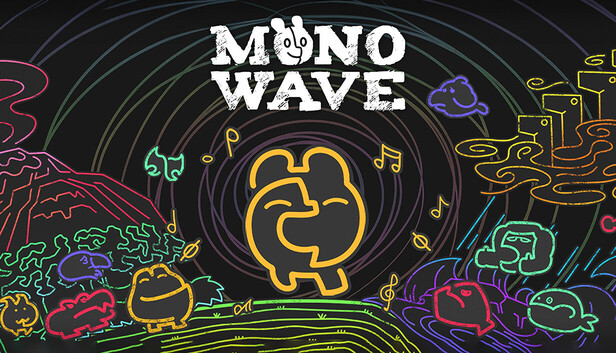
MONOWAVE gives emotions a job description. Studio BBB's puzzle adventure sends a small spirit through a world whose feelings have fallen out of balance, using emotional changes to get around and help its inhabitants. Released on Steam in September 2026, it offers an unusually practical answer to being overwhelmed: perhaps the feeling you were avoiding is the tool you need.
Emotions as puzzle tools
The developer's account of its design is more interesting than a simple instruction to cheer everybody up. In a 2025 AUTOMATON interview, the team explains that it began with changing physical states, then moved toward emotions as something more human. Happiness and enjoyment seemed too similar to justify separate abilities, leaving room for anxiety. That is a sensible design choice: a puzzle needs distinctions you can use, not a committee debating whether somebody is delighted or merely having a nice afternoon. The scratch art appearance follows a similar logic. The developers wanted a dreamlike, storybook world whose feelings could be read visually rather than explained in words. They also describe composing music that responds to emotion and stage progression. Those intentions give the presentation a purpose beyond looking adorable in a screenshot. Colour, shape and sound are being asked to communicate the rules. Video game reviews with hands-on evidence can assess whether every cue lands cleanly; the underlying approach is coherent, but the intentions alone cannot establish that result.
There is a useful restraint in the philosophy behind that approach. In a sponsored March 2026 AUTOMATON interview, Studio BBB's lead describes negative emotions as important too, with the question being how to handle them. That is a better foundation for a puzzle game than treating sadness as a stain and happiness as the only approved cleaning product. A changing emotional state can be useful without becoming a moral verdict. The same interview explains that Mono's design began as a human figure before becoming simpler and less immediately identifiable. That helps explain why the character need not stand for a particular animal: the intended connection is with the person holding the controls. These are artistic intentions, not evidence that the game provides therapy. A thoughtful metaphor does not arrive with a medical licence tucked behind its ears.
Challenge and a different co-op role
The friendly appearance also deserves a qualification. In a launch-period 4Gamer interview, publisher Phoenixx describes discussions about puzzle difficulty: protecting the atmosphere could leave puzzle enthusiasts underfed, while pushing the challenge could lose a broader audience. That tension is worth knowing about before treating the pictures as a promise of effortless progress. The publisher says it generally left the creative foundations to the developers, but difficulty needed negotiation. None of that proves where your own patience will run out. It does establish that accessibility of tone and simplicity of play are different questions. A welcoming world can still ask you to stop, think and try something else; welcoming does not necessarily mean the furniture will assemble itself.
Prism gives a second player a different role rather than a spare copy of Mono. The official co-op explanation describes a companion that flies freely, changes creatures' feelings, blocks projectiles and serves as a platform. That makes cooperation about supplying help at the right moment, not just keeping two identical characters alive. It is an appealing arrangement for a pair who enjoy different responsibilities, though a capable helper is not the same thing as a guaranteed easy mode. The adventure also supports solo play. On PC, the documented arrangement is local two-player cooperation, with Steam Remote Play Together available; that should not be confused with a separately described native online matchmaking system.
Input fixes and Support Mode
The October 2 update offers the most concrete account of the game's practical rough edges. Studio BBB reports repairing inputs lost at the instant an emotion changed, including jumps, glides and midair charges. Its notes also describe Support Mode assistance for certain airborne transitions when playing solo on Normal difficulty. That matters because a puzzle can fairly ask for the right idea while still needing to recognise the button pressed to carry it out. The same update addresses co-op joining and controller connections. Those documented changes are not a promise that every setup now behaves perfectly, and this source-based appraisal cannot certify responsiveness from personal play. MONOWAVE's clearest attraction is the thought put into translating an internal state into something usable. Its current control adjustments are worth considering alongside that ambition. Feelings may be complicated; asking the jump button to register is a comparatively reasonable request.
SteamLaunchDemoDemo2024DesignPhilosophyPublisherCooperationMaintenance