Metal Eden Review
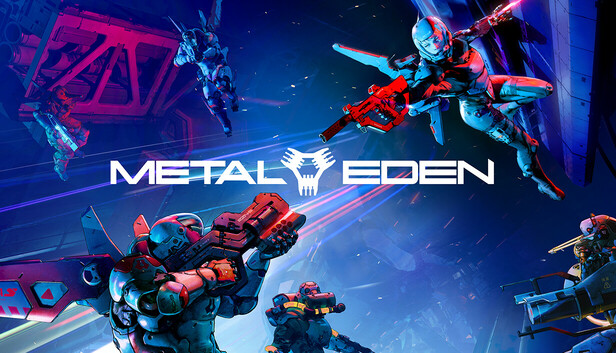
Quick Review
Metal Eden makes aggressive movement and Core Ripping the heart of its shooter combat. Preparing an enemy for extraction and deciding whether to throw or consume its Core links immediate destruction to useful advantages. Special transformations and replay modes favour combat mastery, so players seeking a leisurely return to the story should adjust expectations. It suits action fans who enjoy mobility, conditional opportunities and refining a loadout, with some AI-generated voice content disclosed.
Metal Eden gives its rescue mission an unusual filing system: the citizens you need to save have their consciousness stored in Cores. Reikon's single-player shooter launched on September 2, 2025. As the android Aska, you enter the orbital city Moebius to retrieve people who have become dangerously portable.
Core Ripping and controlled destruction
The developer's explanation of Core Ripping makes its most interesting distinction between throwing a captured Core and consuming it. One turns an enemy's essential component into an explosive; the other can improve your own capabilities, depending on your choices. Waste disposal has become a build decision. The detailed rules add friction: the ability must charge, you must get close, and armour needs to come off before a target becomes eligible. That makes ripping more than a reward for pointing the camera vaguely towards trouble. It asks you to prepare an opportunity and then decide what that opportunity is worth. Body Modules obtained from hacked drones add another route to developing Aska. The attraction is this combination of immediate violence and conditional advantage: the most dramatic action is also a small resource-management decision.
The Armored Ramball is a useful contrast to that precision. In a post-release interview, Reikon's Jakub Izydorczyk explains that the team initially tried making this destructive transformation available everywhere, but found that open spaces robbed it of impact. The transformation has a deliberate limit: the team kept it for specially arranged sections. That is a more persuasive design rationale than simply listing another spectacular ability on the box. A wrecking ball is exciting partly because there is something suitably wreckable in front of it; rolling around an empty room mostly demonstrates excellent floor coverage. Izydorczyk also describes movement as the foundation around which collision, enemy behaviour and visual effects were tuned. Those comments explain the priorities without proving that every encounter achieves them. The promise worth examining is purposeful mobility, not a large collection of movement verbs presented as an achievement in itself.
Returning through New Game Plus and Gauntlet
The shipped New Game Plus mode makes a clear distinction between returning for the story and returning for mastery. After finishing the game, you can restart from the first main mission with the weapons and skills you earned, while the tutorial and other narrative and cinematic elements are removed. Enemies and bosses become tougher, and further advancement lets you unlock the remaining weapons, skills and perks. This is not the most relaxed way to revisit a favourite conversation. It is a way to stop rebuilding the toolkit and start finding out what you can actually do with it. That focus suits players who dislike losing their toys at the beginning of a second run. Anyone hoping primarily for another leisurely tour of the fiction should notice that the mode deliberately points elsewhere.
Gauntlet, added as free DLC, offers a different kind of repeat visit. It is available from the main menu at any point in a playthrough, with an unlocked arsenal from which to assemble a loadout. The challenge is to survive increasingly difficult arenas on one life, earning skill points to improve Aska and weapon synergy. Defeat ends the attempt, but not the accumulated skill points. That creates a useful tension between a run's immediate stakes and longer-term progress: failure can still leave something behind besides an unusually intense relationship with the restart button. It also provides a more direct place to concentrate on combat than replaying the campaign's surrounding material. The trade-off is equally clear. Someone looking for fresh story developments should not mistake an endless survival challenge for another narrative chapter.
Patches and the voice-over disclosure
The September 1.1 patch is a reminder that flow depends on fairly unglamorous details. Its changes included a shorter weapon-switching animation delay, Lightning Gun rebalancing and adjustments to Hard and Brutal difficulty. It also addressed collision, flickering and objects appearing or disappearing because of streaming issues. None of this establishes that the current game is flawless, or provides a benchmark for your PC. It does show why the small timings deserve scrutiny alongside the large explosions. A weapon can have an impressive name and still arrive late to its own appointment. When choosing between guns is part of the action, reducing the wait between those choices is a meaningful repair rather than merely a prettier screenshot. Those documented changes are not a universal performance guarantee.
One purchasing detail deserves plain disclosure: Steam says part of the voice-over was created with AI voice-generation tools. That statement concerns some voice content, not a claim that the entire game was generated.
SteamCore rippingDeveloper interviewNew Game PlusGauntletSeptember patchLaunchNews dates