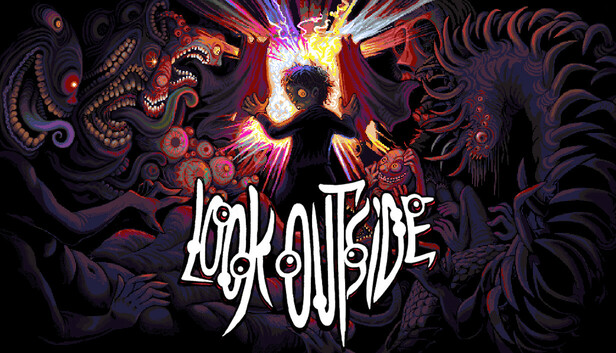
Quick Review
Look Outside makes every trip beyond your apartment a negotiation between supplies, curiosity and self-preservation. Scavenging and distance-based turn battles feed back into cooking, crafting and unexpected companionship at home, giving its grotesque building more than shock value. Survival chores, fragile equipment and costly failed expeditions can become exhausting. It is a strong fit for patient horror-RPG fans who enjoy investigating strange rules and reconsidering suspicious neighbours, with explicit body horror firmly part of the invitation.
In this review
Reasons to look closer · The shopping list is now a survival document · Not every alarming face is an enemy · Distance is a problem before damage becomes one · The discomfort should come from more than lost progress · A good fit for curious people with a strong stomach · Sources
Look Outside makes staying indoors sound like excellent advice, then ensures indoors has problems of its own. Something beyond the windows transforms people who look at it, and your apartment building becomes a collection of terrible discoveries separated by doors. Francis Coulombe’s single-player survival-horror RPG [1] received its full Windows release on March 21, 2025. The setup is small enough to understand immediately and horrible enough to make every ordinary domestic object seem potentially involved.
This is not simply a parade of grotesque pictures with a combat menu attached. The more interesting question is how long to remain outside your own apartment, what to bring home and which inhabitants deserve trust. A corridor becomes a gamble because you need supplies, not because a waypoint insists on another heroic excursion. Curiosity and self-preservation spend much of the game negotiating an arrangement neither appears qualified to manage. If you enjoy discovering the rules of an alarming little world, that tension is the main attraction.
Reasons to look closer
The strongest reason to look closer is the contrast between expedition and refuge. Scavenging and turn-based encounters feed back into cooking, crafting, resting and conversations at home [1]. Progress therefore means more than making damage numbers larger: it can mean returning with enough supplies to make the next decision less desperate. The body horror is explicit, so this is not a gentle recommendation for anyone merely seeking an unusual RPG. For players drawn to stranger RPGs, the mixture of domestic routine and cosmic disaster has considerably more personality than another dungeon full of anonymous bats.
The shopping list is now a survival document
Food and cleanliness have practical consequences. CGMagazine’s review explains how hunger reduces maximum health and poor hygiene can attract monsters [2]. Supplies consequently become reasons to leave relative safety rather than decorations for an overflowing inventory. Looking for food is already a persuasive objective; looking for soap while something dreadful occupies the hallway is a rather more specialised errand. The everyday needs keep the supernatural threat connected to a vulnerable body.
That design gives preparation weight, but it also asks you to enjoy maintenance. A player interested only in strange conversations may find the appetite-and-supplies side less charming than someone who likes planning an expedition. The useful distinction is whether scarcity makes decisions interesting or merely interrupts what you came for. Here it belongs to the premise: remaining safe forever is not a complete strategy when the cupboard is empty. Even the apocalypse has failed to solve the problem of needing something for dinner.
Not every alarming face is an enemy
The building is more compelling because conversation can matter as much as violence. PC Gamer’s detailed feature describes potentially friendly monsters and visitors whose appearances do not reliably reveal their intentions [3]. Some residents can join you, and the home becomes a place for company rather than simply a healing station. That undermines the comfortable RPG habit of sorting every unfamiliar creature into either vendor or experience points before it has finished introducing itself.
Domestic activities deepen that contrast. Cooking, washing, crafting and even playing in-game video games offer ways to spend time away from an expedition; finishing those games can teach skills. There is something wonderfully unreasonable about dealing with a cosmic catastrophe partly by becoming more committed to your gaming backlog. More importantly, these routines create an idea of ordinary life worth protecting. The refuge matters because people and habits can accumulate there, not just because it contains a mechanically convenient place to recover.
Distance is a problem before damage becomes one
Turn-based battles use distance to give approaching creatures an extra kind of menace. A threat can become more dangerous as it closes in, while weapons and abilities have to suit the situation. Shacknews highlights the interaction between positioning, weapon-granted skills and breakable equipment [4]. Combat therefore asks more than whether you can repeat your strongest attack. An effective plan must account for what is available now and what will remain usable afterwards.
The fragility is the interesting nuisance. A favourite weapon is reassuring until relying on it makes you unprepared for its disappearance. That pushes adaptation, but it will not delight everyone who prefers carefully optimised, dependable RPG builds. There is also a useful difference between slow combat and relaxed combat: a menu gives you time to choose without making the creature opposite you any more reassuring. The grotesque close-ups turn the enemy’s approach into a visual escalation as well as a tactical one. Personal space has become a limited resource.
The discomfort should come from more than lost progress
The risk of an expedition is part of the appeal, although it can overshoot into frustration. Hey Poor Player’s launch-era review found later navigation wearing and criticised the progress lost after lengthy unsuccessful outings [5]. That is a meaningful counterweight to the excitement of opening another door. Discovering something horrible is entertaining; repeating the journey to rediscover it may be less so. Players comparing PC game reviews should pay particular attention to difficulty choices and the date of any criticism, rather than treating the toughest arrangement as an entrance examination.
Those launch impressions are not a precise description of every current detail. Official updates added the Final Vision expansion in October 2025, followed by further balancing and fixes [6]. The April 2026 update adjusts encounters, skills and durability-related behaviour, addresses progression blockers and adds an option to disable animated tile effects. These changes are welcome evidence of continued care, not proof that every frustration has vanished. The underlying decision remains whether unpredictable danger and resource pressure are the sort of discomfort you actively want from a horror RPG.
A good fit for curious people with a strong stomach
Look Outside makes the strongest case to players who want horror with rules to investigate, people to reconsider and awkward choices about what to risk. Its ugliness has purpose when it makes another resident difficult to read or makes a familiar room feel unsafe. The appeal weakens if survival chores, fragile equipment or uncertain outcomes mostly sound exhausting. A strange world is not automatically the right world to spend an evening in, even when the landlord has apparently lost control of several laws of biology.
The recommendation is enthusiastic but specific: come for the unsettling discoveries and the tension between protecting yourself and remaining curious. Do not expect a carefree power fantasy or a conventional party adventure wearing a few additional teeth. Alongside Windows, the Switch, native Switch 2, PS4 and PS5 editions are now listed as released on October 30, 2026 by Nintendo and PlayStation. That expands availability without establishing identical performance across editions. There is plenty here for a patient horror fan to investigate. Sensible people should probably keep the curtains closed while making their plans.
Sources
Source links correspond to the numbered references in this review.
[1] Steam: Look Outside official store page, release date, developer, publisher and Windows support • [2] CGMagazine: Look Outside review — Jordan Biordi • [3] PC Gamer: Look Outside survival-horror RPG feature — Jody Macgregor • [4] Shacknews: Look Outside review — Lucas White • [5] Hey Poor Player: Look Outside review — Andrew Thornton • [6] Look Outside official Steam announcements: Final Vision and subsequent updates • [7] Devolver Digital: October 23, 2026 announcement of October 30 console releases · Nintendo: Look Outside for Switch · Nintendo: Look Outside for Switch 2 · PlayStation: Look Outside availability