LEGO Voyagers Review
Quick Review
LEGO Voyagers makes two small bricks cooperate through a physical world they must navigate rather than simply edit. Building solutions from that awkward perspective gives the partnership personality, and wordless companionship gains warmth from a carefully themed score. A second player is mandatory, so availability and online account requirements are part of planning the adventure. It is an inviting choice for a pair who enjoy shared discovery and playful construction, rather than a solo building sandbox.
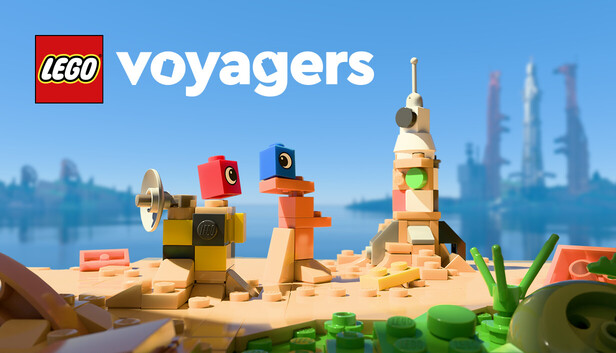
LEGO Voyagers gives two bricks a spaceship to rescue. Finally, a space programme whose missing parts might genuinely be under the sofa. Released on September 15, 2025, it supports shared-screen or online cooperation. Friend’s Pass lets an owner bring another player through the full adventure, rather than merely lending them a demo.
Built for two bricks
Cooperation is mandatory, not a spare controller bolted onto a solo expedition. Creative director Karsten Lund told TheXboxHub that knowing two people will always be present lets the team shape puzzles and storytelling specifically around them. He also describes a prototype about tumbling as a brick that pushed the project towards physics, with the challenge of making construction manageable from that peculiar bodily perspective. That is a much more interesting starting point than treating the player as an invisible architect with unlimited reach. A brick has to negotiate its world instead of simply editing it. The appeal is the combination of agency and indignity: you can help build a solution, but you remain a small object that must get itself into position. Requiring a partner gives that limitation somewhere productive to go, although it also makes another person’s availability part of the equipment list.
The soundtrack has a particularly fitting ingredient. In Annapurna’s launch article, composer Henrik Lindstrand’s childhood Casio keyboard joins the instrumental palette, while recurring musical themes follow characters and events. A childhood instrument is not automatically an emotion dispenser; nostalgia cannot be installed like a graphics driver. But it is an apt material for a story concerned with growing and staying connected. Recurring motifs can give a listener something to recognise before they have words for what has changed. That seems more valuable here than music which simply announces that the current scene is officially moving and tissues should be deployed. The choice suggests a score interested in memory rather than just scale. Tiny plastic protagonists do not need an orchestra continually filing evidence that their feelings are enormous; a familiar musical shape can make a smaller, more specific case.
The technology behind the tumbling
There is substantial machinery beneath the apparent simplicity. In Unity’s interview, programmer Daniel Zastrow explains that networking the attachment system required the host to validate actions while clients waited, with transitions smoothed to conceal latency. Loose objects were simulated locally and nudged towards network updates. Catapults instead used predetermined trajectories before ordinary physics resumed after landing. This is a useful reminder that convincing physical play need not mean uncompromising simulation. If two players disagree about where a brick landed, realism has become a customer-service dispute. The hybrid approach privileges a shared, legible event over purity. That engineering account is not proof of flawless connections, and it should not be mistaken for a connection test. It does explain why a toy-like interaction can demand more careful coordination behind the scenes than its modest appearance suggests. Making something look delightfully incidental is sometimes a very deliberate business.
Platform differences deserve similar honesty. Lund’s eXputer interview says Switch was the initial rendering target, with higher settings developed afterwards. That version uses different scene geometry and runs physics at 30 Hz rather than the 60 Hz described for other platforms. He also describes distinct Switch 2 handheld and docked rendering settings, including different shadow methods, while higher-end platforms add volumetric fog and screen-space reflections. Those are development details, not interchangeable promises about every machine’s frame rate. Starting with the lower settings is nevertheless an appealing priority: a scene should make visual sense before expensive effects arrive to congratulate it. The trade-off matters when choosing hardware: screenshots from one version cannot settle what another looks like. Anyone choosing between platforms should compare the actual version they intend to use, rather than assuming the same bricks imply precisely the same rendering. Plastic is consistent; graphics settings are considerably less sentimental.
Crossplay and the costs around Friend’s Pass
The practical multiplayer picture improved after launch. The official December 9, 2025 announcement confirms crossplay between platforms, including players using Friend’s Pass. It requires an Epic account, and console players need their platform’s online subscription. That distinction matters: a free guest edition is not a promise that every surrounding service is free or unnecessary. Crossplay removes the need to organise matching hardware, but account setup still occupies a seat at the table. For a game arranged around sharing, this is the sort of update that changes the usefulness of the invitation rather than just decorating it. The sensible preparation is therefore boring and valuable: arrange the accounts and applicable subscriptions before arranging the evening. Friendship may be the destination, but somebody still has to check the login details.
SteamDesign interviewMusic and launchNetworking interviewPlatform interviewCrossplay update