Quick Review
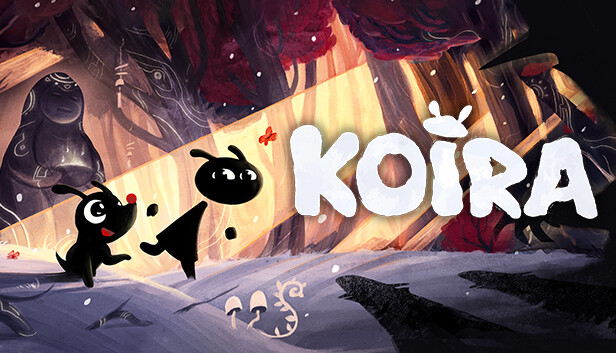
Koira uses music, animation and small acts of care to build a bond between a forest spirit and a puppy. Quiet playtime gives the threatening stretches emotional stakes, making its short woodland journey expressive without written dialogue. Light puzzles can be unclear, and instant-fail stealth sometimes disrupts the gentleness. Choose it for companionship and atmosphere rather than mechanical depth, while remembering that animal distress and danger accompany the lovely artwork.
In this review
Reasons to look closer · Friendship is something you do between the emergencies · The conversations have excellent instrumentation · The forest occasionally forgets its welcoming manners · Light puzzles can still get in the way · A small journey, not a permanent woodland residence · Sources
Koira understands that a puppy can make an otherwise reasonable person accept almost any woodland assignment. Its forest spirit finds a small companion, and suddenly reaching safety is no longer a solitary concern. Studio Tolima’s hand-drawn adventure released on 1 April 2025 [1], building its journey around friendship, music and a forest that is not nearly as harmless as its prettiest corners suggest. The dog has not brought a map, but its contribution to morale is considerable.
This is a story-focused adventure with light puzzles and stretches of stealth, not a complicated survival simulation or a pet-management game. Its story is told without written dialogue [2], leaving animation, sound and shared activity to carry the relationship. That makes the presentation especially important, and it also makes the simple mechanics a deliberate part of the appeal. There is danger and animal distress here, though, so the warm artwork should not be mistaken for a promise of uninterrupted comfort.
Reasons to look closer
Koira is worth a closer look if small gestures matter more to you than elaborate progression systems. Caring for the puppy, spending time together and responding to the forest give the journey its meaning. It has a clear emotional centre without requiring a long explanation of woodland politics. The strongest draw is the way music and movement make two minimally drawn characters feel companionable. If deeper puzzle systems are your priority, the pleasant scenes may offer less mechanical growth than you want.
Friendship is something you do between the emergencies
The official description includes feeding, caring for and playing with the puppy [3], alongside helping other animals and finding a way home. Those are modest actions, but modesty suits the relationship. A companion becomes more than an objective when there is time to interact without an immediate crisis. The puppy does not need a six-page character sheet to justify your attention. It needs a little room to behave like someone you would rather keep beside you.
Shacknews praises the balance between threatening stretches and quiet opportunities to play [4], including building a snowman or enjoying the surrounding wildlife. That rhythm matters because constant danger would flatten the friendship into an escort obligation. The pauses establish what is worth protecting. If you tend to hurry past optional interactions, however, part of Koira’s appeal may pass you by. There is a difference between reaching the next scene efficiently and giving this particular journey enough space to work.
The conversations have excellent instrumentation
Koira’s hand-drawn animation and original score [2] do much of the storytelling that another game might assign to dialogue. Characters communicate musically, making changes in sound part of how they express themselves. This is more interesting than simply placing an attractive soundtrack beneath otherwise ordinary conversations. A hesitant response or a lively exchange can belong to the same expressive language as the wider forest, giving the world a sense of connection without stopping to explain its operating manual.
There is an appealing confidence in leaving the characters visually simple. A clear posture or carefully timed reaction can communicate more than another paragraph announcing that someone is worried. Still, emotional suggestion requires some willingness from the audience. If you prefer explicit motivations and detailed lore, the lightness may feel underwritten rather than elegant. Koira works best when you are happy to read a relationship through behaviour and sound. The puppy is not going to clarify its thematic position in a journal entry.
The forest occasionally forgets its welcoming manners
Enjoying the peaceful scenes does not mean the whole game stays peaceful. Hunters are a persistent threat, and stealth asks the pair to avoid attention rather than overpower everything in their path. Gamereactor describes hiding in bushes and using distractions, while criticising the instant-fail portions [5]. These moments provide tension, but their limits are worth knowing. A simple stealth sequence can feel particularly abrupt when it follows an activity that encouraged relaxed, exploratory interaction.
The tonal contrast is useful even when the mechanical contrast is less convincing. A safe place becomes meaningful because safety can disappear; a companion’s vulnerability gives an ordinary hiding spot real importance. The danger is that repeating a failed section turns concern into impatience. Players who dislike stealth should not assume the sweet presentation removes that hurdle. Equally, this is not primarily a stealth game with a deep collection of tools. The threat serves the story, rather than becoming a substantial system to master.
Light puzzles can still get in the way
The puzzle design generally favours keeping the journey moving over extended brain-teasers. CGMagazine describes musical interactions involving particular sounds or sequences of notes [6], usually straightforward but occasionally unclear or fiddly. That distinction matters: easy and intuitive are not interchangeable. A small puzzle can still interrupt the mood if you understand broadly what the game wants but cannot make the intended interaction register, or if its visual language leaves the crucial detail uncertain.
The same review finds the emotional story effective without claiming it says something entirely new about its themes. That is a fair boundary for the recommendation. Koira’s value lies in the particular delivery of a familiar relationship, not in reinventing the protective-companion story. Players seeking novel narrative structures or steadily escalating puzzle complexity may want more. Players who appreciate a carefully presented variation on kindness, fear and companionship are more likely to find that familiarity comforting rather than limiting.
A small journey, not a permanent woodland residence
The critical accounts place Koira in the territory of a few hours, rather than a sprawling commitment: Gamereactor describes roughly three, and CGMagazine roughly four. Treat those estimates as an indication of scale, not a promised personal finish time. The publisher confirms it is a single-player narrative experience [7], so the partnership is with the puppy rather than a second player. A concise runtime suits a game whose appeal depends on sustained atmosphere more than accumulating systems.
Koira is a strong fit for an evening when you want an expressive, approachable story and have room for its darker turns. It is less persuasive as a demanding puzzle adventure, and its stealth can interrupt the gentleness rather than enrich it. The current computer versions [3] and PS5 release [8] offer the same essential invitation: slow down enough to care about this unlikely pair. Come for the companionship, not an enormous checklist. The forest has problems; fortunately, its casting department found the right dog.
Sources
Source links correspond to the numbered references in this review.
[1] DON’T NOD — Koira launch announcement • [2] Studio Tolima — Koira official press kit • [3] Steam — Koira official store page • [4] Shacknews — Koira review • [5] Gamereactor — Koira review • [6] CGMagazine — Koira review • [7] DON’T NOD support — Koira general information • [8] PlayStation Store — Koira released PS5 version