Keeper Review
Quick Review
Keeper makes a walking lighthouse and a seabird into an unusual puzzle-solving partnership. Shining the beacon and directing Twig connect simple actions to responsive plants, creatures and objects, giving its wordless world a clear reason to explore. The appealing surface leaves room for stranger, darker material, and players should not expect exposition to explain every feeling. It is most inviting for those who enjoy interpreting environments and relationships through actions rather than lengthy conversations.
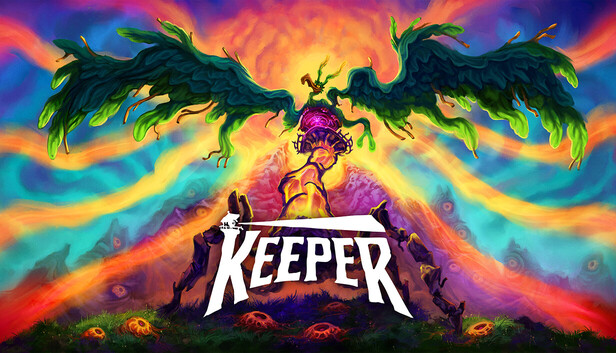
Most lighthouses have the decency to remain where the coastguard left them. Keeper's gets up and goes exploring. Double Fine's wordless puzzle adventure pairs this unlikely traveller with a seabird, turning a lonely landmark into one half of a partnership. Released on October 17, 2025, it offers a pleasingly peculiar proposition: become the building, then find out where it wants to go.
A lighthouse looking for connection
Creative lead Lee Petty's launch-day essay gives that premise some weight. He describes pandemic-era walks and thoughts about isolation, connection and what life might become after humans were gone. His references include surrealist painters and films whose approachable surfaces conceal stranger, darker material. Those influences suggest a useful way to approach the adventure. Cute companionship need not mean that everything around it is reassuring, and an unfamiliar creature need not exist merely to be defeated. The lighthouse is already a remnant of human purpose, repurposed as a living thing. That makes its search for company more interesting than a mascot being assigned a helpful sidekick. The emotional invitation is to care about something whose face is largely architecture, which is a tougher casting decision than giving a small animal enormous eyes.
Xbox Wire's original hands-on account describes how the partnership becomes a puzzle language. The lighthouse shines its beacon to make plants and creatures respond, while Twig can be directed to manipulate objects. One early example combines the two: light opens a flower, the bird tugs part of it, and the resulting change creates a route forward. The appeal is in reading those relationships rather than memorising a long list of commands. Two understandable actions can produce a satisfying discovery when the environment connects them clearly. The report also describes the opening as a physical tutorial in which the lighthouse learns to walk, with abandoned structures suffering the consequences. That is an amusing use of a new player's uncertainty: clumsiness belongs to the character as well as the person holding the controller. These are reported opening examples, not our own play session or a promise about every later puzzle. That opening puzzle is an example of the partnership, not evidence that every later puzzle uses the same solution.
Controls and presentation options
A game that communicates so much without dialogue still needs to make its controls understandable. Double Fine's accessibility documentation lists screen narration for game and menu navigation, adjustable text size and weight, and control over how frequently interaction prompts appear. Basic input remapping has named exceptions: Pause and Interaction Switch cannot be reassigned through that feature. Aim sensitivity is adjustable, and rapid button presses, motion controls and touch input are not required. Those details matter more than describing the whole experience as accessible and hoping that covers everyone. Someone may enjoy deciphering an alien mechanism while having no interest in deciphering a tiny button label. Keeping interface assistance separate from the pleasure of discovery is a sensible distinction. Mystery should reside in the island, not in whether you can read the instructions.
The shipped December updates add ways to reconsider the presentation. Noir Mode offers an alternative visual treatment, alongside HDR calibration and high-contrast options. Windows ultrawide support covers both 21:9 and 32:9, and display settings include monitor selection. A later December update adds forced aspect ratios and PC support for PS5 controllers. None of those changes makes a particular screen or controller mandatory. They are useful because a visually led adventure benefits from fitting the setup in front of the player rather than treating it as an inconvenience. The chapter selector also had its missed-achievement icons fixed, helping completion-minded visitors identify reasons to revisit sections. Even a wandering lighthouse can apparently benefit from knowing which small administrative task it forgot on the previous trip. Display and controller options may have changed since launch, so match the update context to your intended setup.
Windows setup caveats
There are practical Windows caveats to that visual invitation. Double Fine's current support advice warns that enabling AMD Fluid Motion Frames in the driver alongside in-game FSR may cause hitching, and recommends using one or the other. A separate advisory recommends trying another upscaler instead of DLSS if an RTX 3070 user experiences instability or crashes. These are conditional troubleshooting notes, not evidence that every machine has a problem, and they do not supply a universal performance result. They are worth knowing before assuming that more graphics features must automatically mean a better experience. Sometimes the most useful upgrade is turning one thing off. The lighthouse has enough mysteries to investigate without making your driver settings another puzzle.
SteamCreator essayOpening reportAccessibilityShipped updatesAMD adviceLaunchNvidia advice