Quick Review
Isle of Reveries builds retro exploration around a fairy's copying ability, using familiar interactions as ingredients for more complicated dungeon puzzles. Limited trinket slots and settlement errands add practical choices around the main journey, with new understanding making old places useful again. Keeping track of obligations takes patience, and the small co-op extra does not cover the campaign. It suits curious adventure players who enjoy learning a puzzle vocabulary and following connected side tasks.
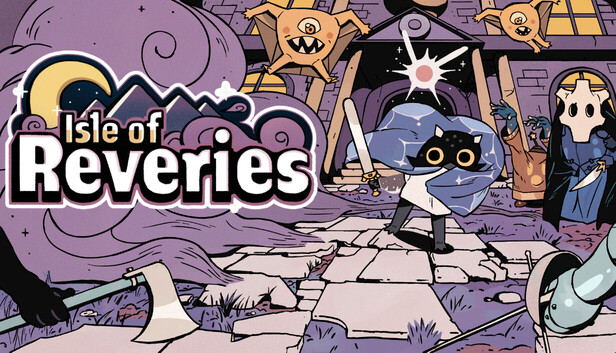
Isle of Reveries sends an owl named Lief toward an island said to grant wishes. Released in September 2026, this retro adventure combines puzzle dungeons, exploration and a fairy's copying ability. Apparently, the sensible response to a mysterious object is to order another one.
Copying tricks and equipment choices
Developer desertcucco's explanation of the puzzles is more revealing than a promise that they are clever. Earlier challenges teach small interactions that can become parts of later, more complicated problems. The intended clue is something you have already done, rather than another paragraph somebody needs to shout across the room. That gives the copying mechanic a useful purpose beyond collecting a cabinet of magical duplicates: familiar operations can become a vocabulary. The developer also describes planning dungeons through progression charts before drawing their layouts, with a distinctive central mechanism acting as a disguised lock and key. None of that proves every solution will feel obvious in retrospect. It does explain the emphasis on understanding relationships rather than simply finding the next door. The AMA acknowledges how difficult it is to judge a puzzle when you already know its answer, and the value of testers with different abilities. One scope warning matters for anyone bringing company: the game launched with two separate cooperative stages. That is a small extra, not a promise that a friend can accompany the entire main adventure. The co-op label needs its scope: two separate stages are not a shared main campaign.
The official guide shows how smaller choices sit around that main quest. Lief can wear three trinkets, swapping them at save points or when a newly discovered one offers a change. Their effects range from preventing pitfall damage to improving swimming; other options make thrown objects explode or turn teleported enemies into frogs. There is a pleasing difference between packing sensible shoes and packing a minor amphibian incident. Three slots mean those conveniences compete, rather than forming an unlimited shopping receipt of bonuses. The same guide lays out a trading chain tied to sword upgrades, with restored inhabitants, exchanged objects and construction feeding into it. Helping build a saloon and later a theater makes the settlement more than a decorative row of doors. Those are documented connections, not a claim that every errand is equally entertaining. They suggest that talking to people and following a seemingly modest request can belong to equipment progression rather than distract from it. Players who enjoy keeping small obligations in their heads have something tangible to follow; players who prefer an uninterrupted march to the next dungeon should notice that distinction.
Finding your way back
Finding your way has received practical attention since launch. October's map overhaul adds six kinds of pins, named points of interest and a zoomed view of the actual terrain. A map that helps remember unfinished business is particularly useful when the world gives you reasons to return. It should not require a separate office administrator to maintain it.
The October 9 update also lets overworld save statues warp you to other statues you have visited. The later fast-travel item remains useful as a more convenient option, rather than being the sole gateway to regional travel. That distinction matters when reading older guidance. These are concrete navigation improvements, although patch notes cannot establish how often an individual player will still get lost.
Optional dungeons and shared magic
September's optional Hero's Hollow adds a different sort of return trip. Built in Verdant Valley, it offers a permanent upgrade, with the developer suggesting a visit sometime after the second dungeon. It is explicitly skippable. Originally intended for an earlier equipment reward, the dungeon was restored with adjustments to stop a late-game item trivializing it. That is a sensible use of a discarded idea: give interested players another challenge without quietly turning yesterday's complete adventure into today's missing homework. The documented reward provides a reason to investigate, while the optional status leaves room for deciding that the main adventure was quite enough.
Combat has a small but telling adjustment too. The updated jump slash works with every sword tier and costs one magic, like Lief's tools. That puts a stronger attack into a shared resource economy rather than making it an entirely free habit. For this source-based appraisal, the interesting question is how that cost competes with the other uses of magic. It is not evidence that combat feels flawless, but it gives the move a decision attached to it. Check the update context before judging a jump slash as a free alternative to the other uses of magic.
SteamOfficialDemoDesignGuideMapWarpDungeonCombat