Quick Review
Inscryption turns a sinister card table into a wonderfully suspicious place to spend an evening. Its appeal is the collision of creature-card tactics, escape-room curiosity and a horror story that refuses to behave. It best suits players who enjoy investigating strange details and adapting to surprises, rather than simply perfecting one comfortable strategy. The caveat is important: repeated defeats and shifts in direction can interrupt the momentum, and the disturbing imagery makes this a poor choice for a cosy, low-stress card night.
A table worth being suspicious of
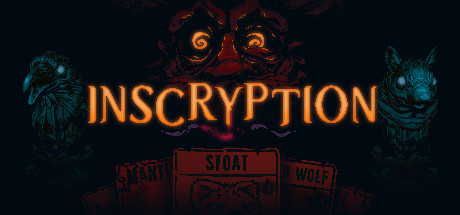
A shadowy host, a wooden cabin and a hand of woodland creatures: Inscryption makes a remarkably strong argument against accepting invitations from strangers. Daniel Mullins Games builds its premise around a card game, but the room around the table matters too. That immediately gives the experience a different kind of tension. Winning the next encounter is useful. Understanding what sort of place you have wandered into feels rather more urgent.
The combination works because it gives curiosity somewhere practical to go. You can leave the table and inspect your surroundings, with puzzles connecting the room to the game itself. It is a good fit for anyone who automatically clicks an oddly positioned object in an adventure game. Here, that habit belongs at the centre of the experience instead of being a scenic detour between proper objectives.
There is also something appealingly intimate about the setup. A small space and an opponent sitting directly across from you provide plenty of personality without needing a sprawling world. Every object can invite a question. Every pause can become uncomfortable. The atmosphere makes the ordinary business of choosing a card feel like a decision you might later have to explain to a very disappointed ghost.
A suspiciously charming deck
The opening card battles use creature abilities, positioning and sacrifice to make a compact tactical problem. Bringing a stronger animal into play can require giving up creatures already on the board. It is a neatly unpleasant way to make resource management tangible: your supply chain has whiskers. The attraction is deciding what your current board can afford to lose, rather than treating every bigger number as an automatic upgrade.
That suits the surrounding horror unusually well. Sacrifice is both a rule to learn and an expression of the world's priorities. A conventional tutorial might explain a currency and leave it at that; this theme gives the cost a little emotional sting. You do not need a realistic animal model for a card with a face to make you briefly reconsider an efficient transaction.
The deck also changes through the encounters between battles. New cards and improvements create reasons to think beyond the immediate match. Push Square praised the satisfaction of strengthening a deck while warning that luck and difficulty can mean several attempts before things click. That is the useful expectation to bring: a failed run is part of learning, but a preference for story alone will not make the tactical demands disappear.
When curiosity meets friction
Inscryption's reputation for surprises can make it difficult to discuss without sounding like somebody withholding a birthday present. The useful spoiler-free warning is that it develops beyond its opening arrangement. Buy it for an unfolding mystery with card battles, rather than on the assumption that the first setup describes every hour that follows. That distinction matters more than knowing any particular reveal in advance.
Not every change is guaranteed to be a favourite. PC Gamer admired the early atmosphere but found repetition and the later layers less compelling. Push Square was much more enthusiastic about discovering what lay beyond the initial impression. That disagreement is valuable buying advice. If getting comfortable with a system is the main pleasure you want, a game determined to unsettle your expectations may occasionally feel like an interruption rather than a reward.
There is a difference between being intrigued and being stuck, too. A mystery can encourage careful attention; repeated losses can test the patience that attention requires. Our recommendation is strongest for players who enjoy both halves of the package. If either card tactics or environmental puzzles already sounds like homework, the other half should not be expected to carry the entire evening unaided.
Before you sit down
Developed by Daniel Mullins Games and published by Devolver Digital, Inscryption first released on PC on October 19, 2021. Steam lists Windows, macOS and Linux versions. Official console listings cover PlayStation 4 and PlayStation 5, Nintendo Switch, Xbox One and Xbox Series X|S. It is a single-player game, not a competitive card battler to bring a friend into online.
The horror warning is real. Official descriptions mention self-mutilation, and the PlayStation listing flags blood, violence and strong language. The story's disturbing material deserves more consideration than the apparently modest sight of cards on a table. Steam also lists a PC demo, a sensible starting point if the premise interests you but deckbuilding normally sends you quietly towards the exit.
The final hand
Inscryption earns a recommendation through the relationship between its ideas. The cards give you something concrete to solve; the cabin gives you reasons to wonder whether solving it is enough. That is a more interesting proposition than another tidy climb through increasingly efficient combinations. Approach it with curiosity, patience for setbacks and as little advance plot knowledge as possible. Just do not expect the host to provide a reassuring customer-service survey afterwards.
Sources
Official information and review sources supporting this article.
Steam · PlayStation · Nintendo · Xbox · PC Gamer review · Push Square review