Hell is Us Review
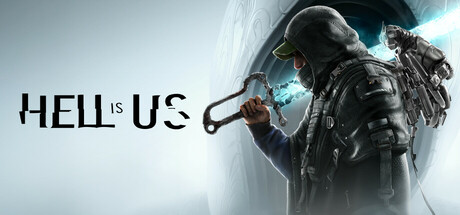
Quick Review
Hell is Us combines melee action with exploration that asks you to read a place rather than wait for it to explain itself. Dungeons connect history, emotion and environmental machinery, while restrained audio preserves uncertainty instead of announcing every threat. That emphasis can make unclear symbolism frustrating, and its civil-war setting is deliberately bleak. It suits attentive players who enjoy interpreting environments and choosing their combat pressures, rather than relying on constant guidance.
Hell is Us puts a third-person action adventure inside a country already torn apart by civil war, then adds supernatural creatures, because apparently the situation needed another department. Rogue Factor's single-player game combines melee fighting with exploration. Paid Deluxe access began September 1, 2025, ahead of the September 4 standard launch; that was an advance unlock, not an unfinished Early Access project.
A world that asks you to read the clues
Its dungeons make a stronger argument than a generic promise of darkness. In a July 2025 PlayStation interview, creative director Jonathan Jacques-Belletête explained that individual dungeons connect their architecture and challenges to particular emotions. Some emphasize puzzles, others combat; changing water levels is one example of the environmental machinery. He wanted fantastical spaces rather than another abandoned contemporary facility with suspiciously convenient electrical cabinets. That distinction matters: a dungeon can make the setting's history something you manipulate, rather than something you politely skim before opening a door. When understanding the lore helps solve a puzzle, reading becomes a practical skill instead of extracurricular homework. The risk is that symbolism can become a password nobody explained. The appealing alternative is architecture with a point of view, not merely architecture with a health bar waiting at the end. A puzzle solution may spoil the discovery of how a dungeon’s history connects to its machinery.
Lead writer Mathieu Larivière's August 2025 developer spotlight gives the political material a useful boundary. His research drew across multiple conflicts rather than reproducing one historical war, examining how societies fracture and people rationalize violence. He describes the science-fiction elements as a way of intensifying those questions, not escaping them. That makes Hadea more interesting as a constructed argument than as a guessing game about which real country it secretly represents. It also sets a demanding standard for the writing: a monster cannot take moral responsibility away from the humans simply by arriving with better lighting. The worthwhile question is not whether the fictional world is bleak enough. It is whether its bleakness leaves room to distinguish survival, complicity and resistance. Darkness alone is cheap; asking what people do inside it is the expensive part.
Audio director Antoine Vachon described another unusually specific choice in his February 2026 interview: adaptive music should accompany discoveries without announcing information the player has not earned. The team avoided obvious danger cues and little musical rewards that would effectively answer a question before the environment did. That is a substantial commitment. A soundtrack can accidentally become the most helpful NPC in the room, helpfully shouting that the innocent hallway is absolutely not innocent. Refusing that shortcut preserves uncertainty, although it also asks the sound to remain expressive without turning into a navigation service. Vachon's account of carefully placing contrasting music, voices and distorted sounds suggests atmosphere built through timing rather than permanent volume. As a design principle, that is more persuasive than simply describing the audio as haunting and ordering another industrial drone from the warehouse.
Choosing the pressures of combat
Combat difficulty is not treated as a single sacred setting. Rogue Factor's official explanation describes three changeable presets, plus custom adjustments including enemy aggression and an option controlling whether death resets enemies and experience gained since saving. Those are meaningfully different decisions. Lowering damage changes the cost of a mistake; reducing aggression changes how much breathing room exists between decisions. Adjusting the death penalty changes how much previously completed work is at stake. This is a better vocabulary for choosing a challenge than asking whether somebody is sufficiently tough to deserve the story. It also means the sensible first response to an unpleasant combat rhythm is not necessarily abandoning the game. Look at what is causing the friction, then alter that particular pressure. Pride is a remarkably unhelpful settings menu.
What the shipped updates actually establish
The shipped updates also deserve more precise language than “fixed now.” January 2026 added optional MyNacon linking, a PC walking toggle and keyboard-layout remapping. October's version 1.8 added ten Hollow Walkers and addressed save-memory corruption and collision traps. These are documented changes, not a guarantee that every machine or encounter is trouble-free. More enemy types can expand the questions a fight asks; whether they transform repetition depends on how they are used. Likewise, a save fix is important without becoming an imaginary technical clean bill of health. The useful buying distinction is that today's documented build contains additions beyond launch, rather than a promise that unspecified improvements are on their way. The build date in PC game reviews can distinguish launch coverage from these documented additions without turning a patch list into a reliability guarantee.
SteamDungeonsWritingAudioDifficultyOctoberJanuaryLaunch