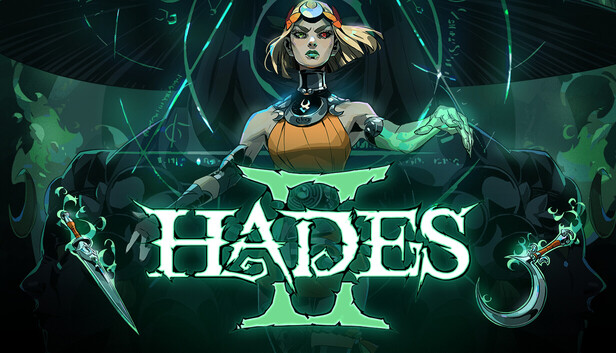
Quick Review
Hades II gives repeated action runs purpose through adaptable witchcraft, preparation and relationships with a lively mythological cast. Sprinting, casts and charged attacks encourage new positioning habits, while different builds make another attempt feel worthwhile. The larger scope also brings crafting errands, uneven progression and more demands on your patience. It is a strong choice for players who enjoy sustained experimentation and character conversations, rather than a compact action story with minimal preparation.
In this review
Introduction • Reasons to look closer • Your old dash habit has been referred for retraining • Before saving the family, please collect these ingredients • A larger world can produce a less tidy climb • The gods are a compelling reason to come home • Come for another attempt, stay because you have a better idea • Sources
Hades II gives Melinoë a straightforward family objective: defeat the Titan of Time. Unfortunately, the practical arrangements involve repeated journeys through hostile territory, an increasingly complicated magical shopping list and gods who have never once considered keeping a conversation brief. Supergiant’s sequel reached its full release on September 25, 2025 [1], after entering Early Access in May 2024. This is the completed adventure, rather than an invitation to wait for the rest of the story.
It belongs on the shortlist if you like learning an action game while your choices keep changing. The appeal is larger than finding a favourite weapon and making its numbers rise: preparation, improvisation and relationships all compete for your attention. That makes for a generous sequel, although anyone who treasured the original’s relative simplicity should expect a busier household.
Hades review — Zagreus’s earlier escape, Boons and persistent progression.Reasons to look closer
A witch with an adaptable combat toolkit, a substantial mythological cast and permanent progression give repeated attempts several kinds of purpose. God Mode returns [2] for players who want assistance, while escalating challenges serve those who want more resistance. The attraction is the combination: a failed expedition can still suggest a new build or move a relationship forward. You need an appetite for repetition, but the game makes a persuasive case for spending that repetition on something more interesting than the same mistake in a different hat.
Your old dash habit has been referred for retraining
Melinoë’s movement changes the rhythm. A dash leads into sustained sprinting, while her cast can hold enemies inside a circle long enough to create breathing room. Charged Omega attacks add powerful alternatives to ordinary attacks, specials and casts, spending magick to do so. GameSpot’s detailed combat breakdown [3] shows why those changes matter together: positioning creates an opening, then your chosen weapon decides how to exploit it. The Witch’s Staff and close-range Sister Blades ask different questions of the same crowded room.
This is a good reason to approach the sequel with curiosity rather than muscle memory. Charging something dramatic while surrounded is an excellent way to become educational material. The satisfying idea is to make a small plan, execute it, then adjust when a boon changes the available tools. More buttons and resources also mean more to learn; familiarity with Zagreus does not automatically provide a professional qualification in witchcraft.
Before saving the family, please collect these ingredients
The Crossroads gives those expeditions a second job. Reagents feed Incantations, while weapons, Arcana Cards, Keepsakes and familiars offer decisions before the fighting starts. PC Gamer’s review found the early crafting requirements intrusive [4], before the expanding possibilities made that preparation worthwhile. That is a useful warning, because collecting for a future option and enjoying the option are separate pleasures. An exciting cauldron remains capable of assigning homework.
The upside is that progress need not mean only reaching the next boss. A modest outing can contribute toward a different approach, and an unfamiliar setup can give an otherwise routine route a fresh purpose. The downside is attention scattered across ingredients and unlocks when you would rather concentrate on combat. If you habitually finish a game with every consumable saved for an emergency that never arrives, try to resist turning this one into a warehouse inspection. Experimenting is the point of having choices.
A larger world can produce a less tidy climb
The journey splits between the Underworld and a separate Surface route [6], giving Melinoë more than one direction in which to pursue trouble. Extra scope has consequences beyond the attractive promise of more things to do. GamesRadar+ praised the combat but questioned uneven progression [5], particularly when imposing bosses halted apparently powerful runs and some resource requirements felt like delays. That distinction matters: a system can offer excellent tools while taking too long to put a particular tool in reach. A spectacular defeat does not become painless because the lighting department has excelled itself.
This is the part to weigh if roguelikes usually lose you somewhere between learning a difficult encounter and earning another chance to practise it. The sequel rewards sustained engagement, but a large adventure asks for sustained patience too. Do not treat every defeat as proof that your build was foolish; execution, familiarity and progression all have a say. Equally, the promise of eventual mastery is not an obligation to love every stretch of the journey. There is room to admire the design and still wish the climb had fewer errands. Even an enthusiastic verdict cannot decide whether repeated preparation sounds like a satisfying journey or too many errands to you.
The gods are a compelling reason to come home
Supergiant describes dozens of fully voiced characters and story events that respond to the journey [2]. That gives the return trip a valuable role. A hub full of people worth checking on can soften the dead stop that failure creates in a more anonymous dungeon crawler. Conversations become a separate reward stream, available to a player whose latest combat performance might best be filed under “enthusiastic”.
The expressive character designs and Darren Korb’s music [6] support that social pull. It also provides a practical reason to slow down. Racing from one attempt to the next can turn the cast into a row of upgrade dispensers when the pleasure lies in their personalities. There is a balancing act here for action-first players: a rich setting means more talking, and more talking is not automatically what you wanted between two demanding fights. Hades II is a particularly good fit when both halves sound like a treat.
Come for another attempt, stay because you have a better idea
Hades II earns its place as a substantial follow-up by giving the familiar loop more room for deliberate decisions. It suits people who enjoy changing a plan rather than repeating a favourite move until the scenery gives in. The strongest recommendation is for players who want a long-running solo game with room to improve, experiment and get attached to an unreasonable number of mythical people. Those seeking a compact action story with minimal preparation should be more cautious.
The official FAQ confirms single-player throughout [1]. Current releases cover Windows and macOS, both Nintendo Switch systems, PS5 and Xbox Series X|S; the latter two arrived in April 2026. Choose the version that fits your setup, then give the mechanics time to become familiar without treating persistence as a moral duty. A good evening can end after one useful attempt. The Titan of Time may object to that timetable, but he was already going to be difficult. The large cast should not be mistaken for a cooperative roster; the adventure remains single-player.
Sources
Source links correspond to the numbered references in this review.
[1] Supergiant Games — Hades II FAQ (updated October 22, 2026) • [2] Steam — Hades II official listing, features and requirements • [3] GameSpot — Hades 2 review: Witching Hours • [4] PC Gamer — Hades 2 review • [5] GamesRadar+ — Hades 2 review • [6] TechRadar — Hades 2 review, routes and presentation