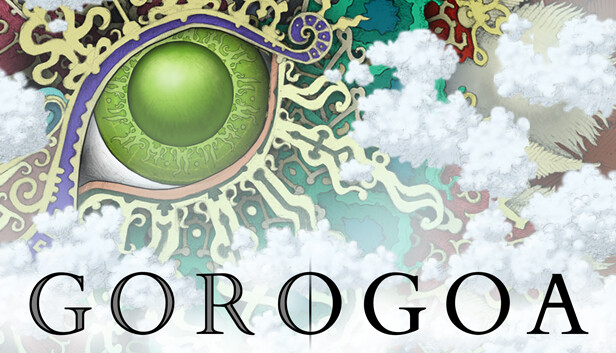
Quick Review
Gorogoa asks you to rearrange, overlap and zoom into illustrated panels until pictures become pathways and visual connections become solutions. Its lovely hand-drawn world gives every detail a possible purpose, making close observation the real pleasure. Sparse clues, an elusive story and a short running time are the main catches. If you enjoy visual reasoning and can tolerate occasionally staring at four beautiful squares in confusion, it is a distinctive little adventure.
Gorogoa is an easy recommendation for anyone who likes puzzles that change how they look at a picture. Its four-panel canvas turns ordinary acts such as moving an image or zooming into a detail into wonderfully strange problem-solving tools. The catch is that its quiet, compact adventure sometimes asks you to spot a connection without much help. Bring curiosity, a little patience, and a willingness to let a perfectly respectable staircase behave irresponsibly.
The pictures are the machinery
Buried Signal's puzzle game, designed and illustrated by Jason Roberts and published by Annapurna Interactive, makes a very strong case for drawing the rulebook directly into the scenery. You arrange and combine illustrated panels, rather than collecting a pocketful of unrelated objects for an inventory puzzle. The screen gives you up to four spaces to work with. That small workspace keeps the immediate question readable: what might these images do together?
Moving a panel is only the beginning. You can examine scenes more closely, pull back to reveal a different context, and overlap suitable images. A frame can become part of another place; a visual resemblance can become a working connection. Gorogoa makes perspective into a useful object. The pleasure is in realizing that a picture you had filed under scenery was quietly offering you a tool. Your brain has to reopen the filing cabinet.
That is a more interesting challenge than simply finding the one tiny object a designer concealed in a busy room. You are looking for relationships: a matching shape, a possible route, a space that another picture might complete. The limited canvas helps experimentation feel manageable, while the shifting scale prevents the arrangement from becoming a routine sliding-tile exercise. It is a lovely fit for players who enjoy visual reasoning but would rather skip a page of mathematical notation.
A story you assemble
The central journey follows a boy collecting five colored objects, but its larger meaning is left open to interpretation. Gorogoa carries its story through images and their transformations, with no dialogue delivering a convenient explanation. That makes the act of solving a puzzle part of how the story moves. You are not clearing a little test so that the next conversation can start. The rearrangement itself is the next sentence.
Roberts' hand-drawn illustrations give the whole thing the intimacy of an elaborate picture book. Architecture, objects and changes of viewpoint matter because you have to study them, rather than sprint past them on the way to a marker. That relationship between looking and doing is the game's strongest artistic choice. The art gets your attention, and the mechanics give that attention a job. Even a modest-looking scene deserves a second glance.
There is a cost to that restraint. Players who want explicit motives, a clearly explained mythology or a tidy account of every event may find the narrative elusive. PC Gamer's review also noted that concentrating on a puzzle could push the story into the background. That is a useful warning: understanding how to advance and understanding what it all means are different tasks here. Enjoying the first does not require settling the second, but ambiguity has to be something you can tolerate.
Small canvas, real caveats
The same visual freedom that makes a solution satisfying can leave you uncertain about the next sensible move. Nintendo Life highlighted the sparse clues and the need to combine experimentation with creative thinking. If you miss a usable detail or keep interpreting an image at the wrong scale, the four squares can start to resemble four very attractive walls. This is a good game to step away from briefly rather than turn every unanswered question into a frantic clicking contest.
It is also a short, authored puzzle journey, not a bottomless supply of levels. Nintendo Life reported a completion time a little over two hours, with the obvious qualification that getting stuck changes the total. Treat that as one reviewer's experience, not a promise about your evening. For value, weigh how much you enjoy a distinctive idea against how strongly you need a long campaign. Returning to the imagery may appeal; discovering each trick for the first time is harder to repeat.
The original release was December 14, 2017. Official listings cover Windows and macOS, Nintendo Switch, PS4, Xbox One, iPhone/iPad and Android. The current US App Store and Google Play pages still list the mobile game for purchase, although availability and compatibility depend on your region and device. Check the relevant store before buying. Nintendo also lists touchscreen support for the Switch edition, which suits the directness of moving pictures around.
Keep the console editions straight: PlayStation lists a PS4 version playable on PS5, and Nintendo identifies its Switch version as compatible with Switch 2. Those are not separate native PS5 or Switch 2 releases. Xbox's listing includes Xbox One and Series X|S among supported systems. Gorogoa is single-player. Another person can help you think through a picture, but that is ordinary sofa collaboration rather than a built-in multiplayer mode.
Who should take a closer look?
Choose Gorogoa if you want a focused visual puzzle game whose central idea does more work than an enormous feature list. Its appeal is strongest when you are happy to inspect, experiment and let an image suggest the next step. Consider waiting for a sale if brevity is a major concern, or choose something more explicitly guided if an unclear objective tends to end your evening. For curious players, though, these four little squares offer an unusually good reason to stop scrolling and actually look.
Sources
Official information and review sources supporting this article.
Annapurna Interactive · Steam · Nintendo · App Store · Google Play · PlayStation · Xbox · PC Gamer review · Nintendo Life review