Quick Review
Eriksholm wraps carefully arranged stealth puzzles in a richly realised Nordic-inspired city. Complementary character abilities and readable guard behaviour reward watching, listening and finding the intended sequence, with quick checkpoints softening mistakes. The full team arrives slowly, and strict detection resets leave little room to rescue an improvised plan. It is an inviting choice for players wanting a focused narrative adventure with thoughtful sneaking, rather than a broad tactical sandbox.
In this review
Introduction • Reasons to look closer • Read the encounter before trying to rewrite it • Three people, three useful ways of getting somewhere else • The guards are having a day, and you should listen • An inviting place to be extremely unwelcome • Choose the puzzle, then enjoy the escape • Sources
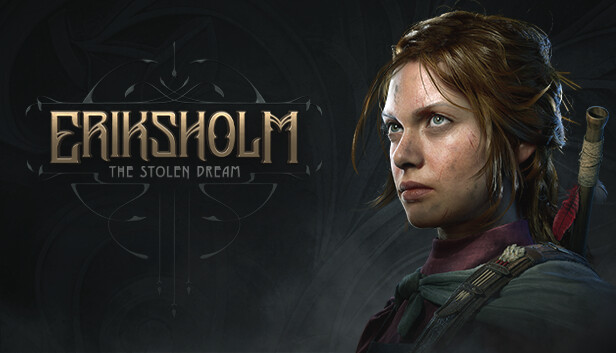
Eriksholm: The Stolen Dream is the sort of city break where the architecture is lovely and the authorities have made sightseeing unnecessarily complicated. Hanna's brother Herman has disappeared, the police are looking for him, and finding out why means slipping through a Nordic-inspired city with more urgent concerns than its attractive rooflines. River End Games' single-player stealth adventure released on 15 July 2025 [1]. It is available on Windows PC, PS5 and Xbox Series X|S. A picturesque setting should not make the assignment sound like unrestricted sightseeing; the police search supplies the stealth problem.
The important expectation is that this is a closely directed puzzle adventure. You observe a situation, understand the useful sequence of actions and execute it, rather than turning an open map into your personal criminal laboratory. That tighter approach gives the story room to move and the encounters a clear shape. It can also leave inventive players wondering why their perfectly reasonable terrible idea is not on the approved list.
Reasons to look closer
Eriksholm pairs small-scale sneaking with an unusually lavish sense of place. Its three playable characters bring complementary tools, and guard behaviour gives you something more interesting to study than a patrol arrow. Frequent checkpoints make failed experiments less expensive. The strongest fit is someone who likes solving a carefully arranged predicament and then moving the story forward. Expect a controlled adventure with room for observation, rather than an enormous tactical sandbox that will politely accommodate every plan involving a conveniently positioned barrel.
Read the encounter before trying to rewrite it
An isometric camera and a small team can suggest the freedom of a sprawling tactical stealth game. Eriksholm uses those ingredients differently. PC Gamer's review stresses its mostly linear, prescribed encounters [4], with success often depending on recognising the intended order. That makes the satisfaction closer to untangling a knot than improvising a grand strategy. The question is less how many solutions you can invent and more what you have not noticed yet.
There is value in that focus. A compact problem can make one missing observation feel important, while a directed route keeps the adventure from dissolving into cautious housekeeping across an enormous map. But it also makes a rejected idea more conspicuous. If your favourite part of stealth is rescuing a chaotic plan through sheer resourcefulness, these constraints may chafe. Eriksholm asks you to enjoy understanding a designed situation. Arrive expecting that, and its restrictions feel like the edges of a puzzle rather than a confiscated toolbox.
Three people, three useful ways of getting somewhere else
The playable trio gives the puzzles their most appealing practical distinctions. Hanna can squeeze through vents and use sleeping darts. Alva climbs pipes and uses a slingshot for distractions or disabling lights. Sebastian brings swimming and close-range strength. Game Informer's review details those complementary abilities [5], and also identifies the pacing catch: the full team takes a long time to assemble. The interesting group project spends a fair while waiting for everybody to arrive.
Different movement options matter because the same location becomes several overlapping routes. A path that helps one character can create an opening for another, so switching people changes the problem instead of merely changing the portrait. The gradual introduction makes those roles easier to grasp, especially for a newcomer. Experienced players may wish the game trusted them sooner. It is a genuine tradeoff: giving each tool space to make sense versus giving the complete set enough room to develop. The later combinations are a reason to persist, but the opening hours are part of the purchase too.
The guards are having a day, and you should listen
Guard conversations and reactions give observation a social dimension. TheSixthAxis highlights encounters where overheard relationships help explain how the guards will react [6]. A missing colleague can alter a situation; a badly hidden body can end it. That encourages you to listen before acting, rather than treating every uniform as an interchangeable obstacle with a viewing cone attached. Workplace morale has finally become a stealth mechanic.
This is where careful scripting earns its place. A tailored reaction can make an encounter feel inhabited, even when the range of successful approaches is narrow. You are reading people as well as architecture. The overhead view helps with planning, although large scenery can occasionally obstruct the view, and indicators are there to clarify concealment and danger. The attraction is the small connection between a line of dialogue and a useful opening. It gives patience a purpose beyond waiting for somebody to turn around for the seventeenth time.
An inviting place to be extremely unwelcome
The city draws on early-twentieth-century Scandinavia, with a contrast between handsome streets and the harder lives underneath them. That setting is more specific than a generic industrial gloom machine. The official PlayStation description [3] places Hanna's search within a wider city-scale mystery, while PlayStation Universe praises the detailed architecture and character performances [7]. The personal starting point gives the grandeur something to attach to: these are places connected to a missing family member, not just impressive scenery awaiting a camera pan.
The presentation is a substantial part of the attraction, especially if you like story-led games that keep their scale manageable. Notes and collectibles offer extra context without requiring the main adventure to become an open-world errands service. The qualification is simple: lovely surroundings cannot supply tactical freedom that the design deliberately withholds. Admiring the city and enjoying its puzzles need to go together. Otherwise you risk spending a beautiful evening feeling that the game has already planned it slightly too thoroughly.
Choose the puzzle, then enjoy the escape
Detection carries a hard consequence: being discovered or leaving a body to be found can force a restart. Worthplaying notes both that strict failure rule and the very quick returns from checkpoints [8]. This keeps attempts short, but it changes the emotional rhythm. You are refining a solution, not escaping a pursuit and carrying the consequences into the next street. The reset is forgiving of your time while remaining quite firm about your behaviour.
Eriksholm is therefore easiest to recommend to players who want a narrative adventure with thoughtful stealth problems between its dramatic beats. The distinct character abilities, readable little situations and carefully realised city give it a strong identity. Players craving broad tactical freedom should weigh the linearity more heavily than attractive screenshots; spoiler-light coverage can explain those constraints without giving away the solution to each stealth problem. For everyone happy to watch, infer and try again, the constraints can be reassuringly purposeful. Find the opening, move carefully, and remember that rescuing your brother does not require giving every police officer an exciting afternoon.
Sources
Source links correspond to the numbered references in this review.
[1] Steam — release, developer, publisher, modes and Windows requirements • [2] Xbox Store — Xbox Series X|S release and single-player listing • [3] PlayStation Store — PS5 release, premise and one-player listing • [4] PC Gamer — Eriksholm review by Joshua Wolens • [5] Game Informer — review by Wesley LeBlanc • [6] TheSixthAxis — review by Adrian Burrows • [7] PlayStation Universe — PS5 review by John-Paul Jones • [8] Worthplaying — PC review and detection/checkpoint behaviour