Dying Light: The Beast Review
Quick Review
Dying Light: The Beast links first-person parkour and brutal combat with survival decisions that become sharper after dark. Routes, safe zones, fuel and visibility all affect one another, so getting somewhere safely can be as important as winning a fight. Greater power does not remove the need to prepare, and the survival emphasis will not suit every action appetite. It is most inviting for players who enjoy reading terrain and planning an exit before making noise.
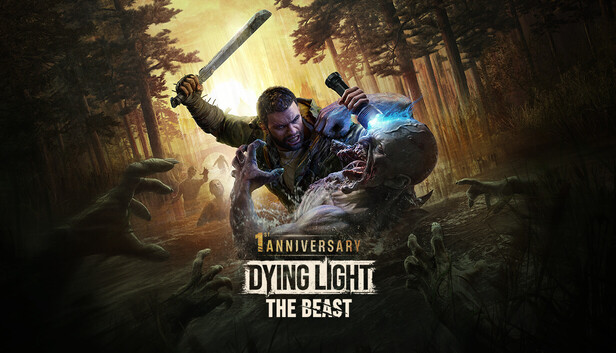
Kyle Crane has escaped captivity with revenge on his mind and something less human in his bloodstream. Dying Light: The Beast sends him into Castor Woods, where first-person parkour, brutal fighting and dangerous nights share the same open world. The hook is that power and vulnerability coexist. Being able to tear through an enemy does not make darkness a sensible place to conduct a leisurely property inspection. Even a monster needs an exit strategy.
Movement, supplies and surviving the night
Movement is the practical heart of that strategy. Techland's parkour breakdown describes climbing without stamina limits, but with routes that still demand observation. Removing the climbing timer does not remove the question of where to go next; it moves attention from a draining meter towards the environment. The same document describes physical hit reactions and human enemies using cover, suggesting two different spatial problems: navigating the world and manipulating a fight within it. That relationship is the appeal. A rooftop is not just scenery above a combat arena. It can be a route, a vantage point or the place you urgently wish you had reached before starting trouble. Unlimited climbing does not mean effortless navigation; you still need to read the environment and choose a route.
The developers' survival guidance puts useful limits around the fantasy. Safe zones must be activated before they can provide refuge, stash access and workbenches. Fuel competes for use in vehicles and flamethrower ammunition. Dark Zones offer crafting components, while nighttime Volatiles respond to noise and flashlight use. These are connected pressures rather than unrelated chores. A vehicle can solve a travel problem while creating a fuel problem; a light can solve a visibility problem while creating an attention problem. Preparing an escape route before dusk is therefore a meaningful choice, not excessive caution. The game is asking you to plan the consequences of your conveniences. Castor Woods apparently runs every amenity through a committee whose only member is a hungry corpse.
Crane and the Baron: two faces of the aftermath
Crane's return is not simply an excuse to reuse a familiar voice. In the development account, Roger Craig Smith describes moving away from the younger character's talkative sarcasm towards an older, darker delivery, while retaining traces of the person underneath. That is the right dramatic problem for a returning protagonist: continuity should be recognisable without suggesting captivity was a particularly unpleasant gap year. This is a description of the performance approach, not a claim that every scene succeeds. The useful narrative promise is a survivor whose history changes how he occupies the role, rather than a mascot pulled from storage.
The Baron provides an effective visual counterpoint on paper. Techland's character designers deliberately gave the pharmaceutical heir clean tailoring, expensive possessions and access to advanced technology instead of the apocalypse's usual distressed-leather uniform. His appearance communicates that disaster has not distributed suffering evenly. While other people scrape together survival, he can preserve the comforts that reinforce his authority. That makes the antagonist's presentation do narrative work before he explains himself. In a valley of scarcity, a spotless suit is not merely fashion. It is evidence that someone else is probably paying an extremely unpleasant dry-cleaning bill.
Restored Land and reasons to return
The free Restored Land update gives scarcity a more permanent meaning. This separate solo mode lets defeated infected stay dead and makes looted supplies finite, allowing you to clear territory rather than repeatedly service the same zombie roundabout. Optional One Life adds a full reset on death. Crucially, the April 1.6.3 update made hunger and draining flashlight batteries optional and switched those survival settings off by default; launch descriptions of mandatory upkeep are no longer the whole story. That flexibility preserves the interesting strategic change without requiring every player to enjoy maintenance meters. The trade-off remains substantial: a cleared area is progress you can keep, but a depleted resource is a decision you must live with. This is not the campaign's cooperative mode with harsher shopping prices.
For the opposite appetite, the shipped New Game Plus and Legend Levels provide an escalating return journey. Update 1.4 lets you retain equipment and character progression while tougher repeat runs offer stronger loot; Legend Levels extend advancement beyond the main tree. That makes progression less about finally completing a checklist and more about deciding how much escalation you enjoy; retained equipment becomes a starting point rather than a retirement gift. PC players also gained ray tracing, but the same notes explicitly warn of performance costs and possible input lag from frame generation. More elaborate lighting is an option to weigh against responsiveness, not a free upgrade delivered by the graphics fairy.
Current fixes and edition boundaries
September 2026's 1.7 patch addressed race obstacles, crashes, settings-menu stutter and specific RTX 40-series tearing with ray tracing and frame generation. Those are targeted fixes, not grounds for declaring every machine trouble-free. Its anniversary reward calendar also had an October 19 claim deadline, now passed. Old event banners should not be read as permanent entitlements; the apocalypse is quite capable of running out of promotional gifts as well as petrol. Those targeted fixes are separate from both a universal stability claim and an anniversary reward whose claim window has closed.
Restored Land is included for existing owners, so do not mistake it for a required paid expansion. Deluxe and Definitive editions instead add bundles and digital extras. Choose those for their contents, not because the base purchase needs a more expensive label to become the current game.
SteamSurvivalEditionsLaunchOriginsAntagonistMovementRestored LandMode rulesSurvival optionsProgressionCurrent patch