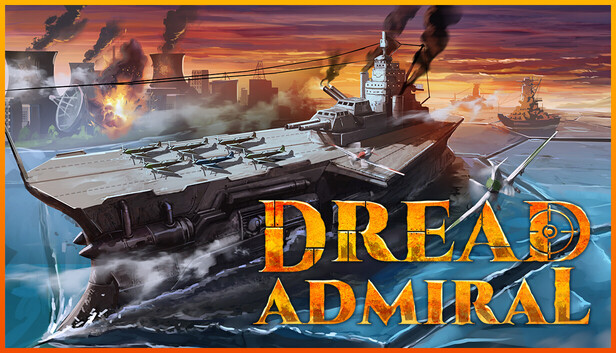
Quick Review
Dread Admiral makes fleet composition a chain of meaningful compromises, balancing shipyard investment, city development and limited extraction space. Preserving experienced vessels or leaving a mission early can be more valuable than chasing an immediate victory, giving the campaign strategic texture. Its battle presentation and underlying calculations are not always the same thing, and the AI has acknowledged limits. It suits planners who enjoy deciding what not to build and when an expensive fleet should retreat.
Dread Admiral makes building a navy a more interesting question than how many enormous ships will fit on the receipt. Advanced Shipyards gate larger vessels, while a Secondary Shipyard offers another route toward a broader force. The developer's October explanation frames this as a choice between developing production, adding an Academy, or pushing toward Superships. Money spent enabling something impressive is money unavailable for something useful now. Then extraction space imposes another decision: which mixture of heavy ships, escorts and submarines deserves a berth? Your fleet has a luggage allowance, and every captain thinks their ship is essential.
Reasons to look closer
Cities make the naval campaign more than a collection of targets. The July developer primer links capturing and developing them to income and population, while blockades interfere with repairs and construction. That gives an admiral something resembling unexpected municipal responsibilities, which nobody puts on the recruiting poster. A city is useful infrastructure, not merely a captured flag to repaint before sailing onward.
Population also buys time before the Black Fleet arrives on the next map, a relationship reinforced in October's changes. Developing a city can therefore serve tomorrow's escape, even while today's clock encourages you onward.
Flight paperwork
Aircraft fly in real time, but that spectacle sits inside turn based decisions and a dice driven resolution system. The developer's July explanation describes supporting flak and losses whose presentation can follow their calculation. A plane still in view is not necessarily an untouched asset. The design aims to let attacks happen while attrition erodes future carrier strength. It is a separation between the battle you watch and the resources you must preserve: flight paths do not abolish the accountant.
The current combat AI also weighs expected aircraft losses against attack value. Flak offers an argument, not just decorative fireworks.
No oracle
October's AI explanation separates command, fleet, movement and combat into layers. Combat actions receive individual scores, considering endangered units, available targets and wasted damage. Importantly, those scores do not plan a future activation sequence. This is a collection of ranked decisions, not a naval prophet living inside the computer. That distinction makes its limitations as interesting as its ambitions: the system tries to order sensible actions, while its developer acknowledges that isolated choices can produce unintuitive damage distribution. This disclosed scoring model is not evidence that the AI can plan an entire future sequence.
Damage control
The August design notes describe critical hits as more than damage numbers. Engines and weapons can suffer functional impairments, while fires create a repair problem. Survivors may therefore need a changed assignment, not congratulations. Keeping an asset afloat and keeping it useful are related goals, but not identical ones.
The AI's disclosed risk calculation ignores critical hits, veterancy and damage variance. Its neat arithmetic leaves room for untidy outcomes.
Veterancy travels between campaign missions, giving surviving ships a developing identity beyond their hull type. October changed its defensive and offensive influence in aircraft dogfights. Experienced crews are investments to protect, not museum pieces to park somewhere permanently safe.
Next headache
Campaign map choices weigh layouts, missions and rewards, but extracting your fleet instead of completing an objective remains viable. Sometimes the valuable prize is leaving with the expensive things you brought along intact. A mission-failure label may miss the strategic value of an extraction that saves the fleet you would otherwise lose.
Wolfpack's submarines and Fortified's gun forts complicate fleet selection and scouting in different ways. The obvious answer of bringing battleships starts to look suspiciously like a policy written by battleships.
Rewards also distinguish immediate help from longer term progression. Bonus XP belongs to that latter calculation; October 20's notes report a correction to it, not a demonstrated guarantee of reliability.
October also revised Supership and technology lab costs, so older shopping lists need another look.
October 20 adds aircraft highlighting and reports interface fixes, but labels its sortie correction only possible. That qualification deserves to stay attached.
Leave space for judgment
Dread Admiral's production and extraction constraints invite fleet composition. If choosing what not to build sounds satisfying, the dockyard has an argument for your attention.
Repeatable Quick Battle and Skirmish were public by May 1, 2026, without confirming full campaign availability. Full commercial release followed September 3; the exact earliest public access date remains unknown.