DOOM: The Dark Ages Review
Quick Review
DOOM: The Dark Ages turns defence into pressure through a Shield Saw that blocks, parries, stuns and helps close the distance. Exploration funds combat upgrades, while custom encounters offer another way to refine preferred fights. Treasure hunting may interrupt the pace for players who only want the next battle, and its shield-led approach deserves attention on its own terms. It suits action fans who enjoy reading openings and shaping aggressive encounters, with granular options to tune the demands.
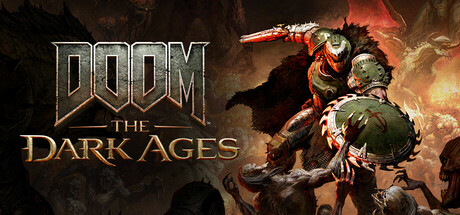
DOOM: The Dark Ages gives the Slayer a medieval war to fight and absolutely no interest in diplomatic relations. This single-player prequel to DOOM (2016) and DOOM Eternal is built around confronting Hell rather than politely requesting that it leave. The attraction is not subtle. Neither, presumably, is the cleaning bill.
The Shield Saw turns defense into pressure
The Shield Saw makes defense an unusually aggressive occupation. It blocks attacks, reflects suitable incoming fire with a timed parry and can be thrown into larger demons to stun them, while cutting down smaller enemies. Shield Charge doubles as movement and a battering ram. That combination is more interesting than handing the Slayer a protective lid: the same tool helps decide where to fight, what to interrupt and when to close the distance. Exploration also feeds the violence. Hidden resources buy improvements at Sentinel Shrines, so looking around is not merely a pause to admire the masonry before demolishing its inhabitants. The appeal is a loop where curiosity funds combat options. Players who only want the next fight may find that treasure hunting interrupts the momentum; players who enjoy checking suspicious corners have a practical excuse. Apparently the medieval economy runs on gold, upgrades and exceptionally poor health-and-safety enforcement.
The Cosmic Realm adds a different kind of menace to the campaign's fantasy. Director Hugo Martin describes it as a Lovecraftian dimension whose alliance with Hell produces enemies such as the twin-bladed Cosmic Baron. Its pressure includes ranged attacks that can obstruct your projectiles, but its attacks also contain parry opportunities. That is a useful design contrast: something visually overwhelming still needs to communicate an opening. Otherwise cosmic horror becomes an appointment with a loading screen. The Reaver Chainshot fits this scale of absurdity, offering a quick shot or a charged attack with its iron mace. This is fantasy weaponry with an industrial accident where the instruction manual ought to be, and a welcome alternative to making every new realm merely a change of wallpaper.
Adjusting the challenge and the combat rhythm
The accessibility options make that aggression more adjustable than the imagery suggests. Parry timing has its own assistance setting, enhanced targeting reduces aiming demands, and damage and other gameplay modifiers can be changed independently. High-contrast options can separate enemies and objects from a desaturated background, while text sizes and controls have their own adjustments. The important distinction is between making an attack readable and making it survivable: those are different problems, and a single easy-mode switch cannot address both. These provisions let players make more specific choices. There is nothing especially heroic about losing track of a crucial visual cue because it blends into the scenery. Hell already has enough advantages without recruiting the settings menu. A simple difficulty verdict can conceal that choice between improving readability and reducing punishment; they solve different problems.
Post-launch changes have also addressed the rhythm of the fighting. August 2025's Update 2 added a slider for the slow-motion feedback following successful parries and melee strikes, increased weapon-swap speed and allowed some animations to be interrupted sooner for blocking or parrying. These are small-sounding adjustments with an important purpose: the flourish that sells an impact should not necessarily dictate how long everybody wants to watch it. Giving the player control over that pause is preferable to treating cinematic emphasis as sacred. This is a documented change to the game's options and responsiveness rules, not a claim that a particular PC now achieves a particular frame rate.
The Ripatorium makes you the encounter designer
The Ripatorium gives combat enthusiasts a place to become their own worst encounter designer. Update 3 expanded it into customizable rounds, with individual settings and passcodes for sharing those rounds. You can construct the unpleasant situation yourself and then discover that your taste in enemies was overambitious. Its appeal is repetition with a purpose: isolate an arrangement, change it and try again instead of treating the campaign as the only route back to a preferred kind of fight. Sharing a setup is also a more useful invitation than merely telling a friend that your challenge was terribly difficult. It gives them the same collection of terrible decisions to examine. Assessments written before Update 3 may not describe those shareable custom rounds, which matter if repeatable encounter-building is the attraction.
Expansion content versus free improvements
July 2026's Revelations expansion is a separate addition, not part of the original release date. Its Chain Spear introduces another combat system, while the accompanying free Update 4 improves the base game's Ripatorium with saved personal presets, continuous spawning and more control over pickups. Keeping those two categories straight matters when choosing what to buy. The free tools already give existing owners more ways to shape an encounter; the expansion adds its own campaign and equipment. More content is only useful if it serves the part of the game you actually want to revisit. A bigger shopping basket is not automatically a better encounter.
There are less glamorous reasons to keep the game updated, too. The July 29 hotfix repaired problems including a key pickup that could trap players after reloading and an interaction that could break a save in an expansion encounter. Those fixes do not establish that every remaining issue has vanished. They do underline the difference between a satisfying hard fight and an accidental dead end: the first asks you to improve; the second owes you your evening back.
SteamCombat and explorationCosmic RealmAccessibilityUpdate 2Update 3Update 4Hotfix 2Launch checklistAdvance accessExpansion details