Quick Review
Deer & Boy builds its cinematic journey around a relationship that changes movement: protecting a fawn initially restricts the boy, before the growing deer can help in return. Wordless storytelling gives gestures, scenery and music room to express that bond. Navigation clarity and companion handling deserve caution, especially when a puzzle depends on getting both travellers into place. It suits players drawn to quiet companionship and interpretation, rather than elaborate progression systems or lengthy exposition.
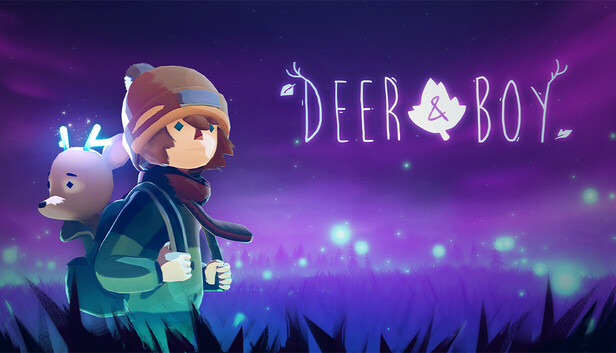
Deer & Boy pairs a runaway child with a fawn and sends them through a cinematic adventure. Released June 23, 2026, Lifeline Games' adventure puts their changing relationship at the centre of its puzzles and journey. It's an appealingly small partnership to build a game around: two vulnerable travellers, a great deal of uncertainty and nobody who looks particularly qualified to fill out an incident report. There is plenty to worry about.
A partnership that changes how you move
The best idea in the developer's gameplay outline is that looking after the deer changes what the boy can do. Initially, carrying the fawn in his backpack prevents him from jumping. Protection has a practical cost: the dependent animal isn't merely a cute passenger attached to an otherwise unchanged platforming hero. Once the fawn can walk, its size lets it enter spaces the boy cannot reach and help open routes. Later, the growing deer becomes strong enough to support the boy in return. That's a clear progression without needing a shop full of increasingly implausible backpacks. Each stage changes who needs help and who can provide it. The relationship therefore has a mechanical shape, rather than existing only in the scenes between puzzles. On paper, that is a stronger reason to care about the companion than simply being told it is important. Whether every interaction lands is another question; the design itself gives the partnership something useful to do. The developer’s outline establishes the intended progression, not a guaranteed emotional response.
Telling the story without dialogue
That same desire to let actions carry meaning explains the lack of dialogue. In its storytelling diary, the team describes distributing information across animation, environments, music and sound instead of using conversations or text boxes. A careful movement while carrying the fawn, or a pause before the pair continue, is meant to communicate what a spoken exchange might otherwise explain. This places a lot of responsibility on small gestures. Without a character helpfully announcing that they are frightened, the animation has to make that fear readable. The approach leaves room for interpretation, which suits a story about a bond between different creatures. It also sets a demanding standard for clarity: an ambiguous feeling can be interesting, but an ambiguous instruction can leave somebody staring at a wall. The absence of spoken language is an inviting quality for players who dislike lengthy exposition. It isn't, by itself, proof that every player will understand every scene or find every puzzle accessible.
The choice of animal is more deliberate than it first appears. The origins diary says the developers wanted something wild enough to keep its distance, without the immediate threat a predator would introduce. A deer allows the friendship to remain a little uncertain; trusting one isn't supposed to feel like collecting a pet from a menu. The same diary names games including Ico and The Last Guardian as relationship influences, alongside films such as Bambi and Moonrise Kingdom. Those references explain the team's ambitions, not the finished game's quality. Borrowing an interest in companionship is easier than earning an audience's attachment. More useful is the stated aim to leave room for a player's own memories of brief friendships or loss, rather than dictate a single response. That suggests an adventure worth approaching for its particular mood, without treating the list of inspirations as a guarantee that it will produce the same feelings.
Updates to keeping the pair moving
The maintenance notes bring those ambitions back to the practical business of getting two characters through a level. July's third patch made picking up and putting down the deer more permissive near obstacles, simplified one assisted jump and let the cuddle input work as a call when the deer needed to reach the boy through an opening. Affection doubling as a navigation request is a useful compromise; sometimes “come here” really is the first step toward a hug. The update also added checkpoints and adjusted some prompts and pursuit timing. These are meaningful details in a game whose partnership depends on movement being understandable.
August's fourth patch reports further fixes for the boy or deer getting stuck, alongside visual adjustments. Those repairs are not proof that every obstruction has disappeared. They do give cautious buyers something more concrete than a promise of emotional connection: a documented effort to keep the characters moving. Deer & Boy's appeal rests on that movement serving the relationship. The premise is worth considering, but nobody should mistake a charming companion for a technical warranty.
SteamGrowthStoryOriginsJulyAugust