Quick Review
Dead Letter Dept. builds psychological dread around reading damaged mail and typing it into a terminal. Close attention to mundane work makes intrusions into the routine unsettling, helped by oppressive sound and the surrounding workplace. Repeated transcription can become laborious, and visual distortion may be uncomfortable even with reduction settings. It is a distinctive pick for patient horror fans who enjoy slow-building unease, provided they want an actual mouse-and-keyboard shift rather than combat or constant mechanical variety.
In this review
Reasons to look closer · The computer has outsourced the difficult handwriting to you · The threatening bit may be outside the screen · An excellent reason to inspect the visual settings · Another shift reveals more, but some of the mail returns · Read the job description before accepting · Sources
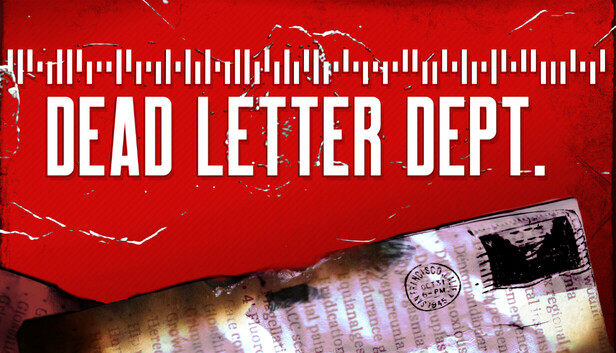
Your new job is straightforward. Read the bits of mail a computer cannot understand, type the relevant text, and try not to think too hard about the working environment. Dead Letter Dept. gives you the title Data Conversion Operator, which sounds considerably more reassuring than “person left alone with the worrying monitor.” Released on 30 January 2025 [1], this psychological-horror game takes a modest task and surrounds it with reasons to reconsider the entire employment arrangement.
You use your actual keyboard to process addresses and other text while the day-to-day routine starts feeling wrong. Anyone seeking elaborate combat or a roaming haunted-house adventure should adjust expectations: the desk is the centre of this experience. If ominous paperwork sounds like a promising evening rather than an unpaid extension of your real job, however, the premise has an unusually direct way of getting your attention.
Reasons to look closer
Dead Letter Dept. makes its main interaction part of the atmosphere. Reading closely draws you into other people’s correspondence, and typing keeps your attention occupied while the surrounding space becomes less comfortable. Multiple endings reward curiosity beyond a first run, while the compact structure avoids demanding a lengthy campaign commitment. The official listing requires a mouse and keyboard [2], which is worth noticing before arranging a sofa session. The control requirement matters: the game is literally about doing the typing, so the equipment is not an optional flourish.
The computer has outsourced the difficult handwriting to you
At the terminal, highlighted text must be interpreted and entered, with an address-suggestion tool helping when enough information becomes clear. A damaged image can make an ordinary string of characters suddenly require attention. There is something neatly unpleasant about being employed as the machine’s backup plan: when automation encounters an unreadable envelope, apparently the solution is to give one tired human a keyboard and wish them well. The developer’s press kit [1] places that work at the centre of the design.
This is not chiefly a test of spectacular typing speed. In a launch-day discussion [3], developer Mike Monroe explained that ordinary letter formatting is more forgiving than address entry. That distinction makes the reading itself important without turning every line into a strict punctuation examination. It also keeps the task understandable while stranger material arrives. Players who enjoy identifying a pattern may find plenty to notice, but expecting every document to become an ingenious standalone puzzle would give the routine a job it was not hired to perform.
The threatening bit may be outside the screen
Video Games Are Good describes the gradual disruption of the daily cycle [4]: commuting, processing mail and returning home, with strange details intruding on familiar actions. Once you know what an ordinary shift looks like, a change can draw attention without needing an enormous announcement. A message that seems oddly personal is more effective when it arrives through the same channel as several thoroughly unglamorous addresses. The office has not scheduled a formal transition into the supernatural.
The trade-off is that you need to engage with the ordinary work for the disruption to matter. If copying text remains merely copying text to you, atmosphere may not transform it into a gripping activity. The game asks for close attention to both the documents and the surrounding mood, rather than providing constant new mechanics. That is a strong fit for slow-building unease, but a less obvious recommendation for anyone who wants horror to produce a steady procession of distinct obstacles and visible things to escape.
An excellent reason to inspect the visual settings
The grainy presentation and prominent ambient sound make the workplace feel unstable, but deliberately uncomfortable visuals can become uncomfortable in a much less entertaining sense. Thumb Culture praised the audio while reporting difficulty with the screen distortion [5], even after using the available reduction option. That is a useful warning rather than something to dismiss as insufficient dedication to the mood. An effective aesthetic should not require you to persist through a headache in order to appreciate the lighting.
Monroe also confirmed that the full release includes a screen-flicker reduction setting [3] absent from the older demo at launch. It is worth inspecting the options before settling in, without assuming that a reduction guarantees comfort for everybody. It is perfectly reasonable to prefer a less aggressive image while remaining thoroughly suspicious of the job. Your monitor does not need to win an argument with your eyes.
Another shift reveals more, but some of the mail returns
The multiple endings invite you to investigate how the routine can change rather than treat the first conclusion as the only possible destination. Destructoid found that approach intriguing [6], while noting that repeated runs did not contain enough fresh letters to keep all the work equally interesting. That is the central bargain of replaying a compact mystery: knowledge gives earlier details new meaning, but familiar actions remain familiar.
The paths are not presented like a tidy menu of remaining objectives, which can preserve mystery while making deliberate experimentation harder to organise. Some players will enjoy looking for the seam in an apparently rigid workday; others will prefer one unsettling run and leave the remaining secrets alone. A first encounter can be worthwhile without obliging you to apply for permanent employment. Consider the extra endings an invitation to investigate, not a promise that every repeat shift supplies a completely new workload.
Read the job description before accepting
Big Boss Battle’s review draws the essential distinction [7]: whole passages sometimes need transcribing, and whether that feels absorbing or laborious will strongly shape the experience. The unusual premise might catch your attention, but Dead Letter Dept.’s remarkably clear identity does not make it universally appealing. Its best audience is comfortable letting a simple task carry an atmosphere while scattered details accumulate significance. A player who wants fast mechanical variety may reasonably wonder when the sinister paperwork is going to finish and the rest of the game will begin.
For the willing applicant, the small scale is an advantage: the unease can remain concentrated around the terminal, the commute and the strange material passing through your hands. The released versions cover Windows, Linux and SteamOS; the official requirements still make keyboard input central. The store also flags written descriptions of graphic violence and adult themes. Come for psychological dread and curiosity about what the mail is concealing, rather than a typing lesson with decorative ghosts.
Sources
Source links correspond to the numbered references in this review.
[1] Belief Engine — official press kit, release, platforms and gameplay • [2] Steam — full release, credits, modes, input requirements and content warning • [3] Mike Monroe — launch-day developer AMA, formatting and visual options • [4] Video Games Are Good — Nate Hermanson review, routine and atmosphere • [5] Thumb Culture — review, audio and screen-distortion criticism • [6] Destructoid — Zoey Handley review, endings and replay repetition • [7] Big Boss Battle — Rob Covell review, typing workload and reader fit