Quick Review
Corsairs: Battle of the Caribbean makes piracy a commander's job, connecting trade, town development, fleet movement and boarding decisions. Capturing a ship creates different risks from sinking it, and varied routes to success give commerce a role alongside cannon fire. Micromanagement is substantial, while the review's record of boarding and campaign repairs warrants caution about smooth operation. It suits strategy players who enjoy juggling a busy naval campaign, rather than hands-on swashbuckling or leisurely sailing.
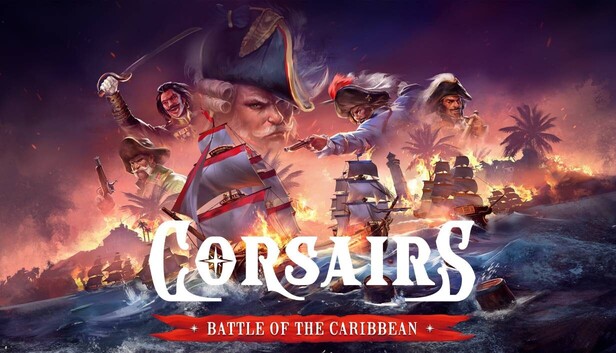
Released on May 18, 2026, Corsairs: Battle of the Caribbean brings naval strategy to PC with twelve ship types, five national campaigns and online battles for up to four players. There is plenty here for an aspiring admiral to organise before anybody gets around to shouting about treasure. A pirate theme does not promise a hands-on swashbuckling adventure here; organising fleets and campaigns is the invitation.
Conquest is not just a cannon count
The remake's most interesting proposition is that conquest need not mean sinking everything within cannon range. Its developers describe several competing routes to success: building wealth, collecting relics or simply outlasting rival corsairs. Towns can be captured and upgraded, while trade rewards longer journeys with better prices and greater exposure to attack. That gives expansion an appealing complication. A distant customer is worth more, but getting paid requires your cargo to arrive somewhere other than the seabed. Relics add another reason to watch merchant traffic: those bonuses can be bought, stolen or recovered after sinking their carrier. Commerce and violence are not separate careers here. They are neighbouring departments, and the accounts team has access to artillery.
Boarding and the work of commanding a fleet
Boarding makes the decision to capture rather than destroy more involved. Fishing Cactus's combat breakdown explains that an enemy ship must first be slowed by attacking its sails; grapeshot can reduce the crew before the boarding begins. Captured vessels retain their damage, so a successful raid can leave you with a repair bill rather than an immediately useful prize. Boarding offers automatic resolution or the alternative of directly controlling the boarding units. The latter offers more intervention, but puts another set of responsibilities on the admiral's desk. Most importantly, losing your corsair means defeat. Sending the boss into a dangerous fight might improve the odds, but it is a remarkably literal way to put the whole company at risk.
The post-launch advanced guide supplies a useful counterweight to all that micromanagement. Ships can be assigned to numbered fleets, sent along waypoints and instructed to attack during movement. Formation sailing keeps selected ships together by matching their speeds, which makes sense for escorts but can frustrate a pursuit when a fast vessel is tethered to a loaded merchant. Switching formation off becomes a tactical choice rather than housekeeping. Espionage has its own wrinkle: you choose the nation to investigate, not the particular ship your spy targets. Buying information therefore involves uncertainty instead of granting an all-seeing pirate satellite. These are promising decisions for players who enjoy managing several problems at once; anyone seeking a leisurely sailing holiday should read the job description carefully.
The studio interview is unusually revealing about the work underneath those systems. Boarding happens within the continuing world rather than isolating a fight behind a loading screen, and ships joining or leaving change the space available to units. Fishing Cactus describes pathfinding, synchronisation and saving those situations as difficult problems. That explanation gives the design some context without proving that the finished implementation is flawless. It also exposes the fundamental appeal: your little deck battle belongs to a larger conflict that has not agreed to stop while you rearrange the furniture.
History as a setting, not a reconstruction
The historical research has a similarly useful qualification. The developers drew on Caribbean geography, colonial rivalries and lost Spanish treasure fleets, but explicitly describe an adaptation rather than a strict reconstruction. That is the right expectation to bring to its competing nations and treasure-chasing campaigns. The setting supplies motives and relationships, not a licence to treat every mission as a history lesson. Enjoy the intrigue; leave the revision notes for another afternoon.
Denmark's campaign gives that intrigue a particular flavour. The faction profile presents Jorgensen as an opportunist willing to cooperate with pirates and abandon arrangements once they stop being useful. It is a less straightforward fantasy than painting the map through superior firepower. Success, in this account, comes from reading rivalries and exploiting openings: less glorious charge, more suspicious handshake beside the docks.
Maintenance matters to the recommendation
The less romantic part of the story is maintenance. July's hotfix reports fixes for boarding problems, campaign softlocks, interrupted fleet behaviour and a corrupted boarding state after loading. It also adds pausing through the Escape menu in solo play and a multiplayer version check. Those are meaningful repairs to basic reliability, not evidence that every remaining problem has walked the plank. They temper the recommendation: Corsairs offers a complicated commander's job, and its own patch history documents rough edges around that complexity. That maintenance record is a reason to check the current state carefully, not a reason to assume that a familiar name guarantees smooth sailing.
Steam recordMicroids launchRemake systemsBoarding and combatAdvanced mechanicsStudio interviewArt directionHistorical researchDenmark campaignNetherlands campaignJuly hotfix