Quick Review
Consume Me turns a teenager's crowded schedule into expressive minigames and interconnected planning decisions. Its personal story gives chores, relationships and everyday pressures meaning beyond better numbers, while questioning the urge to optimise everything. The authored perspective limits freedom, and reactions to the ending differ. Crucially, dieting, disordered eating and fatphobia are central themes. It suits players seeking intimate storytelling through demanding routines, only if that difficult material is something they want to engage with.
In this review
Reasons to look closer · A productive outfit still needs washing · Your to-do list has acquired a collection of minigames · You can choose the activity, not rewrite the person · The systems make their point more neatly than the ending does · Make room for the story, and permission to skip it · Sources
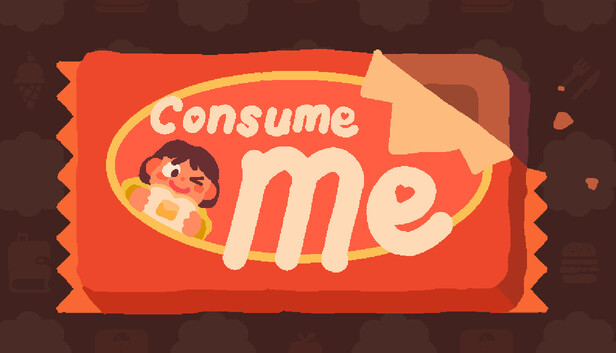
Jenny has homework, chores, relationships and a future to organise. Naturally, the day has neglected to provide enough hours for any of this. Consume Me turns those competing demands into a life-sim RPG built around scheduling and short, expressive minigames. The full Steam release arrived on 24 September 2025 [1], presenting a semi-autobiographical story about a teenager trying to meet expectations that keep finding ways to expand. Even the laundry has somehow become strategically significant.
Its cheerful drawing style needs an important qualification: the game depicts dieting, disordered eating and fatphobia. The creators explicitly warn that these subjects may be upsetting, and the behaviour depicted is not advice to follow. Consume Me has warmth and humour, but it also asks you to participate in a troubling system before questioning what success inside that system means. Looking adorable does not make the material light.
Reasons to look closer
Consume Me gives everyday pressures a specific playable form. Choosing an activity means spending limited time, while a small mistake can complicate the rest of the schedule. The minigames make ordinary tasks visually inventive, and Jenny’s story gives those tasks a purpose beyond collecting better numbers. There is room for awkward comedy alongside genuine discomfort. Anyone looking for a more personal story will find that combination more distinctive than another enormous world full of errands wearing heroic hats.
A productive outfit still needs washing
The official feature list [2] makes the central tension clear: plenty to accomplish, not enough time, and clothes that provide useful effects until they need laundering. That last detail is a wonderfully domestic twist on RPG equipment. A fantasy hero acquires enchanted armour and heads into battle. Jenny must remember whether the relevant shirt is clean.
Planning therefore matters beyond picking the next minigame you fancy. An efficient choice now can make another task possible later, while neglecting one obligation can leave the whole day feeling badly arranged. The attraction is working out those connections. The discomfort is discovering how readily a person becomes a collection of resources to manage. Players who enjoy optimisation have something substantial to engage with, but should expect the story to question that instinct rather than simply hand over a trophy for an immaculate spreadsheet.
Your to-do list has acquired a collection of minigames
So Many Games describes activities ranging from distracted reading to cleaning, dog-walking and laundry [3]. Instead of reducing each choice to a button and a stat change, Consume Me makes you perform little actions with their own timing and visual personality. That helps familiar chores stay legible as parts of Jenny’s day. You are not merely selecting “be responsible” from a menu and watching a progress bar applaud. Responsibility has brought several small tests and would like them completed promptly.
There is a useful distinction between a short minigame that suits its moment and one you want to revisit whenever the schedule demands it. The same review notes that failed chapters can be retried with a level-up option, offering help without removing the structure altogether. That is a sensible concession: the game needs consequences, but a difficult sequence should not automatically reserve the rest of the story for excellent planners.
You can choose the activity, not rewrite the person
In an interview with the co-directors [4], Jenny Jiao Hsia explains that her old journals informed the character’s thoughts, while the team wanted minigame failures to carry meaningful stakes. This clarifies what kind of role-playing is on offer. You can organise actions, but Jenny is not an empty avatar waiting for your preferred personality. Her responses can remain painful or contradictory even when you have found a mechanically sensible way through the afternoon.
An unrestricted sandbox might let you bypass the experiences the game exists to explore, which would make for a more comfortable schedule and a less interesting character. Still, players who expect complete authorship over a simulated life may find the boundary frustrating. Approach Jenny as someone whose circumstances you are inhabiting rather than someone you can redesign through sufficiently efficient menu use. Sometimes a game is asking you to understand why a choice feels urgent, not congratulate yourself for knowing better.
The systems make their point more neatly than the ending does
The meal puzzle is the clearest example of attractive mechanics serving an uncomfortable idea. Food takes shaped spaces on a grid, with competing requirements that turn an everyday act into a problem to solve. Game Informer found that tension compelling [5], while criticising how the ending reduced participation when the story moved toward change. It is a meaningful distinction: if the struggle receives elaborate interactive systems, a less interactive resolution can feel disproportionately brief, even when the underlying life story resists a tidy conclusion.
Critical reactions are not uniform. Video Games Are Good found the final stretch especially effective [6], praising the way its surprises renewed the earlier routine. The difference points to a real question of fit rather than a simple defect everybody will experience identically. Do you need the ending to resolve the mechanical argument as fully as the narrative one? Consume Me is unusually personal, but personal material does not automatically settle questions of pacing or how much control the player should retain at its most important moments.
Make room for the story, and permission to skip it
The best reason to consider Consume Me is its willingness to put a specific, messy perspective inside systems that are engaging enough to make you notice your own response to them. Its jokes work best around the absurd demands of the schedule and the exaggerated presentation, rather than making Jenny’s vulnerability the punchline. The game offers more than a lesson attached to some activities; the activities themselves are part of the argument. That gives its small domestic decisions unusual weight without needing to turn every conversation into a grand speech.
It is available on Windows and macOS, with iPhone and iPad versions also released [2]. Choose it if an intimate narrative and demanding little routines sound appealing together, and if the stated themes are something you want to engage with. The creators’ warning is a genuine reason to pass, not a challenge to prove you can handle it. For the right audience, Consume Me offers a thoughtful, distinctive evening.
Sources
Source links correspond to the numbered references in this review.
[1] Steam — full release, credits, desktop platforms, modes and content warning • [2] Apple App Store — released iPhone/iPad edition and official features • [3] So Many Games — Christopher Lannoo review, minigames and retry options • [4] oprainfall — interview with Jenny Jiao Hsia and AP Thomson • [5] Game Informer — Charles Harte review, mechanics and ending criticism • [6] Video Games Are Good — Nate Hermanson review, narrative and final-act response