Citizen Sleeper 2: Starward Vector Review
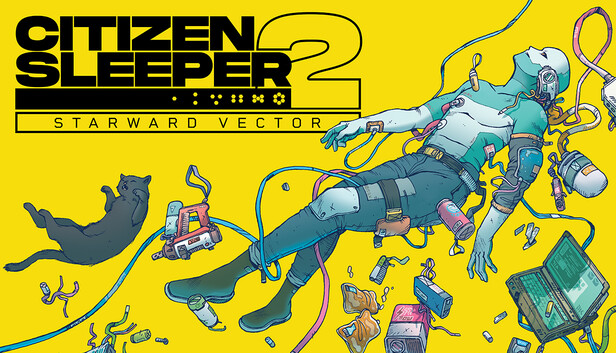
Quick Review
Citizen Sleeper 2 turns dice, contracts and limited supplies into a precarious life aboard a stolen ship. Stress gives conversations and dangerous work meaningful pressure, while crewmates retain their own needs rather than becoming obedient upgrades. Consequences are meant to continue into the story, so players who rely on reloading for ideal outcomes may struggle. It is an inviting fit for narrative-RPG fans willing to live with compromised results and care about surviving together.
Citizen Sleeper 2: Starward Vector makes the spacefaring dream considerably less glamorous by asking who is paying for it. You are an escaped android with a malfunctioning body, a stolen ship, and a need for work. The Starward Belt offers contracts, prospective crewmates, and opportunities to make decisions your future self may describe using language unsuitable for a mission briefing. Released on January 31, 2025, this is a dice-driven RPG about building a life under pressure, rather than polishing a fleet until it reflects your enormous importance. The attraction is that modest scale: survival can be a worthwhile ambition without requiring a galaxy to explode first.
Consequences you have to live with
Its strongest design proposition is that failure should create a story rather than summon the load screen. Speaking to GameSpot, creator Gareth Damian Martin explained why manual saves would undermine that approach: the game needs consequences you continue living with. Even completing a contract need not mean you came out ahead, because supplies spent can eat the reward. A deteriorating wreck can offer extra salvage while also making greed an increasingly expensive personality trait. That gives decisions more texture than a clean success stamp. The question becomes what kind of outcome you can afford, not merely which button awards the most virtuous result. This is also a clear warning for anyone who treats an RPG save folder as an extensive insurance portfolio. That condition matters: the appeal depends on accepting a compromised result as part of the adventure, not evidence that the adventure has malfunctioned.
A crew with agency, a captain under stress
The crew supplies another useful limit on the captain fantasy. In an Xbox Wire interview, Martin described a reversal from the first game's dependence on other people: now your ship can offer someone else a way out. That changes the moral shape of recruitment. A passenger is not simply an upgrade with an unusually detailed portrait; offering refuge carries responsibility. Martin also explicitly resisted making the player everybody's boss, pointing instead toward a group whose members retain their own agency. It is an appealing distinction between belonging to a crew and owning one. A ship can be your home without becoming an office where every conversation ends in a performance review. For players seeking obedient companions who exist to validate command decisions, that emphasis may be less comfortable. For a story about precarious lives, discomfort seems considerably more useful than another captain's chair.
Stress gives that precariousness a vocabulary beyond losing health. Martin told Nintendo Life that the concept can cover difficult negotiations, crew willingness to continue, structural danger, and pressure on the body. The advantage is expressive: a tense conversation need not pretend somebody has been stabbed to matter mechanically. A stress meter can make a situation dangerous without converting every problem into combat. There is also a welcoming argument for newcomers in the same interview. The sequel was deliberately built to work as a first encounter, with a time skip making connections something to discover rather than an entrance exam. That is a sensible promise for a narrative sequel. Knowing the earlier game can supply context, but requiring a completed reading list before boarding would be an especially bureaucratic interpretation of space travel.
A shared mood across art and sound
Presentation is part of this design, not just the attractive envelope around it. In the official developer AMA, Martin described trying to align artwork, systems, writing, sound, and music toward a shared emotional atmosphere, and credited composer Amos Roddy's contribution to that process. That suggests the right expectation: a game interested in sustaining a mood, not merely firing off dramatic announcements. Even the quiet stretches need a purpose. Space can feel emotionally crowded without every corridor containing a boss fight or someone loudly explaining the franchise timeline.
Maintenance and wider language access
The shipped PC game has also received practical maintenance. Version 1.2.22 corrected meals failing to consume supplies, an Extractor stress interaction, and a text-size setting that reset. None is a glamorous expansion bullet point, but each addresses a consequential area: resource accounting, a risk-management tool, or the ability to keep reading comfortably. Fixing a meal that fails to cost anything is particularly on-brand. Even the patch notes insist that dinner comes with obligations.
French, Japanese, and Simplified Chinese arrived in the October 2025 localization update. That is worth distinguishing from a promised feature: these languages shipped. Wider language access is not decorative housekeeping. It changes who can comfortably approach the work in the first place. Translation rarely makes a trailer look more explosive, but its usefulness does not need to be measured in explosions.
SteamFailureCrewDesignAtmosphereMaintenanceLanguagesLaunch