Quick Review
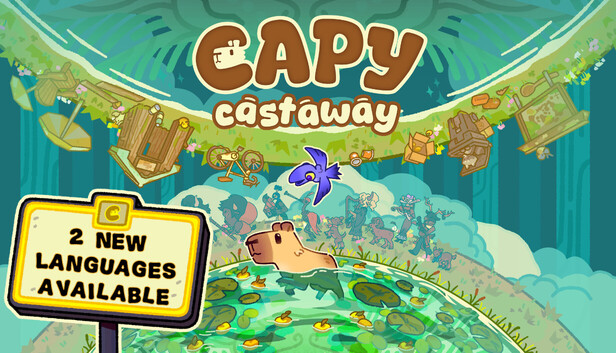
Capy Castaway pairs a capybara's sniffing, digging and swimming with a crow's fetching and flight to explore an island. Playful interactions and relationship choices give their partnership more personality than a simple puzzle-solving arrangement, with solo and local co-op offering different social flavours. Toy-like freedom can bring navigation and targeting friction, and cooperation benefits from discussing replies. It suits curious explorers who enjoy fiddling with objects and spending time with an animal companion.
Capy Castaway makes a persuasive case for giving a capybara a crow assistant. Capy sniffs, digs and swims; Corvi fetches things and supplies aerial transport. Released on August 6, 2026, this exploration adventure turns their complementary abilities into ways through an island full of puzzles and misplaced animals.
Friendship through choices and curiosity
The more interesting promise is how those animals become friends. In her Output Lag interview, creative director Saffron Aurora distinguishes Capy Castaway from the relationship-building system in the studio's previous game, Pekoe. Here, quests and decisions shape reactions instead of repeatedly interacting to push a friendship level upward. That is an appealing distinction, especially for anyone who has ever felt that an allegedly relaxing game was assigning them a second social calendar. A character can respond to what you actually choose, rather than simply appreciating that you have returned with their daily parcel of approved affection.
Aurora also describes a design process built around curiosity and playtesting: discover an enjoyable interaction, then ask what else the player might do with it. Could that object become a hat? Could it be thrown farther? These are modest pleasures, but they suit a creature-sized adventure better than a complicated productivity ladder. The interview explains the intention, not a guarantee that every experiment works. Its attraction is permission to fiddle with things without requiring every fiddle to become a profitable activity.
Solo or co-op changes the conversation
Sharing the controls changes more than who does the flying. In CGMagazine's developer interview, programmer Ashley Kamenska explains that when both characters have something to say, the first player to respond can set the conversation's direction. That gives cooperation a wonderfully awkward social edge: your friend might answer while you are still considering the diplomatic implications of being a small rodent. It is a specific reason to discuss choices together, rather than treating the second character as a portable solution to obstacles.
The developers say neither solo nor cooperative play misses the full story, but Kamenska notices a difference in attention. Pairs tend to banter with each other; lone players engage more with Corvi as a character, including the crow's hints and reactions. That distinction makes solo play sound like a valid choice, rather than the version you settle for when everyone is busy. The same adventure can leave different amounts of room for its fictional companion. Whether you want another human's commentary competing with the crow's is a surprisingly useful way to choose how to play.
An island with memories of Toronto
Behind the animal silliness is a more particular sense of place. Speaking to MobileSyrup, Aurora describes an effort to preserve parts of Toronto that have disappeared, including the remembered Honest Ed's sign. Community manager Bee Zelda connects that impulse to a city often used to represent somewhere else on screen. The developer's point is about letting Toronto be itself. That gives the island's nostalgia a source more interesting than a generic collection of comforting colours and vaguely familiar buildings.
You do not need to share those memories to appreciate the idea. A place assembled from things its creators miss can offer an emotional reason to explore, even when an individual reference passes unnoticed. It also leaves room for a useful contrast: a cheerful animal adventure can carry affection for things that are gone. The developers' explanation suggests that home is something remembered as well as somewhere reached. That is a more distinctive ambition than simply making everything adorable.
Small updates to getting around
The shipped September 1 update provides a less romantic, equally useful picture of exploration. Version 1.0.4 enlarged the sniffing radius and reduced its camera zoom effect.
Version 1.0.5 added bench locations to the park map, identifying places to sit and develop Capy's relationship with Corvi. Those are small changes with a clear purpose: discovering things and finding time for a conversation should not depend on wrestling the interface into cooperation. Even a very patient capybara deserves a readable map.
The later notes also document adjustments to Corvi's flying interactions and lock-on, plus a fix for Capy's hat stack obscuring the map camera. The hat problem is an excellent illustration of the tension here: playful freedom can create wonderfully silly situations and thoroughly ordinary usability problems at the same time. A patch list is not proof that those problems have vanished everywhere. It does show the team addressing the points where its toy-like interactions interfere with getting around. That balance between messing about and making progress is the practical question beneath the cuteness.
SteamDesignCooperationPlacesUpdate1Update2