Quick Review
Cabernet makes vampirism a problem of trust, privilege and knowing what to say at dinner. Knowledge-led dialogue and limited nightly actions give its small-town relationships weight, especially when friendship also creates an opportunity to feed. The measured pace and comparatively forgiving hunger mechanics will disappoint anyone seeking fierce survival pressure or substantial combat. For players drawn to gothic character drama and uncomfortable moral compromises, its polite monsters are well worth meeting.
In this review
Reasons to look closer · Your character sheet has a humanities department · Friendship comes with an alarming second use · Immortality still needs an evening planner · The monsters are dressed for polite company · Verdict: Come for the fangs, stay for the compromises · Sources
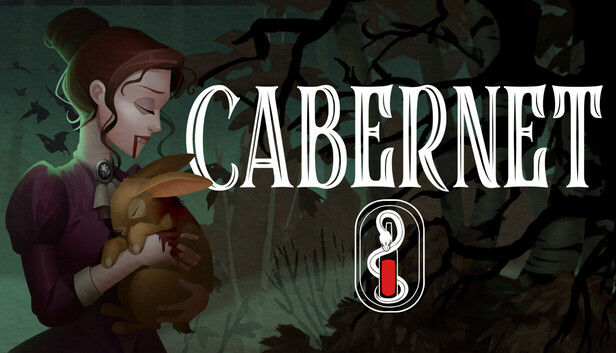
Cabernet has a particularly nasty networking problem: the people worth getting to know are also the people you might need to eat. Liza, a newly turned vampire, enters a nineteenth-century Eastern European-inspired society where excellent manners cover some profoundly unpleasant appetites. Party for Introverts' narrative RPG reached its full release on February 20, 2025 [1]. Its real horror isn't that the aristocracy drinks blood. It's how comfortably everyone has arranged the furniture around that fact.
This is a game about conversations, obligations and the sort of compromise that looks smaller when somebody offers you a beautiful dress. Don't arrive expecting an action RPG with occasional dinner invitations. Cabernet puts the invitations near the centre, then asks what accepting them does to your character. The premise gives ordinary relationship-building an unusually sharp edge, although the supernatural systems aren't always as demanding as the moral questions wrapped around them. Your conscience has considerably more work to do than your sword arm.
Reasons to look closer
Look closer if you enjoy role-playing through dialogue rather than damage numbers. Cabernet connects education, social standing and personal loyalties to a vampire story with something to say about power. Its appeal is the uncomfortable overlap between caring for people and needing something from them. The illustrated presentation helps sell that intimacy, and the manageable town gives relationships room to matter. If combat depth is your priority, the warning is clear: frequent battles, elaborate ability combinations and relentless survival pressure are not the main attraction.
Your character sheet has a humanities department
Liza's background is established through an appropriately morbid opening: the choices made around her funeral help define her starting abilities [3]. Those abilities concern knowledge rather than biceps. Art, literature, science and history provide different ways into conversations, making education a practical tool instead of decorative biography. It's a neat fit for a society where knowing what to say can be more useful than being physically dangerous. Finally, a fictional career path where all that reading might pay the rent.
The attraction is not simply unlocking the cleverest reply. A knowledge-led character system gives Liza a particular way of looking at the world, which is more interesting than a uniformly competent protagonist who can flatter everyone on command. The publisher's emphasis on understanding people's desires [2] also sets the right expectation: attention is part of the work. Readers who skip conversations to reach the next mechanical reward will be skipping much of what those mechanics exist to support.
Friendship comes with an alarming second use
Feeding makes that social investment uncomfortable. Enchanting a potential meal depends on their trust [3], so a convenient enemy isn't automatically a convenient dinner. Buying bottled blood offers another route, but money has other uses. The design's nastiness lies in converting something usually treated as uncomplicated progress, a better relationship, into an opportunity for exploitation. Helping somebody and cultivating a food supply can look distressingly similar from outside. The friendship interface really should come with an ethics committee.
That doesn't mean the hunger system guarantees constant anguish. GameSpot's Jordan Ramée found it comparatively easy to manage, arguing that the practical feeding requirement didn't fully match the story's treatment of dependency. That is an important distinction: Cabernet can provoke discomfort without mechanically forcing an emergency every evening. The strongest reading of its premise is therefore social rather than survivalist. It asks what convenience permits you to justify, not merely whether you can keep a meter above zero until bedtime.
Immortality still needs an evening planner
Being undead does not eliminate scheduling. Each night supplies three action points [4], with substantial activities moving time towards dawn; once those are spent, returning to your coffin becomes urgent. Reading, helping people and pursuing responsibilities compete for a limited evening. The structure makes a useful contradiction out of immortality: Liza might have forever, but she doesn't have forever tonight. A vampire's most terrifying possession turns out to be a calendar with insufficient blank spaces.
The benefit is that priorities acquire weight without turning every conversation into a reflex test. The cost is a deliberately measured rhythm: planning and repeated visits suit a social RPG better than they suit a player impatient for constant discovery. Adventure Game Hotspot also notes that most supernatural powers have relatively specific uses. Bat flight and other tricks add flavour and access, but this isn't a broad simulation where every problem welcomes twelve improvised magical solutions. Expect a guided social drama, not an undead engineering sandbox.
The monsters are dressed for polite company
Cabernet's humanity and nihilism choices [2] sit inside a wider conflict over wealth, authority and who gets treated as disposable. That framing matters. A vampire aristocrat is more interesting when privilege shapes their behaviour than when a fancy collar is their entire personality. The ordinary townspeople also give those themes a human scale. Large arguments about exploitation become harder to shrug off when the person paying for your comfort has a name, a problem and somewhere to be tomorrow.
The artwork supports that storybook unease, but the production has clear limits. JumpScared's Jay Davies praised the character work while finding the animation restrained and the opening slow [5]. Those are useful expectations for a dialogue-heavy game: don't mistake detailed portraits and voice acting for cinematic movement in every scene. Here, stillness can preserve a thoughtful mood, but it cannot manufacture urgency. If long introductions and expressive conversations are your sort of evening, that trade looks considerably better than it does to a restless action fan.
Verdict: Come for the fangs, stay for the compromises
Cabernet's strongest recommendation is its choice of subject. It treats becoming a vampire as joining a social system, not simply acquiring a cooler movement set. Knowledge matters, trust is vulnerable and material comfort has an ugly source. Those ideas belong together, giving the modest daily routines a reason to exist beyond filling a quest log. A small-town conversation can carry more moral pressure than a boss fight when the person talking doesn't realise they're also on the menu.
The reservation is that its dramatic ambition exceeds the pressure exerted by some individual mechanics. Choose it for character-driven role-playing, gothic atmosphere and the chance to shape a compromised person; look elsewhere for demanding combat or a ruthless hunger simulator. That specificity matters: an engaging gothic story and a demanding survival simulator are different recommendations. Cabernet has found a much more interesting use for immortality than extending a skill tree indefinitely: giving bad excuses enough time to become respectable traditions.
Sources
Source links correspond to the numbered references in this review.
[1] Steam — Cabernet release, developer, publisher, features and Windows requirements • [2] Akupara Games — Cabernet official press kit and narrative systems • [3] GameSpot — Jordan Ramée, Cabernet review (February 21, 2025) • [4] Adventure Game Hotspot — Cabernet review, time system and ability limitations • [5] JumpScared — Jay Davies, Cabernet review (March 2, 2025) • [6] Xbox — Cabernet released platforms, release date and single-player mode • [7] PlayStation Store — Cabernet PS4/PS5 release and genres • [8] Nintendo — Cabernet Nintendo Switch release and one-player support