Bus Bound Review
Quick Review
Bus Bound makes ordinary public transport a route to visibly improving a city. Matching vehicles to changing passenger demand and working routes alone or with friends give the driving a purpose beyond collecting buses. Repetition remains central, and extra sightseeing or district features may require separate content, so the package deserves attention. It is most appealing to patient driving-sim fans who enjoy learning a place and gradually making its services work better.
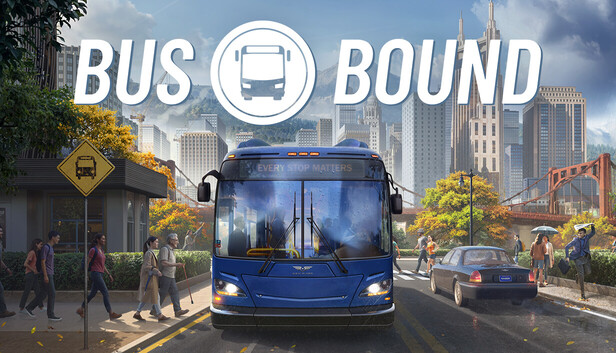
Bus Bound gives saving the city a less glamorous uniform: you're driving the bus. Released April 30, 2026, stillalive studios' transport sim ties successful services to improving Emberville, with licensed vehicles and optional four-player cooperation. Friends can tackle different routes to advance the host's city. The civic fantasy is appealingly specific. You aren't elected mayor; you earn your influence by actually showing up at the stop.
Matching the bus to a changing city
The interesting part is how the developer connects vehicle choice to the city rather than treating the garage as a display cabinet. Executive producer Julian Mautner describes passenger demand changing with district, time and weather. A busy run through the business district calls for something different from a quieter nighttime journey around the educational district. The bigger bus isn't automatically the better bus, an important distinction between fleet roles. Sometimes it is simply more bus to get around a corner, which is a distinction that probably deserves its own driving-test question.
Mautner also identifies Nashville and Asheville as inspirations for the city's broad roads. His account of progression includes parking areas becoming plazas and parks, with bus lanes replacing some general traffic. That gives the repeated journeys a visible purpose beyond filling another meter. It also describes a pleasing contradiction: improving the place changes the job, rather than merely congratulating you for doing the same thing forever. These are the developer's design intentions, not a claim that every junction behaves convincingly.
Less friction behind the wheel
The June update provides a useful look at the less romantic business of making those journeys work. It added an option to repeat a route without returning to the office, along with company and personal statistics. That first change matters in a game about repetition: another run needn't require another administrative detour. New settings let players reduce or hide interface elements, display speed in kilometres per hour and control the visibility of mirrors. Those are practical choices about how much information you want sharing the windscreen. The same notes report work on bus collision shapes, suspension and steering-wheel behavior. They also list fixes for passengers boarding through closed doors and several road problems. That list is not a clean bill of health. What it does establish is an ongoing effort to address the details that can interrupt the driving fantasy. A passenger ignoring a closed door is efficient, admittedly, but not quite the public-transport breakthrough being advertised.
Free additions versus paid excursions
August's Hidden Gems Tour changes the purpose of a journey. Its paid sightseeing mode has you respond to requests from places such as hotels and stations, then take visitors around attractions learned about through relationships with locals. Instead of following GPS directions, you're asked to plan a route that keeps passengers' energy up. That's a sensible variation on the everyday service loop: knowing the city becomes useful in another way. It is also important to separate the expansion from the free additions announced alongside it. The airport area and new hydrogen buses were listed as free, while the sightseeing mode and Sightseer bus belong to the DLC. The airport area opens after the city's bridges are unlocked. Buying a tour ticket and gaining access to an airport road are not the same transaction, even if both arrive in one enthusiastic announcement. That distinction makes the update easier to assess without confusing a growing base game with the contents of its season pass.
September offers another choice about how much progression you want. The free Open Map mode provides several starting setups, from leaving rewards locked while opening bridges and stops to unlocking buses, cosmetics and other rewards. The notes say its availability is highlighted after the New Heights Celebration Tour. That is not quite the same as promising that a completely new player can skip every preliminary step. The accompanying Old Town Roads content has a similarly important boundary: everyone can explore its two rural districts, but their progression features, the minibus and the new traffic events are paid content. The generous-looking map therefore needs a little label reading. Taken together, these additions suggest a game increasingly willing to accommodate different kinds of bus enthusiast: the patient route-builder, the sightseeing planner and the person who mainly wants the roads open. The strongest reason to consider it is that range of driving purposes, not an unsupported promise of flawless simulation. Public service is demanding enough without awarding the software a perfect attendance certificate.
SteamLaunchDesignJuneAugustSeptember