Atomfall Review
Quick Review
Atomfall mixes investigation, scavenging and combat in a fictional British quarantine zone where conversations can withhold leads and ordinary supplies have practical value. Its appeal lies in reading people and situations rather than assuming every problem needs another shot. That uncertainty can frustrate players who want clear confirmation of missed information, even with navigation assists available. Curious survival-adventure fans who enjoy imperfect decisions should find its uneasy countryside more inviting than anyone seeking a relaxing rural escape.
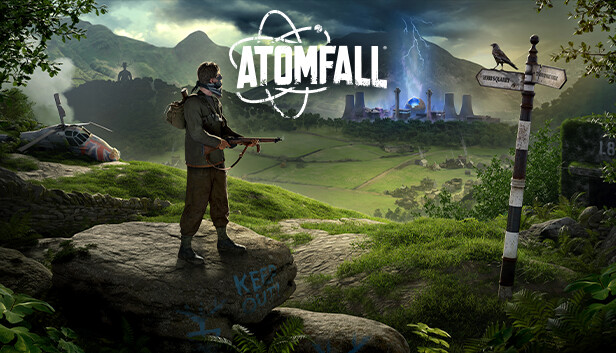
Atomfall's countryside is the sort of place that looks excellent on a biscuit tin and considerably less welcoming once the shooting starts. Rebellion's single-player survival adventure turns the aftermath of the Windscale nuclear disaster into a fictional quarantine zone full of mysteries, cults, and people whose hospitality should probably be checked for sharp edges. Scavenging, crafting, conversation, and fighting all belong in the same toolkit. This is not a historical reconstruction, and the attractive rural setting is not a promise of a relaxing holiday. The contrast is the point: familiar scenery makes the strange things lurking inside it that much more intrusive.
Conversations, scavenging and survival
The most interesting invitation is to treat conversations as encounters rather than information dispensers. Creative director Ben Fisher explained in the official Xbox podcast that a person can withhold a lead because of how a conversation goes, and that characters can die without breaking the wider investigation. That removes the comforting assumption that exhausting every dialogue option will produce a complete shopping list of facts. You have to consider the person doing the talking, not just the words you haven't clicked yet. It is a strong fit for a mystery, although it will be uncomfortable for anyone who wants an unmistakable notification whenever they miss something. A village full of potential informants is more interesting when they are allowed to dislike you. Not every social disaster needs a red warning banner; sometimes the consequence is simply being less informed than you think.
Survival also gives everyday objects a useful second job. In his mechanics breakdown, Fisher describes a metal detector that leads you toward buried supplies, while different traders value different goods. Money is no substitute for something another survivor actually needs. That makes scavenging a question of usefulness rather than merely accumulating a heroic bank balance. The same article describes an especially pleasing bluff: pointing a gun can intimidate an opponent with a melee weapon even when the gun is empty. A kick can buy the moment needed to reload. These are good reasons to pay attention before treating every disagreement as a shooting gallery. The design offers alternatives to straightforward firepower without pretending the countryside has become safe. Even the metal detector, that great instrument of hopeful wandering, now has a more pressing job than locating someone's lost holiday change.
Help with navigation and unwelcome wildlife
There is an important distinction between withholding certainty and withholding access. Rebellion's accessibility breakdown describes adjustable navigation hints, highlighted leads, and optional waypoint markers, alongside customisable playstyles. Someone can want to untangle a mystery without wanting every journey to become a navigational dispute. Directional and distance indicators for dialogue, configurable subtitles, colour options, and remappable controls address different needs rather than assuming one universal solution. The thoughtful part is being able to alter how information reaches you without requiring a different story. These options are particularly relevant to the game's appeal: if observing and listening matter, more ways to observe and listen strengthen that idea. They are not a guarantee that every player will find a perfect configuration, but they are a good reason not to confuse deliberate uncertainty with compulsory inconvenience.
The current game also differs from its launch version in concrete ways. The October 2025 free update added a Rapid Travel Network, unlocked by discovering hatches in the outdoor areas. That preserves an initial act of exploration while giving subsequent journeys a shortcut. More memorably, Phobias Safe Mode can replace hostile vermin swarms with Cornish pasties. It is difficult to imagine a more regional approach to menace management. The option changes the creatures' appearance; it is not a promise that your new pastry acquaintances have become friendly. These additions arrived for existing players alongside the Complete Edition, rather than being benefits reserved for buying the game again. That separation matters. A new package on the shelf should not disguise which improvements belong to everybody who already lives in this very unfortunate neighbourhood.
What the paid expansion adds
Paid extra territory should likewise be understood as extra territory. The Red Strain expansion sends you into Scafell Crag and Test Site Moriah, with new leads that connect back to the main narrative and can produce additional endings. Its new skills also include wielding heavy weapons taken from robots, which is an admirably direct response to being threatened by one. This is more than an isolated side excursion in concept: it can change your options elsewhere, not just give you another fenced-off place to clear. That makes it a potentially interesting extension for someone already invested in the mystery, not evidence that a newcomer must buy everything immediately. The base adventure and an expanded adventure are different purchasing propositions, so check which one an edition includes before buying. A quarantine zone can have enough uncertainty without the checkout adding another unsolved case.
SteamDialogueSurvivalAccessibilityUpdateExpansionChronology