Assassin's Creed Shadows Review
Quick Review
Assassin's Creed Shadows makes its two protagonists' contrasting approaches the main attraction: Naoe manipulates darkness and position, while Yasuke meets danger more directly. Exploration also asks you to gather information rather than treating every destination as an automatic map reveal. That slower observation will not suit everyone. It suits players interested in choosing between stealth and force, with separately adjustable challenges helping shape the balance.
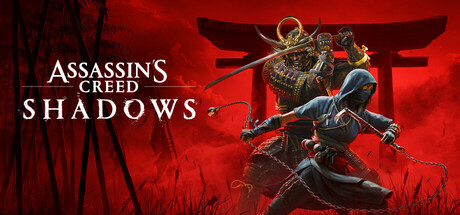
Assassin's Creed Shadows offers two answers to the problem of entering somebody else's heavily guarded property. Naoe brings shinobi agility; Yasuke brings a samurai's more conspicuous skill set. Their shared adventure in feudal Japan makes that contrast the attraction: not merely choosing a protagonist, but choosing how much advance notice to give the people standing in the way.
Two approaches to stealth and combat
Ubisoft's stealth breakdown gives the quieter approach a pleasingly physical logic. Naoe can destroy lanterns to create darkness, crouch to reduce noise and crawl through openings while prone. Servants complicate the arithmetic: they cannot fight, but they can summon people who can. An unarmed witness is therefore not an irrelevant witness. The interesting proposition is that infiltration involves managing a room's information, not simply reducing its population. There is also a useful limit to the fantasy: suspicious guards search in pairs and become harder to lure. Repeating yesterday's clever whistle should not automatically constitute a new plan. This is stealth at its most appealing on paper, when attention itself becomes an obstacle worth understanding.
The combat design gives that contrast more substance than different outfits. Yasuke's successful parry holds his ground and pushes an enemy back; Naoe's deflection pivots around the attack, changing position while potentially exposing her to somebody else. A defensive success can therefore create a fresh spatial problem. Charged posture attacks add another negotiation: holding a strike builds its force and can break a guard, but opponents may interrupt the preparation. The implication is not that slower means worse or faster means better. Each style asks a different question about distance and commitment. Yasuke looks equipped to win an argument with a doorway; Naoe would rather improve her angle before the argument reaches committee.
Exploration that makes information useful
Exploration makes information a task rather than an automatic prize. Ubisoft's overview describes a map that becomes clearer through travel, while viewpoints ask you to inspect and tag nearby places instead of simply revealing everything worth doing. Acquired kakurega safehouses provide practical resupply and safer fast-travel destinations; a viewpoint inside hostile territory is a less restful arrival. That distinction matters. Convenience can support an open world without making every place equivalent, and a useful route home gives distant discoveries a context. It also means the spectacular tower is not necessarily the sensible holiday accommodation. The design's appeal lies in having reasons to notice where you are, rather than treating scenery as the loading screen between icons. A map-size figure cannot tell you whether that slower process of noticing sounds enjoyable.
Accessibility without one-size-fits-all difficulty
The accessibility options deserve attention beyond a polite mention at the bottom. Ubisoft documents remappable inputs with adjustable press or hold behaviour, narration for menus and parts of the HUD, audio description for cinematics, and a conversation log. Combat and stealth difficulties can be adjusted separately. That last separation is especially welcome in a game asking for different kinds of attention: enjoying one challenge need not commit somebody to an equally demanding version of the other. Guided Mode also reduces the work involved in finding content. These are options to assess against individual needs, not proof that every barrier disappears. Still, giving players several ways to tune participation is more useful than appointing one difficulty slider Minister for Everything.
Free additions and the maintenance record
The shipped June 2026 content changes what a current buyer receives. Black Tides adds a free closing story mission, while Domains introduces five challenge arenas aimed at equipment builds. The mission requires finishing the main story and the earlier A Critical Encounter and A Puzzlement quests; Ubisoft explicitly says Claws of Awaji is not required. That is a meaningful distinction between an expanded base game and a demand to buy an expansion for closure. Domains, meanwhile, gives accumulated gear a further purpose instead of letting it retire into a beautifully organised wardrobe. Neither addition proves the original pacing has become perfect. What it does provide is a more definite destination for the story and a separate reason to keep experimenting afterward.
The maintenance record is less glamorous, and more useful than a sweeping promise that everything is fixed. July's 1.1.12 notes address misleading perk displays, missing engravings and unintended combinations of Domain modifiers; August's released 1.1.13 patch concerns smaller interface fixes. Those are consequential details when equipment is supposed to support decisions. A build cannot be an interesting experiment if the labels are unreliable laboratory equipment. The sensible reading is that Ubisoft has documented specific corrections, not certified every possible session trouble-free. Anyone arriving now should judge the updated game rather than its launch reputation, while keeping patch claims separate from guarantees about their own machine.
SteamStealthCombatExplorationAccessFinal contentCorrectionsInterfaceTimingCreditsLaunch map