Quick Review
Aliens: Fireteam Elite 2 centres cooperative shooting on distinct squad roles, useful positioning and enemies that demand different priorities. Support stations, deployable machines and heavy weapons suggest more teamwork than simply bringing the biggest gun. The article also records unresolved reward and ability problems, so those promising class designs do not support an uncomplicated recommendation. It is most relevant to coordinated co-op squads willing to weigh reliability carefully before signing up for another hostile corridor.
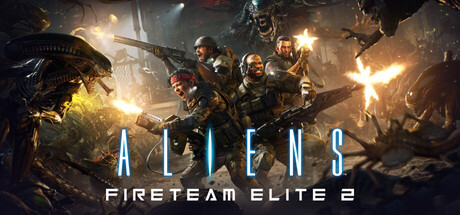
Aliens: Fireteam Elite 2 gives the Colonial Marines another opportunity to demonstrate why a corridor should come with hazard pay. Cold Iron's cooperative shooter arrived on August 25, 2026, with four-player squads, customizable classes and dedicated Horde maps. The attraction is organized resistance to a spectacularly unreasonable workplace.
Squad roles beyond carrying a bigger gun
The Medic's official showcase makes a useful distinction between keeping people alive and merely carrying the bandages. Adrenaline Surge offers damage resistance and protection from knockback; Overclock increases the team's firing rate and the Medic's reload speed. Those are different responses to danger: endure the incoming punishment, or shorten the period in which something remains available to administer it. The Advanced Trauma Station has similarly divergent options. Its Buffing Station configuration strengthens nearby allies, while Poison Station turns the device toward damaging enemies. Even the perks suggest choices about the rescue itself, with faster revives competing for attention against immunity to knockback during interactions. That's a more interesting support brief than following everyone around with a disappointed expression. On paper, the Medic can help determine how a squad holds its position, rather than simply documenting how badly that position went; how those options work in a squad requires evidence beyond the showcase.
The Machinist takes a more industrial approach to friendship: build something that shoots on your behalf. Its showcase describes a Sentry Turret and Bodyguard Drone, with modifiers changing their jobs. Gas and Rumble turret options provide different ways to damage or slow threats; the drone can provide close-quarter or long-range firepower. Choosing between distant support and close protection gives the machinery a tactical purpose beyond increasing the number of things making noise. Cross-Platform Synergy also ties benefits to positioning: allies near the turret gain damage resistance, while the Machinist's own proximity improves its regeneration. Scalable Machine Learning rewards kills from machines and item-based turrets with stacking reload-speed and stability bonuses. The appealing idea here is a feedback loop between placement and personal gunplay. You haven't outsourced your entire job to a robot. You've acquired a colleague whose workplace boundaries need careful marking.
For the Marauder, subtlety appears to have missed the transport. The heavy-combat showcase offers Blast Cannon configurations including a Thermal Cannon, alongside rocket options that can be turned toward laying mines. That's a pleasing difference in intent: immediate violence versus arranging some violence for later. Rampage builds through kills and, at twenty-five stacks, briefly increases firing rate, reload speed and movement speed. Reactive Charges responds to a melee hit with a concussive blast that knocks most nearby enemies back. These details sketch a class encouraged to maintain pressure, with a defensive reaction for when pressure becomes an actual creature in your lap. They don't establish how forgiving the rhythm feels in practice. They do give the heavy role a more specific identity than simply owning the largest gun in the room.
Enemies that change the priority list
The enemy dossier supplies the other half of those decisions. A Drone uses vents to ambush and escape, making concentrated fire important; a Crusher's frontal armor instead asks the squad to find another angle. The Warden disrupts formations with acid and forceful melee, while the Siren's danger comes from summoning additional enemies. Priorities therefore matter as much as raw enthusiasm. A weak-looking caller can deserve attention before a larger creature finishes its dramatic entrance. Exploders add another complication: they're dangerous up close, but shooting one at the right moment can hurt its own crowd. That is a wonderfully practical use of a terrible neighbor. The roster's promise lies in changing the team's immediate question from “what has the most health?” to “what is about to make this position untenable?” Whether encounters consistently realize that promise requires play evidence these descriptions cannot provide.
Patch progress and unresolved rewards
The October 22 patch notes put a substantial caution beside that promise. Cold Iron reports work on combat hitching, crashes, mission blockers and malfunctioning abilities, and makes Horde Mode immediately available to new characters. Those welcome documented changes do not establish that the whole experience is repaired. The same notes acknowledge missing rewards, including trouble after the Queen Fight and with specific wave-fifty Horde equipment. Horde can still attempt to award something already owned and produce nothing; enemies can still visibly spawn in. Empty-magazine bonuses also remain host-only rather than working for other players. For a game built around cooperating and earning equipment, those aren't decorative footnotes. A successful defense followed by an empty reward screen is a particularly joyless interpretation of military service. For a purchase decision, the developer's own current account gives reward reliability enough unresolved baggage to argue against treating this as an uncomplicated recommendation. Check subsequent fixes before assuming that particular battle is over.
SteamMedicMachinistMarauderEnemiesUpdate