Quick Review
Aether & Iron combines an opinionated smuggler's story with vehicular tactics on a road grid that changes around your plans. Vehicle customisation and positioning give the flying-car setting practical purpose, while the city's layers make class divisions tangible. Gia is an established character, and deliberately rich narration may overwhelm players who prefer spare prose or a blank-slate role. It is most appealing to fans of authored pulp who enjoy making equipment choices earn their place in a fight.
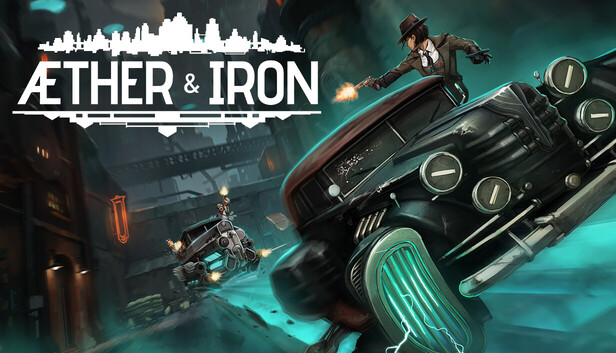
Aether & Iron makes a floating New York the workplace of smuggler Gia. Its vehicular tactics suggest that road rage has finally acquired a planning department.
The more distinctive choice is whose version of this world you inhabit. Narrative director Tyler Whitney describes Gia's narration as personal rather than omniscient, with deliberate sensory language and plentiful metaphor. That is a strong invitation for anyone who enjoys a character putting their fingerprints on every description. It is also permission for the prose to have opinions. You are not hiring an impartial municipal tour guide.
Reasons to look closer
Chaos Theory's combat designers describe building around limited actions on a moving road grid. Lanes open or close, and environmental obstacles can produce chain reactions. The tactical question therefore extends beyond where a vehicle sits: what will that position mean when the road changes? A perfectly respectable square may shortly lose its status as a square worth occupying. That is a promising distinction from battles where scenery mainly watches politely.
Their design account also puts customization into vehicles, with engines, armor, weapons and other components shaping the machine. Preparation and positioning become linked decisions rather than separate hobbies. There is something satisfyingly direct about an equipment screen whose purchases must later survive traffic. The concept gives each modification a practical argument to make, instead of merely asking whether the number is larger. An impressive equipment list is only useful if you also like putting those purchases to work through positioning.
Social climbing gets literal
Whitney's worldbuilding account makes successive generations of technology visible in the city's layers. The Lowers retain older machinery and nineteenth century architecture; the Uppers draw on Art Deco, while the Heights embody an imagined future. Wealth rises with the newer infrastructure. It is an economical way to turn class into geography: the people looking down on you have arranged for physics to assist. More importantly, the setting has a past, rather than acquiring an entire civilization on the day the protagonist arrives.
He also describes roleplaying choices as expressions of Gia's established background, not a blank personality to fill in. That boundary is useful. Choosing her approach should mean inhabiting a particular survivor, not ordering a completely different person from a conversational menu.
Taken together, that worldbuilding and the moving combat design give flying cars a purpose beyond decoration. The fantasy affects both the social order and the tactical problem. Those handsome vehicles have been asked to earn their garage space.
A voice, not a vacancy
The decision to keep Gia as the central character also came from a concrete production tradeoff. Whitney says multiple voiced protagonist versions would have multiplied recording and localization costs; the female version was already written and became the focus. That is refreshingly specific. Creative identity sometimes emerges from a spreadsheet closing doors. His account of demanding more imagery from the writers explains the same commitment from another angle. This is authored pulp, not neutral delivery packaging for quest objectives. Players who want spare narration should recognize the deliberate appetite for language.
The score has junctions
Composers Christopher Tin and Alex Williamson describe a score organized around changing moods rather than only separate location loops. Tin supplied thematic sketches; Williamson developed them around the narrative. Custom entrances and endings let pieces move into one another, with combat layers responding to intensity. The compositional challenge is not simply writing a memorable tune. It is giving that tune several graceful ways to leave the room.
Their stated balance mixes jazz instrumentation, orchestra and modern production without treating period flavor as a museum preservation order. That makes sense for an alternate history: recognizable influences can establish a place without requiring every dramatic moment to obey an imaginary authenticity inspector.
Room to change the plan
The maintenance record adds useful practical details. May's update permits loadout changes after a failed encounter; September adds combat outline colors and controller options. Failure need not insist that you bring the same unsuitable setup back for another appointment. Those are documented changes, not proof of flawless controls or balance; older coverage may also predate the option to change a loadout after failure. They do, however, address how players revise decisions and read a battle, which are worthwhile places for a tactical game to keep working.
The clearest attraction is a firmly voiced story with music designed to follow its moods. Bring an appetite for narration, not an empty character sheet.
Release details
Full release: 2026. Official dates differ between March 30 and 31.
The 2025 demo excludes later acts and other baronies.