Quick Review
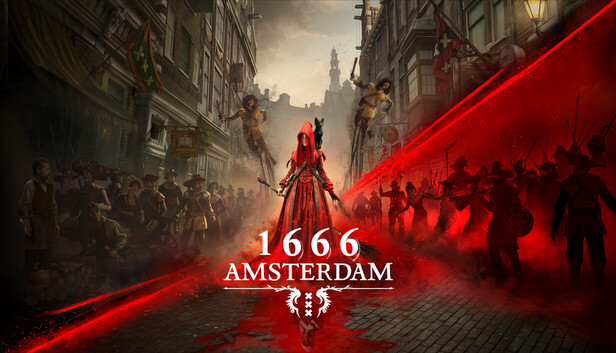
The reviewed Early Access version of 1666: Amsterdam builds its appeal around observation, identity and supernatural investigation. Finding true names and pact seals, reading architectural clues and using human and feline abilities give the city practical work beyond atmosphere. Marker-free navigation asks for attention, while unfinished localisation and evolving systems make the experience provisional. It looks most inviting for patient mystery players interested in learning a place, rather than expecting a fully settled adventure.
1666: Amsterdam gives witchcraft an unusually administrative problem: identifying the person behind the face. Panache's investigation design puts the Originals out in public, so spotting someone suspicious is not the whole assignment. You need their true name and the seal of their pact before the Nominem spell can expose them. It is a specific supernatural premise. The occult has paperwork, and apparently nobody thought to shred it. Curiosity matters more here than pointing at the nearest sinister coat.
Reasons to look closer
Designer Sarah Petri describes daytime information gathering giving way to nighttime revelation. The moon doubles as guidance, while Noa's tools and Aaron's feline abilities offer complementary approaches. Gable stones become clues to analyze and track. These are interesting jobs for a city to perform: its architecture participates in the mystery instead of merely waiting for a postcard. Clio's decoding also frames attempts as hypotheses, making uncertainty part of the fiction rather than an embarrassing interruption.
A city at arm’s length
The studio's 2024 Amsterdam trip focused on physical scale, with designers using their bodies to judge stairs, alleys and distances. That is a useful antidote to treating a historical city as a collection of façades. An alley should be a space somebody must negotiate, not just somewhere to store atmosphere. This is artistic interpretation, though, not a municipal survey with witches appended.
Story beyond the speech
Narrative director Philippe Debay describes story work reaching into missions, systems and level design rather than running beside them. That ambition is more interesting than simply promising lots of dialogue. A revelation ought to change the meaning of something you do, not arrive as a lecture after the interesting part. Dialogue length cannot tell you whether the story achieves that connection. Debay also singles out Noa and Aaron's relationship. The appeal is a mystery with people at its center, not a filing cabinet of lore that occasionally remembers to have protagonists.
The cat notices the skirting
Environment artist Nathan Sioui describes a world that must accommodate both human movement and a cat squeezing into awkward spaces. Suddenly the bottom of a wall has a starring role. Debris, grime and believable barriers matter when your viewpoint is near the pavement. Interactive objects also have to advertise useful ingredients without abandoning their seventeenth century surroundings. That is an appealing visual problem: communicate a function without making every cupboard look like it works in retail. Dutch Golden Age painting supplies inspiration, but a room has obligations a canvas can politely ignore.
Different kinds of composure
Victoria Diamond approaches Noa through controlled strength, with a maintained accent. Xiao Yi Hernan describes Aaron's humor alongside worries and emotional depth. That contrast offers more than the standard arrangement of one serious person and a portable joke dispenser. Aaron's levity has a person underneath it. These intentions make the pair worth noticing without requiring a dramatic speech whenever they enter a room.
Music with an ulterior motive
Audio director Philippe Charron wants supernatural sounds grounded enough to belong to the world, with beauty sharing space with ugliness. Jorane's voice and cello form part of that musical identity. The interesting idea is contrast, not uninterrupted ominous rumbling. If everything sounds cursed, even the cutlery loses its negotiating power. Dedicated work on reverb, occlusion and foley supports a direction in which ordinary spaces can carry extraordinary implications.
Look up, then look again
The navigation philosophy asks for landmarks and observation rather than a minimap or waypoint markers, with a bird's eye perspective available for orientation. This places a different burden on the player: noticing where you are is part of the job. A church spire has more responsibilities than usual. UI director Étienne Beaulieu also describes an alphabet intended to be decipherable, not an admission exam for professional cryptographers. The attraction is understandable discovery. His discussion of feedback and clearer hints matters because a mystery and an unclear instruction are not the same achievement. Keep that distinction in mind before deciding whether navigation without waypoints sounds rewarding.
The city is still changing
September's 0.2.2 update adds God Mode, camera and visibility options, and changes to cat navigation. It also moves the spell HUD over the target and makes returning to Noa's house reset suspicion. Even witches deserve a front door that ends the argument. These changes affect players approaching the city, not evidence that every rough edge has vanished. The notes acknowledge unfinished localization work. The invitation is to an evolving investigation, not a completed restoration.
Paid Early Access began August 25, 2026. The June prologue was a limited narrative sample; the earliest public core day remains unresolved.