1348 Ex Voto Review
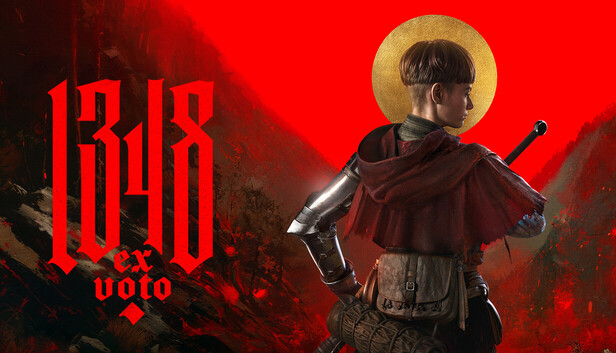
Quick Review
1348 Ex Voto centres a compact rescue adventure on swordplay, with two stances, combinations and weapon parts shaping its main attraction. Aeta and Bianca's unequal backgrounds give the journey a more specific emotional premise than another generic quest. Combat readability and the limited opening instruction deserve caution, especially for players expecting a precise historical simulation. It is most appealing to those drawn to focused historical fiction and a blade-led adventure with a personal reason to keep travelling.
1348 Ex Voto gives its swordplay two stances, unlockable combinations and interchangeable weapon parts. One hand or two: a smaller decision tree than many adventures offer, but a properly sharp one. Released on March 12, 2026, this third-person action adventure keeps a blade at the centre of its appeal.
A rescue built on an unequal friendship
Its emotional argument is more specific. Aeta has grown up noble, encouraged by her father to learn swordsmanship and pursue knighthood. Bianca has grown up poor, working as a servant and learning how to survive people rather than how to impress them. The developers' character introduction describes Aeta treating her as an equal despite that enormous difference in status. That gives the rescue premise something worth examining beyond the usual unfortunate person requiring collection from the villains. Aeta's ideals have a personal test: does wanting to help people mean much until helping becomes difficult?
Bianca's disappearance turns that question into the journey's motivation. The appealing tension is between inherited privilege and chosen obligation, with a practical, streetwise companion standing opposite an aspiring knight. Chivalry sounds considerably less comfortable when it means finding someone you care about rather than looking respectable while holding expensive cutlery. That is a promising dramatic foundation, but the finished scenes still need to deliver that promise; a character biography cannot establish how convincingly they deliver it.
Costumes that tell the story
The art team's account of Aeta's clothing offers a surprisingly useful way to read the adventure. Her red cape survived the design process; a bulky backpack did not. It obscured the cape and looked cumbersome during combat, so a smaller bag took its place. Armour was also reduced to suggest greater agility. These are practical storytelling choices: the figure needs to suggest somebody travelling a long way without resembling a cupboard that has learned fencing. The developers' explanation makes that trade-off visible rather than asking historical atmosphere to do all the work.
Bianca's outfit combines common clothing with elements of a nun's dress because she is heading towards a convent when the story introduces her. Her lighter colouring and softer facial features deliberately contrast with Aeta. Costume therefore helps separate their circumstances before dialogue has to explain everything. The official art discussion describes historical fiction, an important distinction for anyone expecting a meticulously reconstructed medieval life simulator. These clothes have characters to introduce, not a museum examination to pass.
Swordplay between realism and readability
Director Tom Oceano's October interview is equally revealing about the intended combat experience. He says the team initially pushed its historical martial-arts inspiration towards realism, then found the result too chaotic and frustrating for the compact adventure it wanted to make. The eventual direction was more arcade-like. The distinction matters: researched sword movements are not a promise of simulation. A believable duel still has to communicate its rules to the person holding the controller, who probably has not arrived with a fencing instructor and a laminated curriculum.
Oceano also acknowledges that avoiding a long opening tutorial was a mistake. His explanation puts an interesting limit on the appeal of immediacy: removing instruction does not necessarily remove complexity, and confusion can occupy the space where momentum was supposed to go. This is the developer's account of a design problem, not proof of how the game now feels. It does, however, give prospective players a more candid description of its priorities than a simple promise of authentic combat.
What the combat update changed
The June 1.50 update is the concrete reference point for those rules. Its notes specify clearer visual and sound feedback for successful Perfect Attack inputs, with the damage bonus applying to both guard and health. Automatic switching to an attacking enemy became optional, while an indicator was added for attacks coming from outside the screen. Those changes address a basic fairness problem: being surrounded is challenge enough without making target selection a second opponent.
The same update lets dodges cancel attacks and makes Perfect Parry available from the beginning. Heavy attacks no longer use the Perfect Attack window, so the timing rule should not be applied indiscriminately to every swing. This is substantial revision, not merely a notice about tidier menus. Patch notes establish what was changed, however, not whether every encounter now behaves beautifully. The sensible attraction is the revised sword-fighting design; treating a long repair list as a clean bill of health would be considerably more heroic than the evidence warrants.
PlayStationSteamCharactersArtInterviewUpdate